As I write this, it’s a brisk 16 degrees above zero on the last day of the year here in New York City. 2017 was seemingly a scenario for an end-of-days disaster movie, with hurricane after hurricane and one mass shooting after another, punctuated by daily insults to our sensibilities Tweeted by a former reality-show host from his Oval Office sandbox. It’s not easy dealing with all of this.
But there were a lot of good films to help us out. One can only hope that 2018 will bring films half as good as Wind River, The Square, A Ghost Story, and The Shape of Water, among many others.
Tonight we’re seeing Happy End, Michael Haneke’s new film at Film Forum. He’s a great director, as evidenced by Amour (2012) and The White Ribbon (2009), to name but two.
The following clip is a montage of scenes from Universal horror films. It was initially designed as a promo for Universal’s proposed “Dark Universe” films, which would be reboots of these classic films. If The Mummy with Tom Cruise from earlier this year is any indication, they should drop these plans immediately. It rightfully tanked, so we may be spared. But I love this clip and am including it here for no particular reason other than it makes me feel really good.
Stay tuned for recaps of my favorite feature films, documentaries, and TV & cable shows for 2017. In the meantime, here’s Ralph Kramden and Ed Norton to take us out in exquisitely joyous fashion. Happy New Year! – Ted Hicks
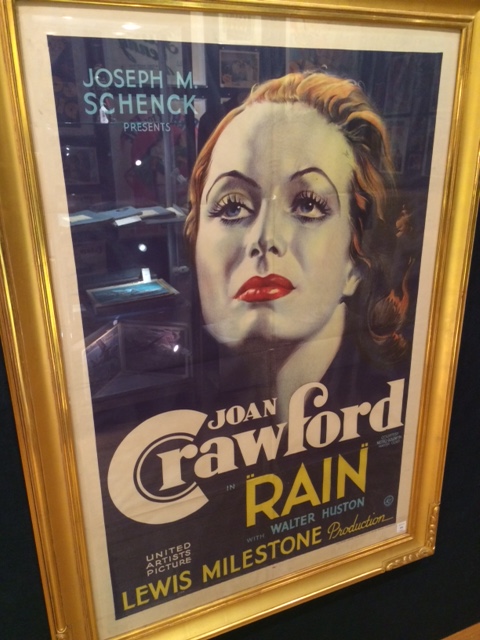
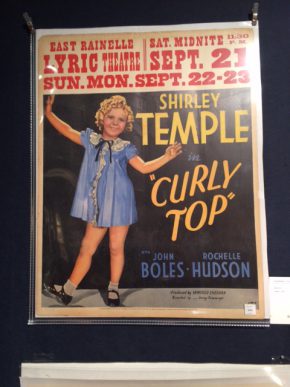
On November 21, 2017, there was an auction of movie memorabilia called “Out of this World,” sponsored by Turner Classic Movies. It was held at Bonhams, an art-auction house here in New York City. The centerpiece was the original Robby the Robot from Forbidden Planet (1956). In addition to Robby, there were film posters, lobby cards, scripts, costumes, and other artifacts from a wide range of classic movies. As soon as I heard about the auction, I checked for preview dates, because I had to see this. I went the day before the auction and took photos of whatever caught my attention, including the one below of Robby.
As it turned out, Robby sold for a record $5.375 million, the most ever paid for a movie prop or costume. Marilyn Monroe’s white dress from The Seven-Year Itch and the Batmobile from the 1966 television series had tied for the previous record of $4.6 million each.
In 1957, Robby was featured as himself in MGM’s The Invisible Boy. I haven’t seen this film, but from what I’ve read, despite the depiction above, Robby is actually a good guy who helps defeat an evil super-computer. He became a science fiction icon in subsequent years — the most recognizable robot in the world — appearing in TV shows and commercials. Robby even has his own IMDb page listing his many credits.
Here is Robby’s entrance in Forbidden Planet.
Below are a few of Robby’s TV appearances: The Perry Como Show, Hazel (in which Robby suffers the indignity of wearing a maid’s cap and apron), Mork & Mindy, and a commercial for Charmin bathroom tissue.
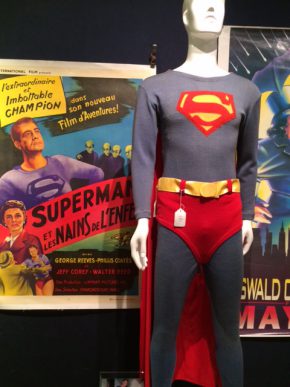
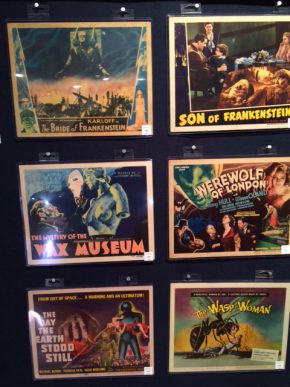
Besides posters, there were also costumes, such as the Superman suit George Reeves wore in Superman and the Mole Men (1951), as well as film scripts (many of them directors personal copies with notes and annotations). Many of the posters on display were part of another TCM auction of vintage movie posters held the day before. Illustrations and information regarding all of the items in both collections may be seen in these catalogs: “Out of This World!” and “Vintage Movie Posters.”
Here is a selection of the photos I took at the auction preview. Some of these are quite stunning.
Note the credit for Ted Healy and His Stooges in the poster above for Dancing Lady (1933). I believe this was an early film appearance of Larry, Moe, and Curly, aka The Three Stooges.
In retrospect, the most important film I saw in 1955 was Blackboard Jungle, written and directed by Richard Brooks, adapted from a novel by Evan Hunter. Hunter later wrote the screenplay for Alfred Hitchcock’s The Birds (1963). Under the name Ed McBain he wrote the popular 87th Precinct crime novels. As Richard Marsten he wrote Danger: Dinosaurs!, published in 1953 in the John C. Winston series of science-fiction books for young readers, which I burned through in our school library in ’55 or ’56. It was my favorite book from the series. Several years ago I purchased a copy from a used-book seller at 62 times the original purchase price, but it was worth it.
Blackboard Jungle stars Glenn Ford as a new teacher in an all-boys vocational high school in New York City. The cast includes Anne Francis as Ford’s wife, with Sidney Poitier, Vic Morrow, Paul Mazursky, and Jamie Farr as students. This was Poitier’s fifth feature film, Morrow and Farr’s first. Vic Morrow went on to appear in the television series Combat!. He was killed in 1982 at age 53 in a controversial helicopter accident while filming a scene for Twilight Zone: The Movie. Jamie Farr became well-known as the cross-dressing Corporal Klinger in the TV series M*A*S*H. Paul Mazursky became an excellent director and screenwriter, with features such as Harry and Tonto (1974); Next Stop, Greenwich Village (1976); An Unmarried Woman (1978).
In the following scene, Richard Kiley plays a teacher whose prized collection of jazz records is destroyed by students led by Vic Morrow. Given the condescending way he speaks to them, one can almost understand why.
While Blackboard Jungle is a powerful look at juvenile delinquency in the classroom in the 1950s, its true significance for me then, as it is now, was its controversial use of “Rock Around the Clock” by Bill Haley and His Comets under the opening credits. This was reportedly the first rock song ever used in a Hollywood feature. It made a lot of people — adults, not young people — very nervous and caused quite a stir. Rock ‘n’ roll, for many, was the devil’s music, promoting sex and — God forbid — race-mixing. Combining “Rock Around the Clock” with a movie about violent juvenile delinquents in an inner-city high school was too much to handle. Many communities tried to ban the film for fear it would incite delinquency. At the urging of Clare Booth Luce, then Ambassador to Italy, Blackboard Jungle was withdrawn as the U.S. entry to that year’s Venice Film Festival.
I didn’t know any of this at the time. To me it was a powerful story kicked off by an incredible song I could relate to. Try to imagine hearing this in a movie theater for the first time in 1955. This was something new. It felt like a seismic shift, and it was. I knew something had changed.
(Bosley Crowther’s review of Blackboard Jungle in the New York Times doesn’t even mention “Rock Around the Clock.” It’s like he wasn’t geared to hear it.) _________________________________________________________
My mom’s mother and step-father lived in Saginaw, Michigan. We would visit every year or so, an 800-mile trip by train or car. When we were there in the summer of ’55, I saw in the newspaper that This Island Earth was about to open in a theater downtown. I knew about this film and was desperate to see it. I knew it wouldn’t get to our local theater for several months, so the thought of seeing it here had me very wound up. The only problem was that the film was opening the night before we were due to head back to Iowa. My parents said I couldn’t possibly see a movie the last night we’d be there. This seemed totally unfair to me; they didn’t understand how important this was. This Island Earth was in color and everything, and promised to be fantastic. Then my grandmother took me aside and calmly talked me down. I resigned myself to my fate and knew I’d eventually see the movie back home at the Vista Theater, but this was a cruel disappointment. I mean, just look at this ad!
So I finally saw it and was thrilled. My disappointment in Michigan was forgotten (well, obviously not entirely). In the movie, scientists are being recruited by aliens with bulging foreheads to help prevent the pending destruction of their home planet, Metaluna. The first three-quarters of the film is terrific. This Island Earth takes its time setting things up. It has mystery and alien presence. But once scientists Rex Reason and Faith Domergue are taken aboard a spacecraft bound for Metaluna, events become very rushed. Worse still, the special effects at this juncture are very tacky. The Metalunan mutant that appears on the ship is pretty cool, though, as can be seen below in an illustration by Basil Gogos, who did many great covers for the magazine Famous Monsters of Filmland. Okay, the mutant is a big humanoid bug wearing pants, with pincers for hands and an exposed, bulging brain. I can’t remember if its function was ever explained.
I think it was on this same trip to Michigan that I bought a copy of Dracula in the Modern Library edition seen here. This was a serious artifact for me to acquire. I avidly read the first section, Jonathan Harker’s diary. But I found the rest of it difficult and tedious, comprised as it was of various journal entries and seemingly inconsequential newspaper clippings. I re-read Harker’s diary several times, but it was years before I was able to read and appreciate the entire book. I have never been able to get through Mary Shelley’s Frankenstein, however. Maybe someday.
I wrote at the end of Part 1 that I basically liked every movie I saw when I was a kid. I think I already knew, though, that some films were better than others. But it wasn’t until I saw Chief Crazy Horse that something really bothered me. As was the norm at this time, the major Native American roles were portrayed by white actors, so Victor Mature played the Sioux Indian warrior, Crazy Horse. Okay, no problem, but the entire film builds up to Custer’s last stand at the Little Big Horn, and when it finally gets there, the camera tilts up to the sky. We just look at the clouds while we hear the fighting on the soundtrack. To me, this was a huge cheat. Some might see it as a bold choice, but I suspect the filmmakers simply didn’t have the money to actually shoot the battle itself. I don’t know if this is when I became critically aware, but it was a start.
Deserts in the Southwest were frequent settings for science-fiction films of the 1950s, such as Them! and It Came from Outer Space. Tarantula is no exception. The result of experiments involving a radioactive super-nutrient (of course), a spider the size of a golden retriever gets loose from the research lab and terrorizes the desert countryside as it continues to grow. Oddly enough, a gigantic tarantula stomping houses and killing cattle is the least interesting thing in the film. Three scientists, led by Leo G. Carroll, have been infected by the super-nutrient, resulting in advanced stages of acromegaly and finally death in a matter of days. This is probably more compelling and frightening because it’s more human than a 100-foot tall spider. Tarantula was directed by Jack Arnold, who made a number of effective science-fiction films in the 50s, including It Came from Outer Space (1953), The Creature from the Black Lagoon (1954), Revenge of the Creature (1955), and my favorite, The Incredible Shrinking Man (1957). Working in television, he went on to direct episodes of Peter Gunn, Dr. Kildare, Rawhide, Gilligan’s Island, The Brady Bunch, and Love Boat. An interesting career.
Tarantula was also the second film appearance of Clint Eastwood, then a contract player at the studio, Universal-International. In the scene below, he plays a jet pilot leading the attack on the spider as it advances on a town. Clint wears a helmet and oxygen mask, but he’s still easily recognizable.
The first incarnation of Walt Disney’s Disneyland was from 1954 to 1958, and that’s when I was watching it. I couldn’t miss an episode. Davy Crockett hit the scene in ’55, and I was as obsessed as any other kid. I loved the three-episode series, especially the last one, Davy Crockett at the Alamo. All three were edited into a single feature released later in the year, Davy Crockett: King of the Wild Frontier. Disney exploited the merchandising of the Crockett craze to the limit. I didn’t have a coonskin cap (too old for that), but did get the comic books.
Violent Saturday is a film that has stayed with me. I saw it again a few years ago and it holds up well. It’s a good example of a narrative with multiple characters and plot lines that converge at the end. There have been many films with this type of structure since. Violent Saturday is set in a small mining town in Arizona where a group of men have come to rob the local bank. Victor Mature made a lot of sword and sandal films such as Samson and Delilah, The Robe, and Demetrius and the Gladiators. He could chew the scenery with the best of them, but when he was well cast, as he was here and in Kiss of Death (1947), he could be quite good. He plays an executive in the mining company who stands up to the criminals at the end. Violent Saturday was directed by the underrated Richard Fleischer, who made good films in a variety of genres, including Armored Car Robbery (1950), The Narrow Margin (1952), Barrabas (1961), The Boston Strangler (1968), and Soylent Green (1973).
Fewer films in 1956 made a lasting impression on me than in some of the previous years, but Attack! and Invasion of the Body Snatchers definitely did. They’re as good today as they were then.Attack!, directed by Robert Aldrich, is a brutal war film that has lost none of its corrosive power. It concerns a company of army soldiers fighting in Belgium in 1944. Jack Palance is Lt. Joe Costa, a platoon leader; Eddie Albert is Capt. Erskine Cooney, the incompetent and cowardly company commander; Lee Marvin is Lt. Col. Clyde Bartlett, the battalion commander. Costa hates Cooney, whose incompetence has already caused the deaths of several men. When the Battle of the Bulge begins, Cooney’s company is ordered to take the village of La Nelle. Afraid, Cooney opts to first send Costa to lead a reconnaissance patrol into the town. Things go badly and Costa is determined to make Cooney pay. Made on a low budget without Defense Department cooperation, Attack! is blunt and bitter. I was knocked out by it as a 12-year-old, and still am.
Even those who haven’t seen Invasion of the Body Snatchers are probably familiar with the term “pod people.” It’s become part of our language. The film, directed by Don Siegel, has a potent concept. Aliens progressively take over the human population of a small California town, replacing people with exact duplicates grown in large seed pods. You become convinced that your wife or husband or friend is not that person, even though they look and sound exactly like that person. Kevin McCarthy, in a career-defining role, plays the doctor who first dismisses those who come to him with their fears, but slowly becomes convinced with a horrible certainty that it is true. Siegel wanted to end the film with Kevin McCarthy shouting “You’re next! You’re next!” into the camera, but the studio imposed a more positive, upbeat ending. Despite that, it’s McCarthy’s desperate warning that stays with you. Invasion of the Body Snatchers has been remade several times, though the 1978 version directed by Philip Kaufman is the only decent one. I’ve seen the original many times. It always works for me. Jack Finney’s novel is also excellent. I still have the Dell paperback copy seen above. It’s a great film, well made and well acted by all, and much more subtle than the following trailer would have you believe.
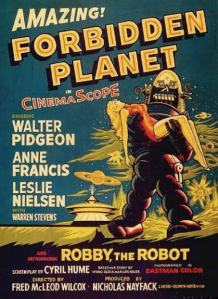
The electronic music under the main titles of Forbidden Planet is appropriately other-worldly.
And for those living in New York City, the original Robby the Robot from the film will be auctioned off next Tuesday, November 21 as part of a TCM “Out of This World” auction at Bonhams on Madison Avenue. Previews are this Friday through next Tuesday morning.
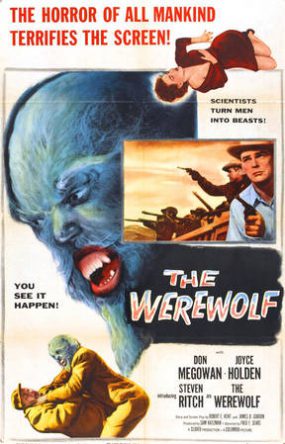
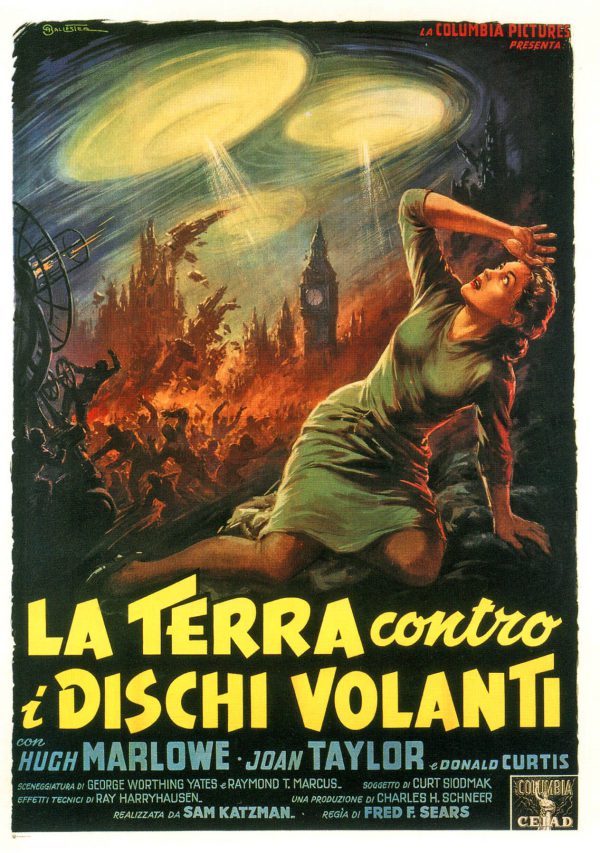
These two films were directed by the same man, Fred F. Sears, but they couldn’t be more different. Earth vs. the Flying Saucers has excellent stop-motion work by the justly-revered Ray Harryhausen, and it’s always fun seeing landmarks in Washington D.C. being destroyed, but otherwise it’s not very good. I think I knew that even then. The Werewolf has the distinction of scaring me so much I had to leave the theater before it was over. It might be that there was something a little too real about it. Werewolves are traditionally supernatural creatures governed by specific genre rules (full moon, wolfsbane, “Even a man who is pure in heart…”, yadda yadda) but this was wasn’t that at all. In it, a stranger from a car accident is injected with an experimental drug containing irradiated wolf’s blood by two scientists trying to find a cure for radiation poisoning. This has the result of transforming this poor guy into a werewolf. Of course it does. Not much real about that, I know. So what was it? The film is set in a small town near the mountains somewhere in the Northwest during the winter. There’s a scene that takes place in the alley outside a seedy bar where the protagonist in werewolf form, though we don’t see him, is attacking a man. All we see are their legs and feet thrashing about, and sounds of struggle, groaning, growling. I found this really upsetting. Maybe it was too easy for me to imagine that anybody could be attacked like this, though probably not by a werewolf. I think the film, up to the point where I left, was too close to the everyday. And with one exception, I didn’t know anyone in this film. It was like they weren’t actors. Whatever was going on with me, I left shortly after this scene. I finally saw The Werewolf on television a couple of years ago. It’s no masterpiece, but there’s still something uncomfortable about it.
Like everyone else in this country, I first saw Godzilla in the Americanized version with Raymond Burr edited into the storyline. It was years before I saw the original Japanese film, Gojira, released in 1954. For the American market, all references to atom bomb testing being responsible for the creation of Godzilla were removed. When the Japanese made Gojira, less than ten years had passed since the atomic bomb had been dropped on Hiroshima and Nagasaki. The firebombing of Tokyo was still a recent memory. The original film is dark and disturbing. But yes, it has a giant dinosaur destroying entire cities, so that’s the same.
And of course I saw The Ten Commandments. I’m sure I was suitably impressed. This is a film that renders criticism almost moot. It’s been shown on television every Easter since forever. I think you just have to surrender to it in all its cheesy, overblown, overacted glory. Whatever else, Yul Brynner is great as Rameses. I always remember his delivery of the line, “His God is God.”
Time to lower the curtain on this. These were my formative movie-going years. Early on I developed a love of science-fiction and horror, films of the fantastic. I also saw Westerns, war films, period epics, knights-in-armor, you name it. None of these films took place on an Iowa farm. I didn’t see a foreign film until I started college in 1962. That’s just the way it was. I think I’m still that kid in a lot of ways, waiting in expectation as the theater lights go down and the screen lights up.
This series is dedicated to my mom, Jean Hicks, who took me to the movies and started me on this path, and to the Vista Theater, which is still in operation in Storm Lake, Iowa, where most of this happened. – Ted Hicks
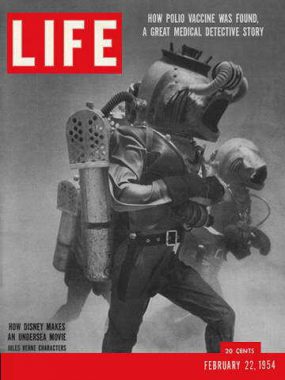
I was already hooked on Walt Disney films and cartoons by the time Disneyland premiered on ABC television on October 27, 1954. I didn’t know it at the time, but the television program was produced expressly to finance the construction of the original theme park in Anaheim, California (which I finally visited in the summer of 1970). As such, it was a promotional vehicle for Disney films and TV shows. It was there that I saw features on the upcoming 20,000 Leagues Under the Sea, which would be released that December. I couldn’t have been more wired for this film. By the time the curtain went up at the Vista Theater, I must have been hyperventilating in the seat after weeks of anxious anticipation. I lived for movies; nothing else came close. 20,000 Leagues delivered beautifully. This was a big production in CinemaScope and Technicolor with a great cast of international stars, including Kirk Douglas, James Mason, Paul Lukas, and Peter Lorre. It felt totally believable to me. I loved the design of Captain Nemo’s Nautilus submarine, and still do. I had little awareness then of who did what behind the camera in the films I saw, but learned later that 20,000 Leagues was helmed by Richard Fleischer, an underrated director who made solid films in a variety of genres, such as Armored Car Robbery (1950), The Narrow Margin (1952), Violent Saturday (1955), The Boston Strangler (1968), and Soylent Green (1973).
To view the trailer, click on the message “Watch this video on YouTube” when it appears.
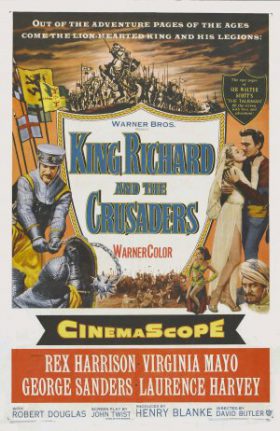
I liked knights-in-armor stories and other swashbuckling films. Here are several that captured my attention that year.
In retrospect, these were standard-issue films, with little to distinguish them, though that didn’t stop me from thinking they were great. Prince Valiant, however, is an exception, but only in retrospect. It’s pretty much what you’d expect, except for the climactic sword fight between Prince Valiant (Robert Wagner) and the bad guy, Sir Brack (James Mason). It has a very different style from the way scenes like this were usually done, though I wouldn’t have been conscious of that when I first saw it. It’s not conventionally edited; the takes are longer; there are no close-ups of the participants or reaction shots of the observers, only medium and long shots to cover the action. There’s no leaping about à la Erroll Flynn, nothing heroic. It’s not even thrilling. This is just two guys with broadswords and shields slamming away at each other until one of them drops. It’s like a demolition derby. The scene lasts a hair over three minutes. There’s no music until the final minute, which is also unusual. Films of this period are usually heavily scored.
Update: At this point in the original post I had a clip of the entire sword fight scene, which was later taken down by either YouTube or 20th Century Fox. That was unfortunate, because the actual scene is far more impressive than my description of it. I’d check from time to time to see if the clip had become available, but had no luck until today, the day after Thanksgiving, 2023. The clip runs 2:56. It ends abruptly before Valiant has triumphed over Sir Brack, but rest assured that he does. But there’s more than enough of it to give a good sense of how it played out.
The Robe, which introduced CinemaScope the year before, had been a big hit. No time was wasted making a sequel, Demetrius and the Gladiators, starring Victor Mature, an actor well suited to the sword and sandal genre.
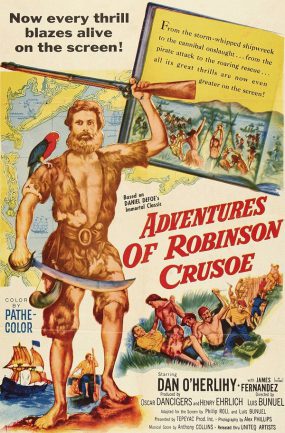
The notable thing about Adventures of Robinson Crusoe is that it was directed by the great Luis Buñuel. Again, this isn’t something I would have been aware of at the time, but knowing he directed it, I’d like to see it now. It seems like such an odd film for Buñuel to have made. The other three above were also made by strong directors; Douglas Sirk for Magnificent Obsession; Samuel Fuller for Hell and High Water; and Anthony Mann for The Glenn Miller Story. Speaking of The Glenn Miller Story, it takes a fairly standard bio-pic approach, but the music is great. My folks loved big band music, so I was primed for this one.
The High and the Mighty is a film with multiple storylines playing out on an airliner piloted by John Wayne. I remember nothing about the picture except the theme music by Dimitri Tiomki.
To play the following, click on the message “Watch this video on YouTube” when it appears.
For the most part, The Bridges at Toko-Ri , adapted from the novel by James A. Michener, is a competent, by-the-numbers war film with William Holden, Grace Kelly, Frederic March, and Mickey Rooney in the lead roles. What makes it stand out from the pack is the ending. *SPOILER ALERT* Holden is a jet pilot stationed on an aircraft carrier during the Korean War. He’s shot down after a bombing mission to blow up the titular bridges. Mickey Rooney is a helicopter pilot sent to rescue him. They both end up dying in a sewage ditch, killed by enemy troops. It’s an ending that’s as grubby and unglamorous as any you could imagine. There’s a final scene back on the carrier with the admiral, Frederic March, delivering a stirring speech (“Where do we get such men?”) after he learns of Holden’s and Rooney’s deaths. But it doesn’t change what we’ve just seen. I’m sure at the time I just saw exciting aerial footage, carrier takeoffs and landings, the comic relief of Mickey Rooney, and so forth. I would like to have included the sequence here, but the only clip I could find has poor image quality and is out of sync to boot. Too bad, though this lobby card shows them in the ditch in their final moments.
My love for horror and science-fiction films was rewarded in ’54 with Them! and especially Creature from the Black Lagoon. Giant ants and a prehistoric fish man — what more could a farm boy want?
Arguably the greatest moment in Creature is this scene of the Gill Man swimming beneath Julia Adams, mirroring her movements. It was a powerful stimulus to a young boy’s curiosity and imagination.
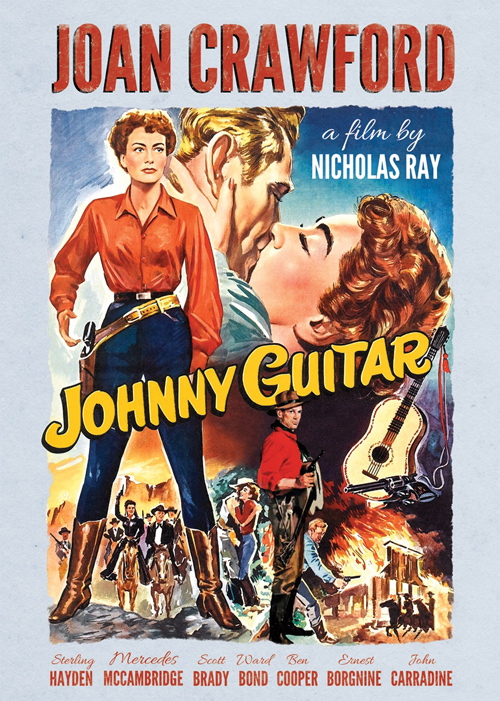
When I saw Johnny Guitar, I enjoyed it as a Western, but certainly didn’t have a clue as to how twisted, overheated, and operatic it is. I identified with Ben Cooper’s character, probably because he was the youngest, but then he ended up getting hanged. That was disturbing. The film builds to a traditional climactic shootout, but with Joan Crawford facing Mercedes McCambridge in a butch showdown. Weird. Nicholas Ray’s films have a unique strangeness to them, and this one is no exception. The trailer attempts to sell it as a regular Western, but don’t believe it.
Of the films on my list for this year, Johnny Guitar has stood the test of time the best. It’s not on the same level as High Noon, Shane, The Day the Earth Stood Still or The Thing from Another World, and I don’t love it the way I do those films , but I don’t think it needs any apologies, either.
As I stated in Part 1, I saw hundreds of films while I was growing up. These are some of the ones I remember from 1953.
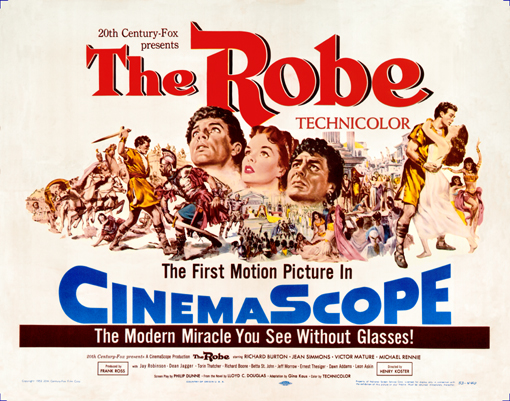
This was the year of 3D and CinemaScope. I remember when the Vista Theater installed a new screen for the opening of The Robe in September of ’53. This was a big event.
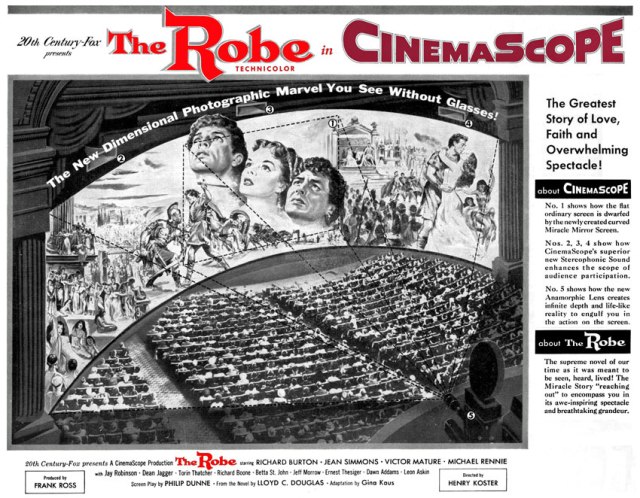
A promotional ad touted the wondrous features of this new format.
I saw The Robe again a few years ago and was struck by how static it is. There were few close-ups and very little camera movement. Filmmakers hadn’t yet learned how to use the wide screen frame. The Robe kicked off a flood of ‘Scope productions. Almost all of the ads for these films contained some variation on the excited statement, “You see it without glasses!” 3D films were very big at the time, but you had to wear glasses, so this was playing against that. Both formats were obviously an anxious reaction to the growing threat of television.
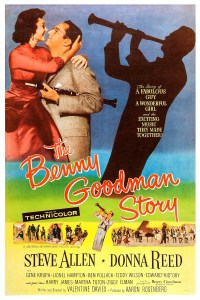
I always got a kick out of hearing the CinemaScope fanfare at the beginning of 20th Century Fox films. I still do.
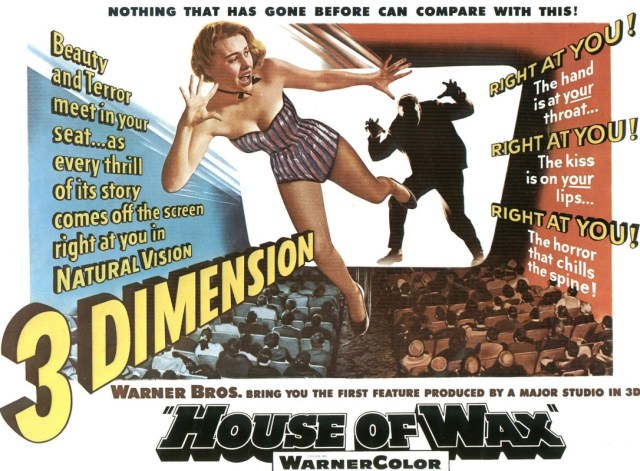
The 3D craze exploded in ’53. One of the most effective uses of the process was House of Wax, which is ironic when you consider that the director, Andre De Toth, had only one eye. The poster below gives you some idea of the subtlety of the film’s marketing.
I wouldn’t have seen this Italian poster for House of Wax in the 50s, but I couldn’t resist including it here. It’s beautiful.
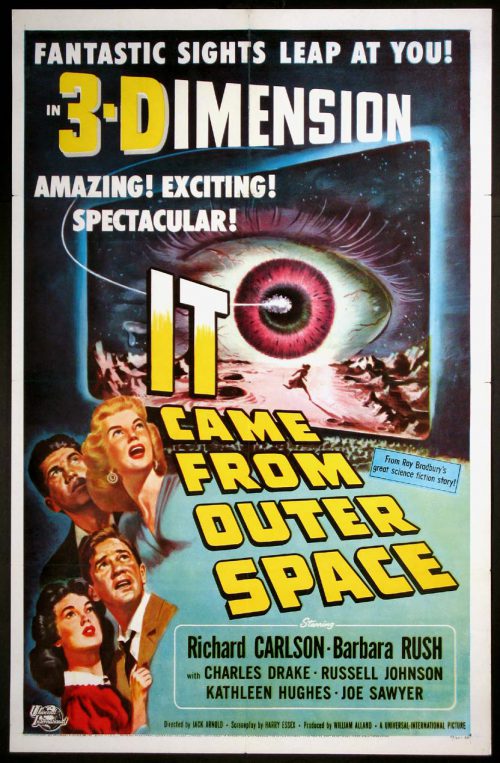
It Came from Outer Space, directed by Jack Arnold, was one of the more literate science-fiction films of the period, though I doubt I appreciated that aspect at the time.
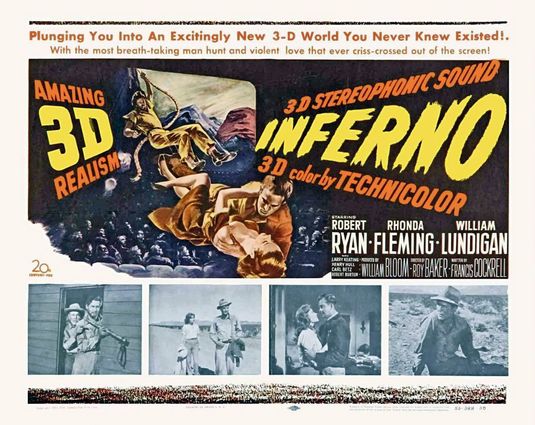
The use of 3D in most of these films was just a gimmick, but not always. Inferno shows the struggle to survive of a man (Robert Ryan) who is left to die in the desert by his wife (Rhonda Fleming) and her lover (William Lundigan). I remember seeing Inferno in 2D at the Vista Theater. A few years ago I saw it in a 3D series at Film Forum, and was struck by how 3D was used in a non-gimmicky way to draw the audience into the space depicted on the screen, rather than throw stuff out of it. Though the poster below makes sure you know it’s in 3D. It’s only in the last reel that chairs and torches start flying out of the screen, as though the filmmakers suddenly remembered they were making a 3D film.
A film I was particularly enthralled by was The Beast from 20,000 Fathoms. It was one of the first of the creature-on-the-loose movies that I saw (generally revived dinosaurs or giant insects). I didn’t know who Ray Harryhausen was at the time, but his stop-motion work in this and many other films was quite magical. Here is a clip from the film that captures the hand-made charm of this technique. It shows the dinosaur picking a policeman up in its jaws and swallowing him, then stomping a car flat and casually brushing it aside. I love it.
I was 8 years old when I saw Invaders from Mars, about the same age as the protagonist, David, a young boy who sees a flying saucer land in a field beyond his house and burrow into the ground. The Martians begin taking over the local human population via implants in the back of the neck. David’s parents are among the victims. He’s the only one who has a sense of what’s going on, but who’s going to believe him? He’s just a kid. Eventually a scientist and his girlfriend do believe him and somehow enlist the army to thwart the Martians. I saw Invaders from Mars again a few years ago, and it’s pretty bad. But what does work is what worked then — having David’s parents, previously loving and supportive, become something “other.” The film exploits a fear that your parents are not who you thought they were. Invasion of the Body Snatchers would explore this theme much more powerfully in 1956. But until then, this one did the job.
My anticipation for Peter Pan and The War of the Worlds was intense. I couldn’t wait to see them. They did not disappoint. There was a lot of merchandising related to Peter Pan. Disney really exploited this market. The Little Golden Book below looks very familiar, so I’m sure I had a copy.
Of all the films in this post, Shane is the one that has stood the test of time. It’s a truly great film. I didn’t know that when I first saw it, I just knew that I liked it tremendously. George Stevens directed many fine films; Shane is one of his best. The music score by Victor Young, leisurely majestic and deeply moving, is crucial to the feeling I have for this film.
The cast is stellar from top to bottom, with Alan Ladd in the title role bringing humanity and decency to the character of a gunfighter who’d rather not use his gun. But of course, the Western genre dictates that he must, and we wait in anticipation of the inevitable. Jack Palance (billed as Walter Jack Palance) brings a reptilian deadliness to the role of Jack Wilson, a hired gun for the cattle baron trying to drive homesteaders off their land. Here’s a key scene with Wilson confronting the hotheaded “Stonewall” Torrey, played by Elisha Cook, Jr.
Shane was based on a 1949 novel by Jack Schaefer. After seeing the movie, I bought a paperback edition for the princely sum of 25 cents and doubtless read it several times. I was a bit thrown by the depiction of Shane on the cover, since his appearance was a radical departure from that of Alan Ladd in the film.
My wife Nancy doesn’t like most genre films, including Westerns. Some years ago I kept pressing her to watch Shane with me. I was convinced that its obvious excellence would win her over. I told her that if she didn’t like it, I would never ask her to see another Western. So we watched it. When it was over, I turned to her and hopefully said, “Well, what did you think.” She shrugged and said, “It was okay.” I was taken aback. Shane was just okay? But a deal’s a deal, and that was that. Too bad, though. I still haven’t been able to get her to watch The Bride of Frankenstein. I have a feeling that’s not gonna happen.
I had initially thought to finish “My Movie Life” in two parts. That’s neither manageable nor practical, considering I have three more years to cover. My intent is to wrap it up in two more parts, ending with 1956. Please bear with me. – Ted Hicks
One of my earliest movie memories is of seeing Bambi and being totally traumatized by the death of Bambi’s mother. Who wasn’t? It fact, that’s the only thing I remember about the film. Since Bambi was originally released in 1942, I must have seen it after it was re-released in December of 1947. I was born in 1944, so I would have been three or four years old, and very susceptible to being freaked out by the prospect of losing a parent. I grew up on a small farm in northwest Iowa. I’m an only child, so my mother was my main companion until I started grade school. She loved movies and we went a lot, mainly to the Vista Theater in Storm Lake, my mother’s home town, 12 miles north. Besides the Vista, Storm Lake had the Corral Drive-In on the east side of the lake. There was another movie theater in town at the time. I’ve forgotten its name, but it’s where I saw The Man from Planet X in 1951, a film that had a great impact on me. I recalled recently that it’s also the theater where my dad first met my mom. She was working at the concession stand and he was buying popcorn. At least, that’s the story. This was probably in 1940 or ’41. It’s not lost on me that Nancy and I also met by chance at the movies here in New York in 2002. I wrote about that a couple of years ago, and you can read it here.
All of the films referenced in this piece are ones I recall seeing. Some I remember in detail; others only that I saw them. But of all the films I saw during the 1950s, these registered for one reason or another. In one of my first blog posts, “Famous Monsters and Me,” I wrote “…from an early age, as early as I can remember, I was totally in love with science fiction and horror (monsters!) via all their delivery systems; i.e., books, magazines, comics, TV, and movies. Mainly movies, probably because films are so immediate.” I was strongly attracted to these kinds of films, but also Westerns, Biblical epics, war movies, Martin & Lewis comedies, and all things Disney. I didn’t see a foreign film until 1962, when I went to the University of Iowa. Before that, it was Hollywood all the way. Here are the movies I remember.
________________________________________________
1949
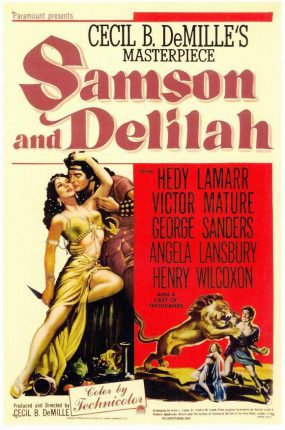
Samson and Delilah was my first sword-and-sandal movie. There were many such films in the 1950s, usually Biblical epics, with Cecil B. DeMille leading the way. The U.S. posters for Samson and Delilah weren’t nearly as risqué, or as artistic, as the German poster above. Here are the posters I would have seen.
_________________________________________________
1950
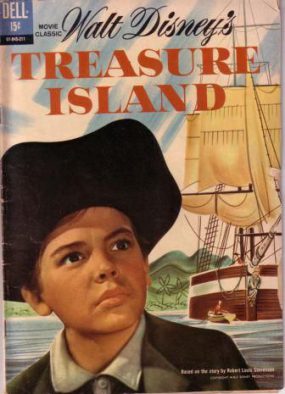
Disney films really kicked in for me in 1950. I loved Treasure Island. My identification with Jim Hawkins (played by Bobby Driscoll) was strong, as I’m sure it was for many young boys. Robert Newton as Long John Silver was both friendly and frightening. He was the definitive pirate. Bobby Driscoll went on to be the voice of Peter Pan in the 1953 Disney film, which I hadn’t known until I looked him up for this piece. Things didn’t go well for him later on. He began using drugs and was sentenced to a California narcotics rehabilitation facility in 1961. He moved to New York City in 1965, where he became part of the scene at Andy Warhol’s Factory. His body was found in a deserted East Village tenement in 1968, four weeks after his 31st birthday. With no identification on the body, he was buried in an unmarked grave in Potter’s Field on Hart Island. A fingerprint match in late 1969 finally identified him. Pretty grim. A long way from Disney.
I’m sure Destination Moon would look fairly hokey today, but in 1950 it was great! Its semi-documentary approach to telling the story of a privately-funded moon shot is a little dry compared to the flying saucers and monsters that were to come, but this was something different. Harvey might have been too grown-up for me at the time, but I liked James Stewart, probably because he seemed like a child in the film. And I wanted the rabbit to be real!
Samson and Delilah, David and Bathsheba, and Quo Vadis were among the first Biblical epics I saw. I recently saw Samson and Delilah for the first time since 1949. It was quite bad, but typical of the era. I ended up fast-forwarding through most of it just to get to the part where Samson brings down the temple with his bare hands. That scene is still exciting. Two years ago I saw Quo Vadis at the Museum of Modern Art, for the first time since 1951. It seems stilted and absurd now, though I’m sure I totally bought into it at the time. Apparently, so did a lot of people. It was a huge box-office success, reportedly the most successful MGM film after Gone With the Wind. But Gone With the Wind is still watchable, while Quo Vadis is a bit harder to take. The sets were very impressive, however, as seen below. Remember, this was before CGI, so all this stuff was built and the crowds were real.
The only real burst of energy in the film is the overwrought and over-the-top performance by Peter Ustinov as Nero, seen below in a typical moment of restraint.
When I saw it at MoMA, I realized the only thing I remembered was the scene where Peter is crucified upside down on an inverted cross. This was pretty potent, especially for a kid who went to Sunday school. I no longer go to Sunday school, but it’s still a powerful image.
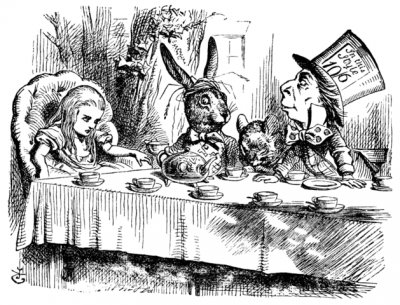
I’m probably not alone, but my first exposure to Alice in Wonderland and other children’s classics was through Walt Disney. The films fixed the way I pictured the characters. This was how I thought Alice, the Mad Hatter, and all the other characters should look. I was jolted the first time I saw the John Tenniel illustrations for the Alice books; they were wrong. But they don’t seem that way now. The Tenniel tea party (below the Disney version) is somewhat disturbing, and much more interesting.
I think I started connecting with the films more in 1951. I was, after all, a sophisticated 1st-grader. The two films I saw that year that had the biggest impact on me were The Day the Earth Stood Still and The Thing From Another World. They’re both great films. They’re just as good now as they were then, and I’ve seen them many times. For years after moving to NYC in 1977, channel 9 or 11 (I don’t remember which) would show King Kong and The Thing back-to-back every Thanksgiving afternoon. Seems like a strange holiday choice, but it worked for me. The music for both films used theremins. I didn’t know what a theremin was then, but it’s a sound forever associated with outer space weirdness. Day is literate, intelligent, and thrilling. I made a model of the robot Gort out of modeling clay and covered it with aluminum foil for realism. I also fashioned a woman for Gort to carry in his arms, à la Patricia Neal in the film. Sadly, no photographic evidence of this creative effort remains, but a shot of Gort is in the banner of all my blog posts. The Thing scared me deeply for months. A mother taking her 7-year-old son to such a film today would probably be charged with child abuse, but I loved it. Hell, even the opening titles are frightening!
Fewer films in 1952 made a strong impression on me. I know I saw Bwana Devil, but can’t remember if it was in 3D. Our local theaters sometimes showed 3D films in flat prints, so I don’t know. Ivanhoe began an obsession with knights-in-armor movies. Son of Paleface was a lot of fun. Bob Hope was great at that time, but I was an easy laugh. I liked The Greatest Show on Earth for obvious reasons. It was a circus! This was before clowns became creepy and nightmarish. But the clear standout from this year was High Noon, another film I never tire of seeing. In retrospect, it seems insane that High Noon lost out to The Greatest Show on Earth for the Best Picture Oscar that year, but at least Gary Cooper got Best Actor.
Up to this point, I liked everything I saw. It was wonderful just being in the theater and being transported when the lights went down. I enjoyed all of it. It would take a few more years before I began to develop any kind of critical faculty, before I would see something and think, “Hey, wait a second.” During these years, movies became an extremely important part of my life. They still are.
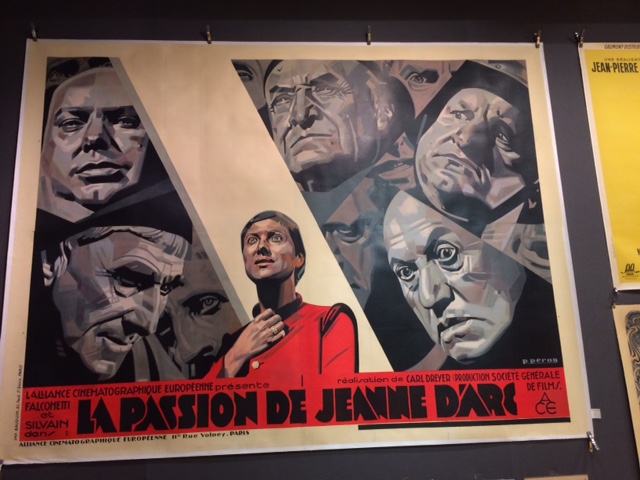
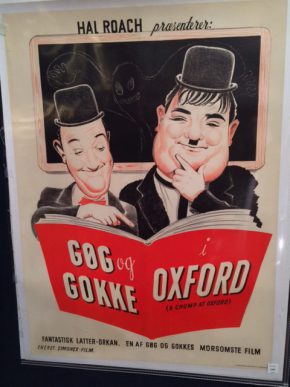
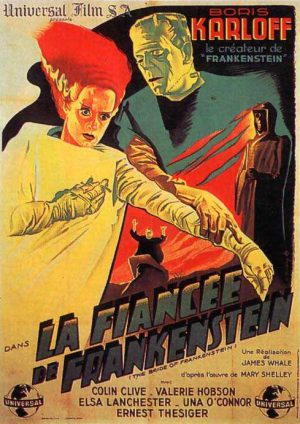
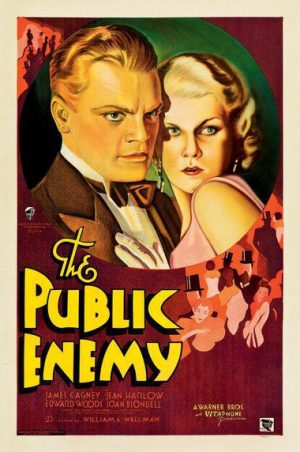
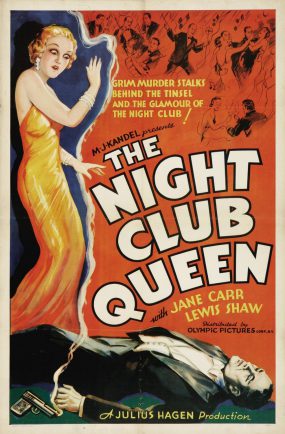
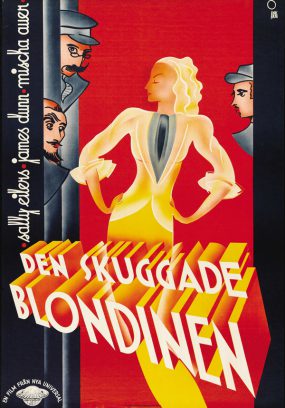
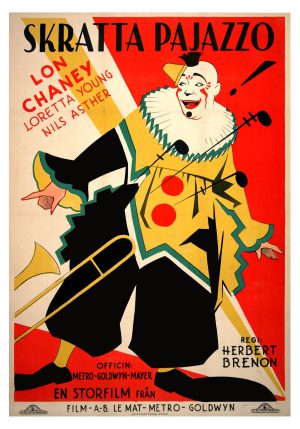
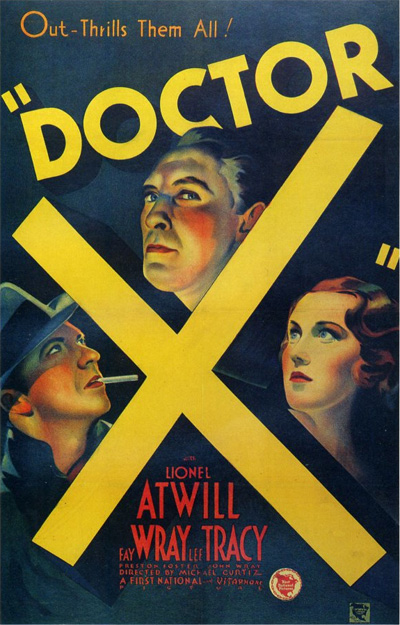
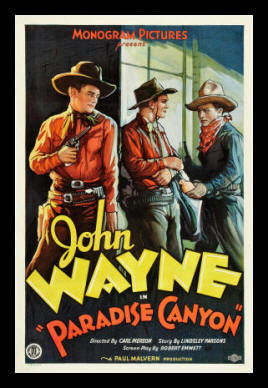
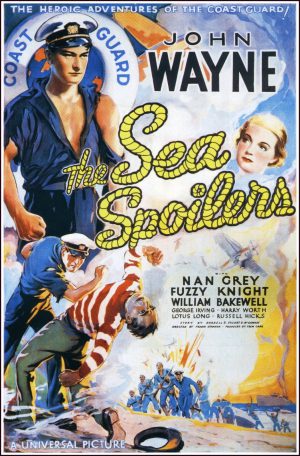
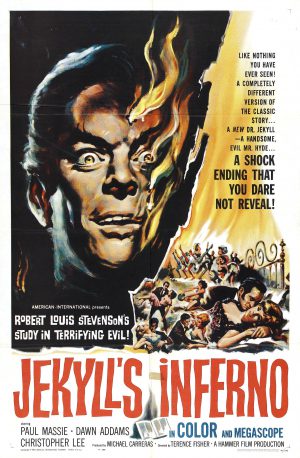
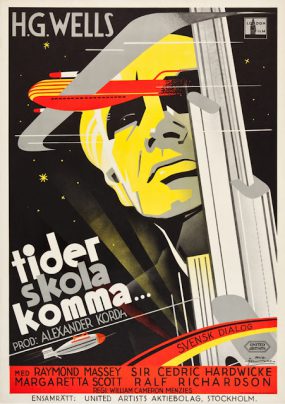
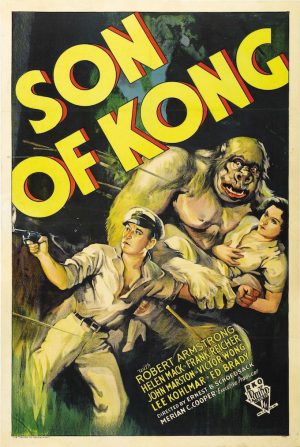
There’s no particular theme or category for this collection of film posters, other than they’re dynamic and dramatic. Some are foreign posters for American films, some are for films both well-known and obscure, and some are just weird, but they’re all pretty cool.
Title and year for films are listed below in the order they appear above (countries for foreign posters are also indicated):
Frankenstein (1931, Sweden), The Bride of Frankenstein (1935, France), The Public Enemy (1931), Pickup (1951), 42nd Street (1933, France), The Nightclub Queen (1934), The Devil Is a Woman (1935), We Have Our Moments (1937, Sweden), Trouble in Paradise (1932, Finland), Woman (1918, Sweden), Laugh Clown Laugh (1928, Sweden), Doctor X (1932), Paradise Canyon (1935), The Sea Spoilers (1936), The Loves of Edgar Allan Poe (1942), Jekyll’s Inferno (1960), The Hideous Sun Demon (1959), Son of Kong (1933), Things to Come (1936, Sweden), The Chase (1966, Spain), Earth vs. the Flying Saucers (1956, Italy).
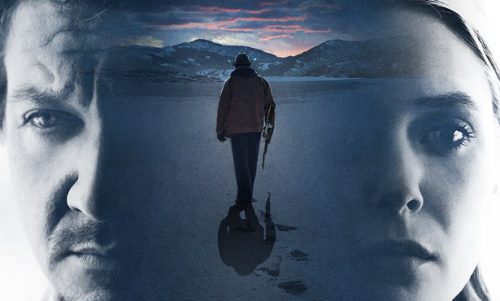
This is a good one. Based on his terrific screenplays for Sicario (2015) and Hell or High Water (2016), I was more than ready for Taylor Sheridan’s Wind River. It does not disappoint. After seeing Wind River on opening day last Friday, I knew I wanted to write about it, so I saw it again on Monday. I didn’t want to miss anything, but mainly I just wanted to see it again. The film was as strong or even stronger on a second viewing. Wind River was directed by Sheridan as well as written, and it’s an incredibly assured piece of work.
Jeremy Renner plays Cory Lambert, a US Fish and Wildlife Service officer in Wyoming. While tracking mountain lions that have been killing cattle on the Wind River Indian Reservation, Cory finds a barefoot body of a young woman in the snow. Elizabeth Olson plays Jane Banner, an FBI agent sent in to investigate, since this is a homicide committed on federal land. Arriving from Las Vegas on short notice in the midst of a heavy snow storm, Jane is clearly out of her element.
But Jane is smart and adaptive, and enlists Cory to help uncover the truth of what happened. Cory is a tracker and a hunter. This is what he does. He tells Jane he hunts predators. She says so help me find who did this. Taylor Sheridan said in an interview that Cory and Jane are hunting rather than investigating.
Cory knew the victim, Natalie Hanson, just as he knows most of the people living on the reservation. At the beginning of Wind River we meet Cory’s ex-wife, Wilma, a Native American, and their son, Casey. Their deceased daughter Emily was Natalie’s best friend. Emily’s demise, which we learn about over time, makes the current case very personal for Cory.
There’s a strong sense of family and community in this film. An on-screen title at the beginning reads: “Inspired by actual events.” Wind River Indian Reservation is a real place that has been plagued by violence and crime. A 2012 article in the New York Times discusses this. In particular, the death of Marisa Spoonhunter in 2010, as described in the Times article, seems an inspiration, if that’s the right word, for the story Sheridan tells here. An on-screen title just before the end credits furthers the documentary aspect of the film: “While missing person statistics are complied for every other demographic, none exist for Native American women. No one knows how many are missing.”
On the most immediate level, Wind River is an engaging crime thriller, and like Sicario and Hell or High Water, it’s a modern Western. But it uses the genre to get at something deeper. Sheridan calls these films a trilogy, which feels right. The weight of history — specifically Native American history — hangs over Wind River. This is felt in the behavior of the characters and the overall tone of the film. It’s most particularly felt in the way the Native characters react to yet more tragedy. As Natalie’s grieving father Martin says to Cory, “I’m tired of fighting this life.”
Sheridan says that as a white director telling a story with two white protagonists in a film about Native Americans, he wanted to be very careful to be respectful of the Native people and their culture, and to be as authentic as possible. A tribally owned enterprise, Acacia Entertainment, provided funding for 90% of Wind River’s budget. It was important to Sheridan to honor the trust that came with that investment.
Taylor Sheridan, who was an actor on the FX series Sons of Anarchy, is first and foremost a screenwriter. His dialogue is great; there’s nothing rote or predictable about it. The conversations between Jeff Bridges and Gil Birmingham in Hell or High Water felt totally authentic and unique to the characters, and that’s true here as well. I hadn’t intended on taking notes the first time I saw Wind River, but this exchange between Cory and his father-in-law, Dan Crowheart, early in the film made me scramble for pen and paper. Cory tells Dan that Wilma, Cory’s ex-wife, is interviewing for a job in Jackson Hole. Dan says, “Going to live among the millionaires,” to which Cory replies that billionaires have pushed out the millionaires.” And Dan says, “Hang on to your money, because when the wolves start eating their golden retrievers, the land will go for pennies on the dollar.” The choice of “golden retrievers” is just great, takes it to another level.
Here are some others that got my attention:
Cory to his son Casey after he comes downstairs holding a BB gun carelessly pointed in Cory’s direction: “The gun is always loaded, even if it ain’t.”
Jane and Ben, the Tribal Police chief, played by the great Graham Greene, are approaching a trailer where a suspect is said to live. Jane says, “Shouldn’t we wait for backup?” Ben replies, “This isn’t the land of backup, Jane. This is the land of you’re on your own.”
And these key lines, delivered by Cory to Jane after she’s said she was lucky to have survived a life-and-death encounter: “Luck lives in the city. Luck don’t live out here.”
As much as I love his writing, I don’t want to discount Sheridan’s skill as a director. There’s a shootout in Wind River that’s as well-staged and edited as any I’ve ever seen. The buildup to that is extremely tense. It’s anxious anticipation on a razor’s edge. This is exciting, for sure, but it takes something out of you watching it. And I always knew where I was geographically within scenes in the film throughout. That’s not always true in a lot of films.
The performances are all very strong. In addition to Jeremy Renner, Elizabeth Olson, and Graham Greene, Gil Birmingham plays Natalie’s father and Cory’s friend, Martin. He was a standout as Jeff Bridges’ partner in Hell or High Water. The music score is by Nick Cave and Warren Ellis, who also did the score for Hell or High Water. I don’t really remember their score for Wind River, which I think is a sign of how good it is. ** Update: Even though I wrote here that I didn’t remember the score the first two times I saw the film, it definitely registered when I saw Wind River for a third time last November at the Museum of Modern Art. I love the music; it reminds me very much of the score for Sicario, discordant and unsettling.
Wind River may not be quite as complete as Hell or High Water, but it’s close. I would like to have known the fate of one of the characters, but unless I have the chance to ask the director at some point, I’ll just have to live with it. I have a couple of other minor quibbles, but I’m willing to put those on the shelf because I like the film so much. Wind River is sad and mournful, and full of feeling, but by the end the characters have gained a measure of understanding and acceptance, despite the loss, or perhaps because of it. – Ted Hicks
There have been so many great documentaries in recent years. It’s an incredibly flexible art form. The following fourteen are the best of what I saw from January through June of this year.
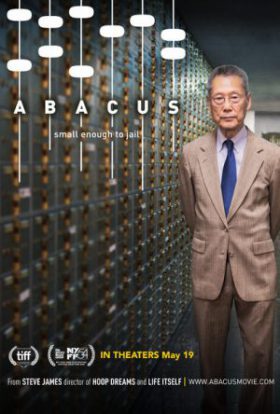
Abacas: Small Enough to Jail (Steve James, director) Abacas Federal Savings Bank, a family-owned community bank in New York City’s Chinatown, was the 2600th in size among U.S. banks, and was also the only financial institution criminally indicted in the aftermath of the 2008 financial meltdown. The ensuing court case lasted five years and cost $10 million dollars, and it’s a rare instance where the little guy wins. Steve James has had a long career, with films such as Hoop Dreams (1994), Stevie (2002), and Life Itself (2014), in which film critic Roger Ebert talks about his life with movies and the devastating illness that didn’t seem to slow him down much. James was also a producer, series editor, and segment director of the astounding multi-part The New Americans (2004). A strong sense of humanity and respect for his subjects is reflected in all of his films. Abacas: Small Enough to Jail is ample evidence of that.
City of Ghosts (Matthew Heineman, director) Follows a number of citizen journalists who exhibit unbelievable courage in transmitting accounts of life in Raqqa, a Syrian city under ISIS domination. Their lives are at risk, even for those who have left Syria for other European countries. Seeing City of Ghosts made me realize I don’t have all that much to complain about in my life.
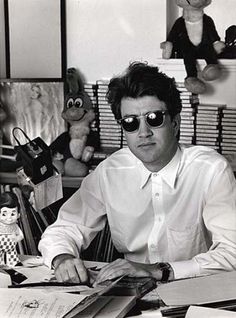
David Lynch: The Art Life (Jon Hguyen & Rick Barnes & Olivia Neergaard-Holm, directors) I hadn’t known (or had forgotten) that David Lynch started out as a painter. Examples of his early work indicate a clear, if twisted, path to his films. The Art Life feels very intimate. We see Lynch in his home in the Hollywood Hills as he speaks in voice-over or directly to the camera about his early life as a painter and how he eventually segued into film. He’s very casual, yet quite precise. The Art Life only takes us up to Eraserhead (1977), but it provides a context for thinking about his subsequent films and televison shows. If you have any interest in the work of David Lynch, you have to see this, especially in light of his revival of Twin Peaks on Showtime. Trust me.
Dawson City: Frozen Time (Bill Morrison, director) My previous post on this film can be accessed here.
Hummus! The Movie (Oren Rosenfeld, director) A love of hummus can bring Israelis and Arabs together. Hummus is the road to peace in the Middle East. At least this film makes you think it might be. We see a number of fascinating people in different European countries who have eating establishments that feature hummus. They talk about their lives and how and why they make hummus. You will definitely get hungry seeing this film.
Karl Marx City (Petra Epperlein & Michael Tucker, directors) Petra Epperlein grew up in the former East Germany. After the Berlin Wall came down, she moved to the West and became a filmmaker. Following her father’s suicide, she returned home in an effort to unravel rumors that he had been a collaborator with the Stasi security service. This is a very personal film for Epperlein. She’s on camera much of the time, but distances herself somewhat by referring to herself as “she” rather than “I” in the voice-over narration. The subject of a surveillance society in Karl Marx City feels very timely in the current climate.
Kedi (Ceyda Torum, director) If you don’t like cats, this film is not for you. But if you do, it’s a must. Hundreds of cats walk the streets of Istanbul. Kedi focuses on several of these cats and the people who feed them when they drop in. The camerawork is amazing.
Kiki (Sara Jordenö, director) Bursting with humanity, this is a film of fascinating personalities determined to be themselves, and proud of it. Yet another subculture I was only vaguely aware of.
Mr. Gaga: A True Story of Love and Dance (Tomer Heymann, director) I hadn’t heard of Ohad Naharin before seeing this film, but I definitley know about him now. His percussive choreography is incredibly exciting to see. He speaks eloquently in the film of his early life and how he came to be who he is. Mr. Gaga is powerful and often quite moving.
Obit (Vanessa Gould, director) This fascinating film profiles several obituary writers at the New York Times and examines how they do what they do. The process is laid out from start to finish. We saw Obit at Film Forum last April on its opening day. I’d seen it the week before at a press screening, but I knew that Nancy, being a writer and editor, would love it. The director and two of the subjects in the film, Bruce Weber and Jeff Roth, were there for a Q&A after. This always adds a lot to anything you’ve just seen, and that day was no exception. Bruce Weber is seen as he works throughout the day to finish an obit on time. Jeff Roth oversees the Times’ morgue where thousands of clippings and photographs are archived, ready to be accessed as necessary. Roth is a live-wire presence in the film, and just as entertaining in person. Something I found especially interesting is that when a celebrity dies unexpectedly, such as Michael Jackson, and an obit hasn’t already been prepared in advance, as it normally is for luminaries of a certain age, the obit reporters have to work against the clock to artfully write the summation of a person’s life in a matter of hours.
Quest (Jonathan Olshefski, director) We saw Quest last March at this year’s New Directors/New Films series and loved it. The director filmed the Rainey family in North Philadelphia over a ten-year period. The result is an intimate study of human beings through good times and bad. When we saw Quest, Jonathan Olshefski went on stage after the screening and asked the Raineys to join him. It turned out the entire family had been sitting directly in front of us. Considering the feeling the film generated for these people, this was quite a kick.
I couldn’t find a trailer or clips that give a sense of the film, but here is a review from Slant Magazine, followed by an interview with the director at the Sundance Film Festival and another interview in Filmmaker Magazine that tell how the film came to be.
Below (from left) are director Jonathan Olshefski, Christine’a “Ma” Rainey, William Rainey, Pearl “PJ” Rainey, and Ma’s husband, Christopher “Quest” Rainey.
Restless Creature: Wendy Whelan (Linda Saffire & Adam Schlesinger, directors) Just as I hadn’t been aware of Mr. Gaga‘s Ohad Naharin, I also knew nothing about Wendy Whelan until I started seeing trailers for this film, despite the fact that she had been the prima ballerina for the New York City Ballet for decades. She’s truly inspiring as the film follows her through a surgery that could end her career and the challenges of transitioning from ballet to contemporary dance. As with some other films on this list, Restless Creature feels very intimate. Whelan is surprisingly open as she talks about her fears and anxieties. These are feelings we all experience to varying degrees. To hear someone who’s the best at what she does talking about this stuff brings us closer to her.
Risk (Laura Poitras, director) While not quite the tour de force that Citizenfour (2014) was, this is an extremely interesting and problematic look at Julien Assange, the wizard of Wikileaks. Assange is a strange figure, likeable and reptilian at the same time. Laura Poitras was granted an incredible degree of access, but her relationship with Assange soured by the time production ended. The last I’d heard was that Assange had disavowed the version of the film that was released in theaters. A review from The Atlantic can be read here.
Who’s Gonna Love Me Now? (Barak Heymann & Tomer Heymann, directors) What links most of the films on this list is a strong sense of humanity. This film has that in abundance. The Heymann Brothers are excellent filmmakers, as their earlier film on this list, Mr. Gaga, will attest. Who’s Gonna Love Me Now? is a wonderful story of love, identity, and acceptance, but what really sets it apart is that the process of making the film influenced the outcome. If the Heymann brothers had not made this film, Saar Maoz’s story would not have gone the way it did. The title poses a question that engages us even before we know what it means in context. When we hear it asked in the film, it’s a punch to the heart.
Below are two trailers for the film. Even though there’s some overlap, I think they’re different enough to justify including them here.
David Lynch: The Art Life is available for streaming on Amazon Prime. Mr. Gaga: A True Story of Love and Dance and Who’s Gonna Love Me Now? are available on Netflix. Risk will be aired by Showtime beginning July 22nd. Abacas: Small Enough to Jail and Quest will be aired by PBS later this year on “Frontline”and “Independent Lens,” respectively, with dates yet to be announced. – Ted Hicks
The following feature films are some of the best that I’ve seen in the last six months. We’ll see how this shakes out at the end of the year, after six more months of movies. But in the meantime…
Alien: Covenant (Ridley Scott, director) In the Alien films chronology, this one takes place between Prometheus (2012) and the original Alien (1979). I don’t think it holds together, but it has some absolutely terrifying scenes that really freaked me out — always a plus. The feeling that no one can possibly make it out alive is pervasive, which probably doesn’t make it a great first-date movie. Ridley Scott is a terrific director. Like Michael Mann, his films are solid and concrete; you feel the weight of things. I liked Prometheus, which many people didn’t. The first film and the James Cameron’s Aliens (1986) are still the best, though Alien: Covenant has nothing to be ashamed of.
Baby Driver (Edgar Wright, director & writer) An amazing rush of energy with a killer soundtrack to keep it rolling. This is a break-out role for Ansel Elgort. He’s incredibly appealing and engaging in the title role. Kevin Spacey does his thing as only he can do it. Jaime Foxx and especially Jon Hamm make very strong impressions. Everybody is really on the money in this one.
Beatriz at Dinner (Miguel Arteta, director & Mike White, writer) Here’s Selma Hyack as you’ve never seen her before, no makeup, dressed down, a little dumpy, but a spitfire when standing up for what she believes in. She’s great, as is John Lithgow as her dinner party nemesis, an unscrupulous land developer who would probably be close friends with Donald Trump. The running time is a tight 82 minutes, all of them dead on target.
The Big Sick (Michael Showalter, director) Looks and sounds like a rom-com at the outset, but becomes something much deeper and more authentic by the end. The film is written by Kumail Nanjiami and his wife Emily Gordon, based on their real-life romance. Nanjiami plays a version of himself and Emily is played by Zoe Kazan. Anyone who’s followed Nanjiami on HBO’s Silicon Valley knows how special he is. A stellar Holly Hunter and Ray Romano play Emily’s parents who rush to Chicago when she falls ill. The Big Sick is very funny and very moving as it looks at family relationships and the messiness of falling in love, as well as the dynamics of being a Pakistani in today’s America.
The Dancer (Stéphanie Di Giusto, director) I saw The Dancer at this year’s Rendez-Vous with French Cinema series at the Film Society of Lincoln Center. Unfortunately, it doesn’t have a US distributor, which is really sad, as it’s quite extraordinary. The Dancer tells the real-life story of Loïe Fuller (played by Soko), an who starts out in the American West with her prospector father and makes her way to Paris at the turn of the 20th century. She becomes famous throughout Europe with her “Serpentine Dance” style, which she discovered by accident, crossing paths along with way with the Lumière Brothers, Toulouse-Lautrec, and a young Isadore Duncan, among others. This is one to watch out for. In addition to the trailer, I’ve added a clip from the film that shows more of her unique dancing style, which is quite sensational.
Get Out (Jordan Peele, director & writer) Jordan Peele (of Key & Peele) has done something extraordinary and cleverly subversive here. In the guise of sci-fi horror films such as Invasion of the Body Snatchers and The Stepford Wives, he’s given us a study of race relations as deep and insightful as the documentaries I Am Not Your Negro, O.J.: Made in America, and 13th.
The Giant (Johannes Nyholm, director & writer) Here’s another film that doesn’t have a US distributor as yet. I saw The Giant at this year’s New Directors/New Films series and was completely entranced. It tells the story of Rikard, an autistic, severely deformed 30-year-old man who hopes to win the Scandinavian Championship of pétanque, a game similar to boules. Rikard was taken from his mother at birth. He imagines he can get her back if he wins this championship. His challenges are many, but he’s helped at times by a 200 foot giant, which brings a fairy-tale quality to the film. The giant, though obviously imaginary, is presented in very realistic, concrete terms. He’s quite wonderful.
Harmonium (Kôji Fukada, director & writer) This terrific Japanese film is a slow-burn psychological thriller that starts out as one thing and slowly becomes something else. It’s quietly disturbing with a creeping sense of dread. I’m not sure what to make of the ending, but the film is so good overall that I don’t really care.
The Hero (Brett Haley, director & co-writer) I don’t know anyone who doesn’t like Sam Elliott. He’s great here as an aging, over-the-hill cowboy star, who we see at the beginning doing voice-over work for a barbecue-sauce commercial, take after take after take. I just wish it was a better film. What’s here is fine, but there’s something missing. It needs to be longer; it ends before it’s over, for me anyway. Regardless, Sam Elliott in a starring role his whole career has prepared him for makes The Hero more than worth seeing.
It Comes at Night (Trey Edward Shults, director & writer) This film is terrifying in an understated way. It’s set in the near future. An unspecified, extremely contagious viral catastrophe has occurred. We don’t know any more than those trying to survive, which is very little. There’s no radio, no television, no communication with the outside world. What they do know is to keep the doors bolted, don’t go outside at night, have gas masks ready at all times, trust no one. The always excellent Joel Edgerton is barricaded in a remote house in the woods with his wife, her father, and their son. A second family shows up seeking shelter. After tense negotiations, Edgerton takes them in. This is life on a razor’s edge. You do whatever you have to in order to survive. I’ve said the film is understated, but it tightens the screws every step of the way.
Lady Macbeth (William Oldroyd, director) This is a nasty little film that I liked a lot. I’ve seen it twice so far; once at a press screening and again when it was screened in this year’s New Directors/New Films series. A plot synopsis from IMDB sets it up more concisely than I probably could: “Rural England, 1865. Katherine is stifled by her loveless marriage to a bitter man twice her age, whose family are cold and unforgiving. When she embarks on a passionate affair with a young worker on her husband’s estate, a force is unleashed inside her, so powerful that she will stop at nothing to get what she wants.” Set in a desolate landscape, the film has echos of Wuthering Heights, but with a fairly modern sensibility. Florence Pugh’s Katherine is smarter and deadlier than anyone around her, determined to survive no matter what. Lady Macbeth opens in New York next Friday, July 14th.
Logan (James Mangold, director & story) Hugh Jackman is the title character, aka Wolverine from Marvel Comics. He’s played this character many times before in X-Men and Wolverine films. But this one is different, a superhero movie that’s not really a superhero movie. It’s R-rated, down and dirty, and very violent. Logan shows the bloody consequences of violent actions that are played for thrills in conventional PG-13 action films where it’s more about the body count than it is about the bodies. This one feels real, even if it’s not. There’s more at stake. Life, death, redemption. Not everyone walks away.
Maudie (Aisling Walsh, director) I didn’t know before seeing this that Maude Lewis was an actual person who became a well-known Canadian folk artist in the 1940s and 50s. Sally Hawkins is simply wonderful in the title role, as is Ethan Hawke as the lonely, extremely gruff (to put it mildly) fishmonger who becomes Maude’s initially unwilling companion. They’re an odd couple if there ever was one. This is a film with a lot of human feeling, but not maudlin or sentimentalized. It earns the emotional response you’re likely to have for it.
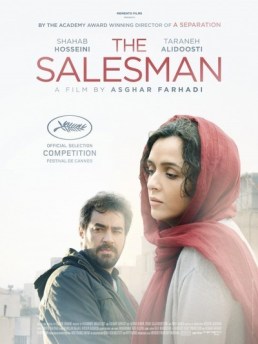
The Salesman (Asghar Farhadi, director & writer) Anyone who has seen About Elly (2009) or the Oscar-winning A Separation (2011) knows how good this Iranian director can be. The Salesman, which also received an Oscar, is no exception. A husband and wife performing in a local production in Teheran of Death of a Salesman attempt to deal with the ramifications of an assault on the wife when she was alone in their apartment. Who attacked her and what will the husband do about it? Like Farhadi’s earlier films, it’s a suspenseful drama with no easy answers.
Their Finest (Lone Scherfig, director) Set in 1940 during the London Blitz, a film company is recruited by government officials to produce a patriotic film about the evacuation of British troops from Dunkirk. I generally like films about filmmaking, and this one is no exception. It’s a fairly traditional and straight-forward, which seems right for a film set in this period with this subject matter. There are few surprises, but it’s all in the telling, which is excellent. The great Bill Nighy is a standout in the role of an actor past his prime and quite indignant about that. Gemma Arterton plays a young woman hired to work on the film in a writing capacity. The obstacles she encounters add a feminist layer to the film. There’s also, as you might expect, a love story.
Wonder Woman (Patty Jenkins, director) Enormously successful at the box-office, and for good reason. Wonder Woman is a knockout. It may not carry the real-world weight that Logan aspires to, but it’s pretty great, and raises the bar for the superhero (or superheroine) genre. This is largely due to the casting of Gal Gadot as Diana Prince, aka Wonder Woman. She’s a stunning, dynamic presence. The climactic showdown is the special-effects blowout we’ve seen many times before, but the film works like gangbusters in spite of that.
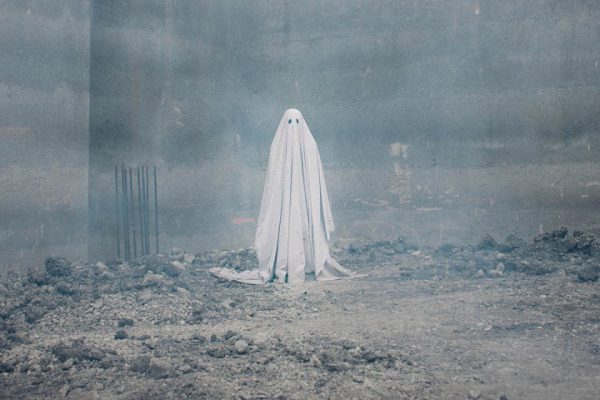
A Ghost Story (David Lowery, director & writer) Strictly speaking, I shouldn’t include this film at all, since initially I was limiting this post to films I’d seen during the first six months of the year. But I saw A Ghost Story this past Friday when it opened and knew I couldn’t not write about it now. It’s one of the saddest films I’ve ever seen. At the beginning we see Casey Affleck and Rooney Mara in and around their house on land that might be in Texas. They’re married and in love. She wants to move; he doesn’t. Then he dies. And is resurrected as the classic kid’s idea of a ghost, a someone in a sheet with two blank eye holes, the least-expensive Halloween costume ever. The ghost stays in the house, haunting it, I think, silently watching Mara dealing with grief as her life goes on. He remains in the house after she moves out and as a succession of families move in. The film is a strong evocation of loss, loneliness, existence, and time. That’s a heavy load for a film to carry, but I think A Ghost Story more than does it. The film suggests why ghosts might hang around at all, why objects in haunted houses suddenly fly off shelves, and gives new meaning to the expression “giving up the ghost.” This shouldn’t work at all, but it does. Or maybe it doesn’t, I don’t know. You’ll either go with it or reject it entirely. It’s hard to describe the effect it had on me. Well, not hard, exactly; it’s more that I’m kind of embarrassed to spell it out. At the end, A Ghost Story left me feeling lonely and alone, but also exhilarated. At dinner that night I was telling my wife Nancy about the final moments in the film and I got choked up. I didn’t expect this, but I can’t ignore something that provokes a reaction this strong. Maybe I identified too much with the ghost. You might wonder why someone should want to go through that. The answer is because it’s beautiful. I don’t know, maybe I’ll see it again and it won’t work at all. But I strongly doubt it. – Ted Hicks

 But there were a lot of good films to help us out. One can only hope that 2018 will bring films half as good as Wind River, The Square, A Ghost Story, and The Shape of Water, among many others.
 _____________________________________________________

 ______________________________________________________