Below is a clip of a key scene in the film. (This comes with a SPOILER ALERT for those who have not yet seen Marriage Story.) Can you imagine having to do multiple takes of a scene like this? I know it’s called “acting,” but something this emotionally raw would have to take something out of you. I know I felt wrung out just watching it.
_________________________________________________
1917
I saw 1917 again recently, this time on an IMAX screen, and was even more impressed. While I still don’t think it’s the best of last year’s features, I won’t have a problem if it wins the Best Picture Academy Award.
Here are the best of the rest of what I saw last year, 31 films in alphabetical order. I don’t claim that all of these are great films (though some of them are), but they all got my attention and engaged me in one way or another. Sometimes it’s just a performance, more often it’s the whole package. When movies work for me, it’s an interactive experience.
Ad Astra (James Gray, director & co-writer) I liked this enough to see it twice in IMAX. I thought maybe some of the things that had bothered (or confused) me the first time would become clearer with a second viewing. Brad Pitt is outstanding in the role of an astronaut in search of his father (Tommy Lee Jones), an astronaut who’d gone missing years before, and who just might be responsible for interstellar energy surges that could threaten the entire solar system. I wanted to like Ad Astra more, but a second go-round only reinforced my original assessment. I liked the first half or two-thirds of the film, but once Pitt embarks on his journey, and especially once he locates his father, who’s gone full Kurtz from Heart of Darkness, it becomes increasingly hard to accept. Still, James Gray is a serious director who has made some outstanding films. There’s a curious distance and restraint, a disconnect, between the characters in Ad Astra, both physically and in the way they speak to one another. I was drawn in by the mystery of what was happening and especially by Brad Pitt’s restrained performance. Despite these caveats, I still think this is a film worth seeing.
________________________________________________
Ash Is Purest White (Jia Zhangke, director & writer) Per David Rooney in The Hollywood Reporter, this film is a “chronicle of the relationship between a low-level Chinese crook and the woman who goes to prison for him.” IMDb calls it “A story of violent love within a time frame spanning from 2001 to 2017.” Those brief descriptions don’t begin to hint at this film’s depth and texture.
Black and Blue (Deon Taylor, director) This is a compact, well-made urban thriller, powered by Naomi Harris’s totally invested performance as a rookie cop in New Orleans. She witnesses murders committed by bad cops (led by the always-authentic Frank Grillo), and spends the rest of the movie trying to stay alive and outrun them until she can get the evidence on her body cam to authorities. Harris is an excellent actor. We’ve seen her as a crack-addicted single mother in Moonlight (2016), and as Miss Moneypenny in James Bond films with Daniel Craig, including the upcoming No Time to Die. She really sells this movie. Black and Blue is basically non-stop, and probably not even remotely credible, but if you like this sort of thing, which I do, it definitely does the job.
Booksmart (Olivia Wilde, director) This film is a hoot. I loved it. The two leads are great. I wasn’t familiar with Beanie Feldstein before this, though she’ll be appearing as Monica Lewinsky later this year in the third season of American Crime Story on FX, so I think everyone will get to know her better. I’ve liked Kaitlen Dever since seeing her in Justified (FX) from 2011 to 2015, and she’s great as a rape victim in the Netflix series Unbelievable.
Captain Marvel (Anna Boden & Ryan Fleck, directors & co-writers) Given the excellent reality-based, character-driven films they’ve made in the past, including Half-Nelson (2006) and Mississippi Grind (2015), as well as directing episodes of Showtime’s Billions and The Affair, Anna Boden and Ryan Fleck probably wouldn’t be the first people you’d think of to write and direct a Marvel superhero movie. But you’d be wrong. Their involvement is what sets Captain Marvel apart from the pack, along with Brie Larson’s incredibly appealing performance in the title role. Along with Wonder Woman (2017), this is my favorite superhero movie of recent years.
_________________________________________________
Clemency (Chinonye Chukwu, director & writer) Great performance by Alfre Woodard as a conflicted prison warden overseeing executions, and it’s always a pleasure seeing Wendell Pierce (The Wire and Treme) in anything.
Dark Waters(Todd Haynes, director & writer) I don’t know why this didn’t make more of an impact. Probably not enough action. It’s a powerful true story about deliberate pollution in our water system that takes years to resolve, to the extent that it does. Even then, it feels like we lost.
Ever After (Caroline Hellsgard, director) The original German title of this film about two young women attempting to survive in the aftermath of a global zombie apocalypse is Endzeit, which means “last days of the world.” I prefer Ever After, which I think better suits the fairy tale vibe of the story. This film puts a creative spin on what has become a rather well-defined genre, and takes it someplace new.
The Farewell(Lulu Wang, director & writer) This movie deserves the attention it’s received. I just wish I’d seen all of it. The night we saw it, the entire theater went dark about 10 minutes before the end. It turned out a large portion of the Upper West Side was in a blackout. The next day a friend who’d seen the whole movie told me how it ended. Even though I now knew, I still intended to see it again so I could see for myself what happened. But so far I haven’t made it back. Probably won’t. Good movie, though. Awkwafina rocks.
______________________________________________
Fighting with My Family(Stephen Merchant, director & writer) Based on the trailer, I initially didn’t think I wanted to see this film about a family of would-be wrestlers, but then I saw that Stephen Merchant wrote and directed the film and Florence Pugh was in it, which got my interest. I liked it a lot. I first saw Florence Pugh in Lady Macbeth (2016), a twisted variation on Wuthering Heights filtered through Alfred Hitchcock. She was great in that, as she is in Little Women. She was also in Midsommer last year, a film that a lot of people have praised. I’m not one of them, but that wasn’t Florence Pugh’s fault. She brings a distinctive quality to everything I’ve seen her in.
First Love (Takashi Miike, director) Prolific isn’t a strong enough word for this genre-hopping Japanese director. I don’t think I’ve ever fully recovered from being freaked out by the first film of his that I saw, Audition (1999). He brings an incredible amount of energy to his films, which are frequently filled with scenes that are outrageous and over the top. I’ve particularly liked his samurai films, specifically 13 Assassins (2010) and the astounding Blade of the Immortal (2017). I really liked First Love, but be warned, it’s a little violent.
________________________________________________
Ford v Ferrari (James Mangold, director) This is a really good film. Matt Damon and Christian Bale are excellent as Carroll Shelby and Ken Miles. Ray McKinnon is a quiet standout as Phil Remington. The race footage both looks and feels different than the way it usually does in racing movies. It seemed that way to me, anyway. Also, the scene where Henry Ford II (played by Tracy Letts) totally collapses in tears after being taken for a spin around the track by Shelby is priceless.
Invisible Life (Karim Ainouz, director) Set in Rio de Janeiro in the 1950s, this is the story of two inseparable sisters, who nonetheless get separated for many years. It’s a tragedy. It’s also a sensual overload of color and emotion, a film with a very rich texture. There’s artistry in its melodrama.
Joker (Todd Phillips, director & co-writer) Though it’s very well made, I didn’t much like Joker, found it unpleasant and ugly. Though I like a lot of films that are unpleasant and ugly, so I’m not sure what didn’t work for me, but it didn’t. I think I should see it again. The reason I’ve included it here is to acknowledge the greatness of Joaquin Phoenix’s performance. He’s another actor who doesn’t hold back anything, which can be frightening and unsettling.
_________________________________________________
Judy (Rupert Goold, director) As with Joker, I don’t think Judy is a particularly good film either, but am including it because of Renée Zellweger’s stellar performance.
Just Mercy(Destin Daniel Cretton, director & co-writer) We’ve seen this before, an unjustly convicted black man on death row is freed due to the tireless efforts of a dedicated lawyer. Until recent years, this lawyer was frequently a white guy. Just Mercy has the distinction of being based on a true story. Michael B. Jordon plays African-American attorney Bryan Stevenson, by all accounts an actual hero. Jamie Foxx is Walter McMillan, sentenced to death in 1987 despite a preponderance of evidence that he was innocent of murdering a young woman. Tim Blake Nelson has a nice turn as an inmate whose false testimony had helped to convict McMillan. He finally does the right thing. The film is uplifting not only because justice prevails in the end, but also because of how solid and well-made it is. Everything in it is in synch.
Knives Out (Rian Johnson, director & writer) This film is immensely enjoyable. Riffing on Agatha Christie plotting, Knives Out is an intricately constructed puzzle in which all the pieces lock into place by the end. Knives Out has one of those all-star casts that you used to see in big films like this in the 1960s and ’70s. It’s ironic that the least-known actor here, Ana de Armas (excellent), plays one of the most central characters. We’ll see her again later this year with her Knives Out co-star Daniel Craig in the new James Bond film, No Time to Die.
Long Day’s Journey into Night(Bi Gan, director & writer) The last hour of this hypnotic film is in 3D and a single take. This had a very strange effect on me. I realized at some point that I’d become so immersed in the film that I didn’t have any idea how much time had past, or even, briefly, where I was. This was very disorienting, but in a fascinating way. I wanted to see it again to try to figure out how this worked, but so far haven’t.
________________________________________________
Mickey and the Bear (Annabelle Attanaio, director & writer) This is a sharply observed character study that feels delicate and special. Though the stories are completely different, it reminds me in a way of a film I loved from 2018, The Rider, .
Never Look Away(Florian Henckel von Donnersmarck, director & writer) After following up the award-winning The Lives of Others (2006) with the disaster that was The Tourist (2010), with Johnny Depp and Angelina Jolie, von Donnersmarck recovered with this epic three hour story of the life of a painter who escapes East Germany to live and work in West Germany. I thought I recognized the lead actor, Tom Schilling, and realized I’d seen him in the German film Generation War (2013), and then in The Same Sky (2017), a German series on Netflix.
_________________________________________________
Oh Mercy (Arnaud Desplechin, director & co-writer) Terrific slow-burn police procedural with the mesmerizing Roschdy Zem as a police chief investigating the murder of an elderly woman, with Léa Seydoux as one of the suspects.
One Cut of the Dead (Shun’ichiro Ueda, director & writer). Takes the concept of “meta” to a whole other level. One Cut of the Dead is comprised of three parts, each about 30 minutes long. In the first, it seems we’re watching a low-budget zombie film being made, but then real zombies turn up to disrupt the shoot. This film-within-a-film was slapdash and frantic, and was being done in a single-take. I wasn’t too impressed. Then the second part kicks in, which takes place a month earlier. We’re in a studio where a live TV show is being prepared, which is what we just saw. The final half hour is a recreation of the first part, but seen from the perspective of the cast and crew. It all comes together in ways that make you rethink what you saw earlier. I now knew why the first part seemed slapdash and frantic. I wish I could describe it better. It’s like an elaborate magic trick, but it’s not just a stunt. At least, I don’t think so.
Ready or Not (Matt Bettinelli-Olpin & Tyler Gillett, directors) This is a nasty little thriller with Samara Weaving as a new bride who discovers that on her wedding night she has to play a game of hide and seek in which the groom’s extended family set out to kill her as she tries to elude them in the labyrinth of a large mansion. She finds out she’s quite capable of turning the table on her pursuers when it’s a matter of life and death. It’s utterly absurd, but I quite liked it.
_________________________________________________
The Report (Scott Z. Burns, director & writer) Burns made his name as a screenwriter, having written Contagion (2011), Side Effects (2013), and The Laundromat (2019) for director Steven Soderbergh, as well as co-writing The Bourne Ultimatum (2007) and the forthcoming Bond film, No Time to Die. Adam Driver was busy in 2019, appearing as Kylo Ren in Star Wars: The Rise of Skywalker, Marriage Story, and this film. That’s quite a variety. The Report is very good, but it won’t make you feel any better about how government agencies work. Secretary of State Mike Pompeo has attacked the film, which is probably an indication of how accurate it is.
_________________________________________________
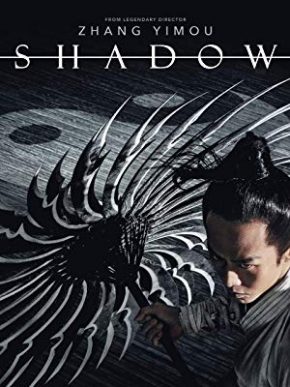
Shadow (Zhang Yimou, director & co-writer) I’m running out of time and energy, so I’ll let Oliver Lyttelton from The Playlist handle this one. Below are excerpts from his review. I’m in complete agreement with his assessment.
“Shadow is set in the third century, during the time of the Three Kingdoms, and centers on Yu, the brilliant military commander of the Pei Kingdom. After years of battle have taken their toll, Yu replaced himself with an identical ‘shadow’ named Jing, with only Yu’s wife Madam aware of the difference. This is a filmmaker in total command of every visual element — his compositions more compelling than ever, the production design almost verging on steampunk, and a special mention has to go to the extraordinary costumes — but it doesn’t feel stifling or precious either. I can’t think of a film this year that’s been such a pleasure to look at. And the action, when it comes, absolutely bangs. It’s probably not ruining things too much to say that rather than swords and arrows, the fight sequences mostly revolve around, uh, umbrellas. The result, in the final battle and in a few warm-up sequences beforehand, is some of the most kinetic, inventive, and thrilling sequences that Chinese cinema — or any cinema, really — has seen in a long while. The extended final sequence, in particular, is something of a masterclass in cross-cutting and tension building.”
Sunset (Laszlo Nemes, director & co-writer) Set just before World War I in Budapest, this film by the director of the devastating Holocaust drama Son of Saul (2015), follows a young woman who has come to the city to work as a milliner in a famous hat store once owned by her late parents. This is a powerful, engaging film.
Sword of Trust (Lynn Shelton, director & writer) A shaggy-dog story that involves people trying sell an antique sword that supposedly proves the South actually won the Civil War. The always acerbic Marc Maron plays the owner of a pawn shop in Birmingham, Alabama who doesn’t want anything to do with this. Sword of Trust is a very funny film with an abundance of deadpan charm.
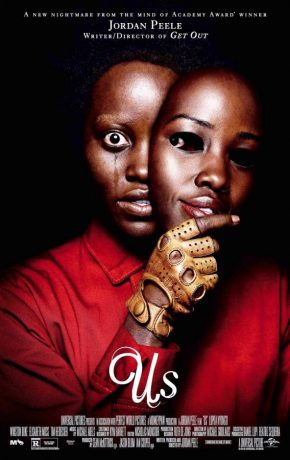
Us(Jordan Peele, director & writer) Peele’s follow-up to Get Out is even stranger and more disturbing. It took two viewings before I really get into it. Itchy and unsettling.
The Whistlers(Corneliu Porumboiu, director & writer) I saw this at the New York Film Festival and loved it, as I had this director’s earlier film, Police, Adjective (2009). Both films are concerned with language and modes of communication and they’re both terrific. The Whistlers is also noir to the hilt. As A.O. Scott wrote in his New York Times review, “If the Coen Brothers were Romanian, they might have made The Whistlers.” Indeed. It opens in New York on February 28, 2020.
Yesterday (Danny Boyle, director) This is a very seductive fantasy built on the premise of a young man in London who comes to after a global power blackout to discover that he’s apparently the only one who remembers The Beatles and their music. He then becomes famous singing Beatles’ songs that everyone thinks he wrote. It’s a somewhat shaky premise, but who doesn’t like hearing Beatles music? I went with it. The clip below the trailer is the most interesting scene in the film for me. In it, before thousands of adoring fans at the seaside, the hero rips into a version of “Help” that has a desperate, frantic edge to it.
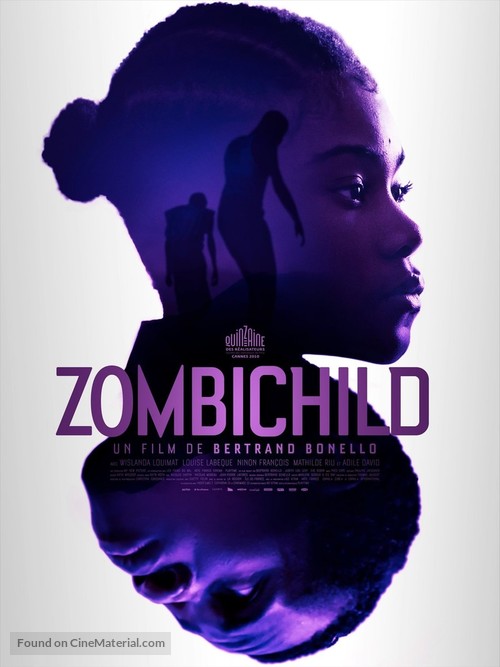
Zombi Child(Bertrand Bonello, director & writer) I saw this at the New York Film Festival a few months ago and knew it was special. This is not the kind of zombie movie we’ve come to expect since Night of the Living Dead changed the game in 1968. Make no mistake, this is not one of those. This feels more like the real deal. Switching back and forth between Haiti in 1962 and an elite girls’ school in present-day France, Zombi Child is a deeply unsettling film. Zombi Child opened in New York on January 24.
2019 was another year of exceptional films. Maybe every year is, to one degree or another, or so it seems to me. Out of the 384 feature films (including documentaries) I saw in 2019, I’ve actually come up with a top 10 list for the first time. Well, not exactly. Besides my top 10 picks, which I’ll deal with in this post, there are 31 other features that really stood out for me. I can’t leave those out, so they will be included in part 2, which will follow shortly. And now, on to the top 10.
_____________________________________________
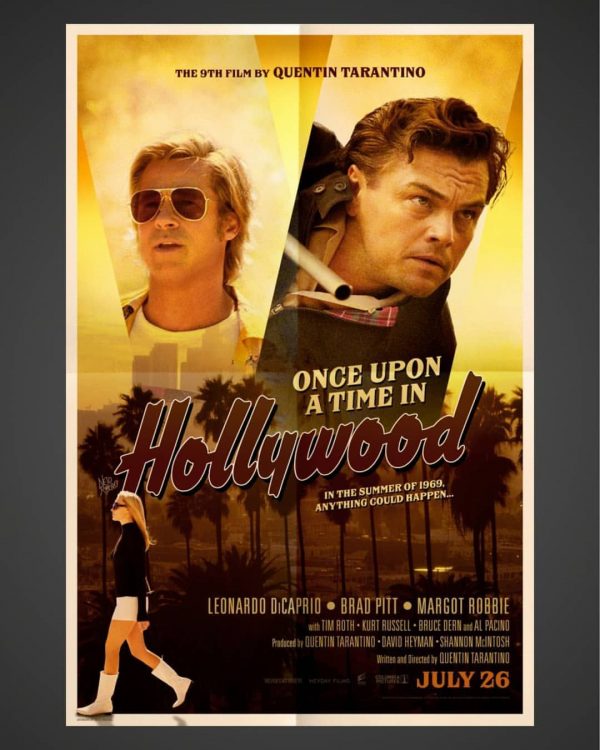
Once Upon a Time…in Hollywood (Quentin Tarantino, director & writer) This is my favorite of the year, and the best film, I think, when all the dust has settled. I’ve seen it five times now, most recently earlier this month when it was back in theaters after its Golden Globes win. It has never let down for a minute. I wrote about it at the end of August, which can be accessed here.
The rest of my top 10 picks are in alphabetical order.
________________________________________________
Diane (Kent Jones, director & writer) This is the first narrative feature from Kent Jones, who was director of the New York Film Festival for many years. He made several documentaries prior to Diane, including Val Lewton: The Man in the Shadows (2007) and the excellent Hitchcock/Truffaut (2015). Diane is extraordinary, quiet, and powerful. Its everyday rhythms, characters and situations rang true for me, having grown up in a rural community in Iowa. These people felt real. Jones shows a great deal of respect for his characters. I would love the film if only for the single-take scene of Diane (Mary Kay Place) in a bar dancing by herself in front of the jukebox. Jones just lets it run. It’s one of those privileged moments you sometimes find in a film.
________________________________________________
The Irishman (Martin Scorsese, director) A great film from a great director. We saw it at the New York Film Festival. I know that with a running time of 3 hours 29 minutes, it’s a long film, but it didn’t feel that way to me. I didn’t even have to take a bathroom break, which is a big deal for me. The Irishman is a kind of summation, in a way, of all the films Scorsese has made during his long career. It’s gangsters again, sure, but with less flash and stylistic flourishes than in films like Goodfellas (1990) and Casino (1995), which was disappointing to some, but not me. Scorsese has gotten older, along with his characters. Robert De Niro and Joe Pesci bring all the associations of the previous Scorsese films they were in together, and their age and experience. Al Pacino, working with Scorsese for the first time, also brings the authority of age and experience, and in the process gives one of the best performances of his career. There’s been a lot of talk about Netflix’s involvement with The Irishman, but Scorsese has said they were the only people willing to put up the money to make it, and for him, the film had to be made. Most people will probably stream The Irishman at home on their TV, though I always think the best way to see anything is on a big screen in a theater where you can’t hit pause.
Little Women (Greta Gerwig, director & writer) This is a wonderful film, nearly perfect from top to bottom and side to side. I’ve only seen it once, but a scene I loved takes place in a pub with everyone dancing in a swirl of color, movement, and stomping feet. I felt like I was in a whirlpool of sight and sound and music. I was swept away. Greta Gerwig is going to have a great career.
________________________________________________
Marriage Story (Noah Baumbach, director & writer) I’ve always had a soft spot for The Squid and the Whale (2005), but this is probably Baumbach’s best film. A study of a couple — Adam Driver and Scarlett Johansson — going through a painful divorce (is there any other kind?), Marriage Story is funny, gentle, sad, and wrenching. There are scenes, one in particular, where the actors enter an emotional space that feels almost too raw and frightening. Marriage Story was shown at the New York Film Festival, but we saw it at the Museum of Modern Art in their annual Contenders series. Noah Baumbach was there for an interview and Q&A after, which always expands my awareness of a film I’ve just seen.
1917 (Sam Mendes, director & co-writer) With ten Oscar nominations, a Golden Globes win, and top awards from the PGA and DGA, 1917 has a lot of momentum behind it for getting Best Picture at this year’s Academy Awards. While I don’t think it’s the “best” film of those nominated, it’s still very, very good. A lot of its interest is in the way it was edited to look as though it’s one uninterrupted take from beginning to end. I like films with very long takes that dispense with traditional shot/reverse shot editing. This technique seems more real because scenes play out in real time and feel more authentic. But a single-shot style is only a stunt if story and content aren’t there. This isn’t a problem with 1917. I was with it all the way (mostly), and after a while, was caught up in the story to the extent that I was no longer conscious of the technique. It’s an immersive experience. I plan to see it again.
________________________________________________
Parasite (Bong Joon-ho, director & co-writer) Bong Joon-ho is among the best of South Korean directors now working. I especially like his Memories of Murder (2003), The Host (2006), Mother (2009), and Snowpiercer (2013). He puts interesting spins on traditional genre material. With Parasite, Ho has taken it to a whole other level. It’s as well-received as any recent film I can think of. That doesn’t mean everyone is going to love it. A friend of mine absolutely doesn’t, but as a film teacher of mine once said, “Sometimes you get on the ride, and sometimes you don’t.” I was definitely on the ride. We saw it at the New York Film Festival with Bong Joon-ho and three cast members there for Q&A after. This was a great way to see it.
The following two trailers are different enough to warrant including here.
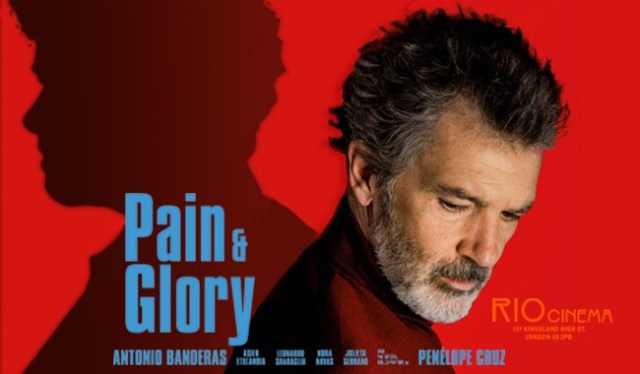
Pain and Glory (Pedro Almodóvar, director & writer) A truly great film from a great director. Antonio Banderas, who has frequently acted in Almodóvar films, here plays a version of the director in this autobiographical study. As with his best films, it’s inventive, colorful, and surprising, much like Almodóvar himself. I remember many years ago seeing a film of his at the New York Film Festival (can’t remember which). When he was introduced prior to the screening, he came out on the stage practically turning cartwheels, bursting with energy. He’s mellowed with age. Pain and Glory is quieter, more reflective, deeply felt, and a knockout.
Portrait of a Lady on Fire (Céline Sciamma, director & writer) I saw this during a limited run last month. As I wrote in Happy New Year + Things to Come: “It’s extraordinary, a film by women about women that feels quite different. Men are present more by their absence than anything else. It opens on February 14, which will make for a very interesting Valentine’s Day.”
This is an excellent film. I look forward to seeing it again. By the way, “Lady on Fire” is not just a metaphor.
As with the Parasite trailers, the following two are different enough that I want to include both.
_________________________________________________
Uncut Gems (Josh Safdie & Ben Safdie, directors & co-writers) I was so turned off by Good Times (2017), the Safdie Brothers’ previous feature with Robert Pattinson, that I didn’t even stay to the end, which is something I seldom do. I hate walking out of a movie. So when I saw the trailer for Uncut Gems, and saw it again and again before films at Lincoln Square, I knew I didn’t want to get close to this one. This is an example of what should be on my tombstone, which is “What the hell do I know?” Because when I finally did see it, I was completely converted, and not just by Adam Sandler’s take-no-prisoners performance, which is amazing, but also by the film itself. Just the way he walks hooks you in. It’s a harrowing experience as we watch this guy blow up his life over the course of a few days. The end is never really in doubt, but you start hoping, and you can’t take your eyes off of him. I think what finally got me into the theater was all the buzz about Sandler’s performance. He definitely should have gotten an Academy Award nomination for Best Actor, but who can figure these things?
The Irishman and Marriage Story are available for streaming on Netflix. Once Upon a Time…in Hollywood, Diane, and Parasite are available for rental on Amazon Prime. Uncut Gems will be available from Amazon Prime on February 25.
Okay, that’s it for my top-10 films. Part 2 , which includes the 31 other features I couldn’t bring myself to leave out, will appear in a couple of days. It may be less predictable. Stay tuned. — Ted Hicks
This is a follow-up to my previous post, “Actors on Acting – Face to Face.” The Actors Roundtable was just made available, so I’m including it here with the Actresses Roundtable. I prefer the term “actor” for both male and female, but these roundtables use traditional labels, so I’ll use them, too.
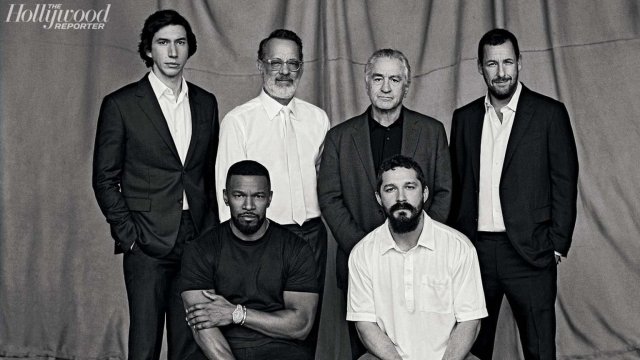
All of these actors and actresses and their films are awards contenders this season. So, staying traditional, ladies first. (The roundtables run about an hour each.)
One thing: Adam Sandler got robbed by not getting a Best Actor nomination for Uncut Gems. Just my opinion. I didn’t even want to see the movie, until I did, and he knocked me out. Okay, that’s all for now. — Ted Hicks
Since 2014, the trade publication Variety has produced a series of television specials appearing on PBS SoCal called Variety Studio: Actors on Actors. Each program has actors talking to actors about their work and experiences with no moderator or audience, just the actors. The 11th and current season, which I stumbled across recently while searching for more roundtable discussions, has a pair of actors conversing in each episode of 30 to 50 minutes. I haven’t watched all of them in their entirety yet, but based on what I have seen, they’re excellent. I find it fascinating to hear these conversations, which feel unrehearsed and spontaneous. Of course, they are actors, but I want to believe.
Here are ten conversations. Each actor has had at least one feature film released in 2019. Many of the actors and/or the films have already received awards, and have been nominated in various categories in the upcoming Academy Awards presentation. These films are either still playing in theaters or available for streaming. And away we go!
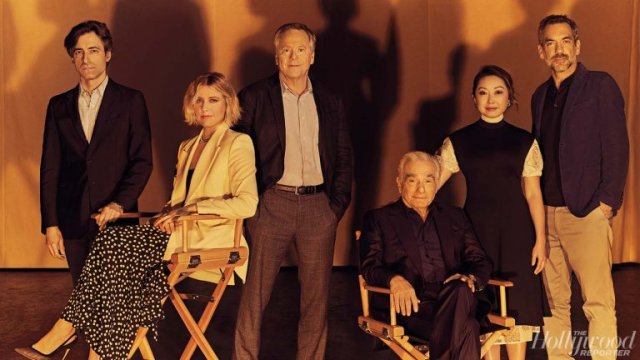
Yesterday I started watching a new Directors Roundtable presented by The Hollywood Reporter. I had the idea of including it as a supplemental item to my roundup of feature films for 2019, but the more I watched it, the more I got hooked and realized I didn’t want to wait to put it out there. It’s a really great discussion of films and filmmaking between six directors who have new films in release that have been getting a lot of attention. Their ages range from 36 (Greta Gerwig & Lulu Wang) to 77 (Martin Scorsese). Age doesn’t seem to make any significant difference in how they express themselves, which is open and articulate. These are all very smart people. It’s stimulating and exciting to hear them talk. Of course, Scorsese has had a lot more time to create a large body of work, starting in 1963 with short films at NYU. As such, he has elder statesman (or statesperson) status in this group. His presence here really raises the bar, since he’s arguably the greatest living American filmmaker working today.
This roundtable is moderated by Stephen Galloway of The Hollywood Reporter. Roundtables in recent years have focused on actors, screenwriters, cinematographers, and so forth. They are available on YouTube.
______________________________________________
Here are the directors who participated this year, along with some of the films they’ve made, to provide context, if needed.
Here’s some stuff I didn’t have when I put yesterday’s post together. I could save it until next New Year’s, but if the presidential election goes sideways, I might be in the hills with the Resistance. But more likely I’d be cowering in the tub, all cognitive functions fried, so why take a chance?
Usually I’ll do a Happy New Year post by just putting up a bunch of random stuff like this…
or this…
But this year I thought that instead I’d list some of the films I’m looking forward to in 2020. I have hopes for all of these, but you never know. Though in the case of three of them, I do, since I’ve already seen them.
The Rhythm Section (Reed Moreno, director) Looks like a revenge story, nothing new there, but the trailer got my interest, plus I like Blake Lively and Jude Law. The Rhythm Section opens on January 31.
Emma (Autumn de Wilde, director) The title character is played by Anya Taylor-Joy, who has a rather other-worldly look. I remember her well from a very interesting and nasty little film titled Thoroughbreds (2017). Plus I’ll see anything with Bill Nighy in it. Emma opens on February 21.
Underwater (William Eubank, director) From the trailer this looks to be yet another horror thriller with “gotcha!” jolts. At least, that’s how the trailer sells it. Alien underwater. The attraction for me is Kristin Stewart, who gets more interesting with every film. French actor Vincent Cassel is also in it. Familiar set-up, but it’s all in the telling. Underwater opens on January 10.
Les Misérables (Ladj Ly, director & co-writer) Looks very tough. This film has already received many nominations and awards in numerous international film festivals. It opens here on January 10.
Portrait of a Lady on Fire (Céline Sciamma, director & writer) I saw this during a limited run earlier this month. It’s extraordinary, a film by women about women that feels quite different. Men are present more by their absence than anything else. It opens on February 14, which will make for a very interesting Valentine’s Day.
Wendy (Behn Zeitlin, director & co-writer) Anyone who saw Zeitlin’s Beasts of the Southern Wild (2012) will know to expect something different in what appears to be a radical re-imagining of Peter Pan. Wendy opens on February 28.
Zombi Child (Bertrand Bonello, director & writer) I saw this at the New York Film Festival a few months ago and knew it was special. This is not the kind of zombie movie we’ve come to expect since Night of the Living Dead changed the game in 1968. This feels more like the real deal. Switching back and forth between Haiti in 1962 and an elite girls’ school in present-day France, Zombi Child is a deeply unsettling film. It opens on here on January 24.
The Whistlers (Corneliu Porumboiu, director & writer) I also saw this at the New York Film Festival and loved it, as I had this director’s earlier film, Police, Adjective (2009). Both films are concerned with language and modes of communication and they’re both terrific. The Whistlers is also noir to the hilt. As A.O. Scott wrote in his New York Times review, “If the Coen Brothers were Romanian, they might have made The Whistlers.” Indeed. It opens on February 28.
No Time to Die (Cary Joji Fukunaga, director) I mean, come on, it’s JAMES BOND! Sam Mendes did a great job with the two previous Bonds, especially Skyfall. I wish he’d directed this one, but I liked what Fukunaga did with True Detective on HBO, so I’m hopeful.
Wonder Woman 1984 (Patty Jenkins, director & co-writer) I liked the first one that Jenkins made in 2017. Gal Gadot was stupendous in the title role, and I have high expectations (always risky) for this sequel, which opens on June 5. Chris Pine, another actor I like a lot, is also back, though his character appeared to have died a glorious sacrificial death in the first film. I guess you’re never really dead in these films. Okay with me.
Tenet (Christopher Nolan, director & writer) Nolan is one of those directors, such as Michael Mann and David Fincher, whose films seem to have actual, physical weight. You can feel it. Very few details about Tenet have been revealed, but from the trailer it seems that some aspect of time travel may be involved. Dunkirk is a hard act to follow, but I’m sure Nolan is up to it. Tenet opens on July 17.
(From press notes provided by Cohen Media Group, the film’s distributor)
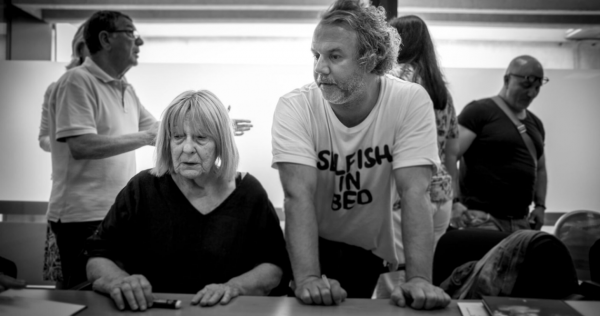
Kim Longinotto is a multi-award-winning documentary filmmaker, well known for
making films about female outsiders and rebels. Among her 20 films, she has followed a teenager struggling to become a wrestling star in Gaea Girls (2000), looked at runaway girls in Iran in Runaway (2001), challenged the tradition of female genital mutilation in Kenya in The Day I Will Never Forget (2002), introduced Cameroon female judges in Sisters in Law (2005) and brave South African child advocates in Rough Aunties (2008), shown women standing up to rapists in India in Pink Saris (2010), and told the story of an Indian Muslim woman who smuggled poetry out to the world while locked up by her family in Salma (2013). Longinotto’s most recent film, Dreamcatcher (2015), looks at the life and work of an ex-prostitute who rescues Chicago girls from the street.
________________________________________________
DIRECTOR’S STATEMENT
(From the press notes)
Letizia Battaglia is a gifted photographer and an irreverent woman. In SHOOTING THE MAFIA, we explore the story of this remarkable Sicilian, who has defied male authority, her society’s culture and the all-pervasive Mafia, her entire life.
Letizia not only challenged and infuriated the Mafia by bravely photographing their crimes, but was also outspoken at a time and in a place where this was unheard of.
We were determined to make a film that could do her justice. Working with our wonderful editor, Ollie Huddleston, we have woven together archive, classic Italian films, Letizia’s home movies, on-the-spot TV news, and our own filmed footage to take the audience on a journey through the life of this passionate woman.
Letizia’s photographs are astonishingly graphic but they also, strangely, have a kind of heart- stopping beauty. You can sense the resolve of the person behind the lens, a kind of clear-eyed reckoning of unpunished crimes. She is standing up to the bullies and showing great courage to reveal their cowardice.
She is my hero for doing that. – Kim Longinotto
________________________________________________
_______________________________________________
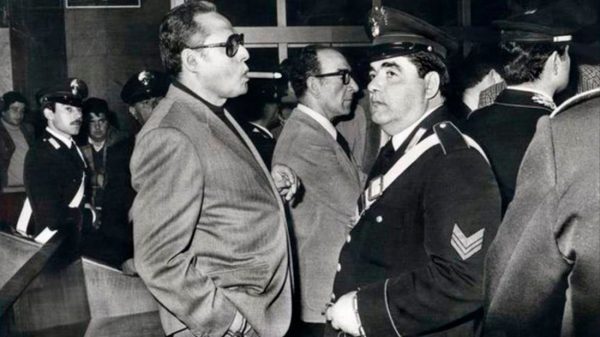
Luciano Liggio was a big shot in the Sicilian Mafia. Guess which one he is in the photo below, taken by Letizia Battaglia (Hint: He’s the guy in a shiny suit and dark glasses, sucking on a cigar. Not too obvious.)
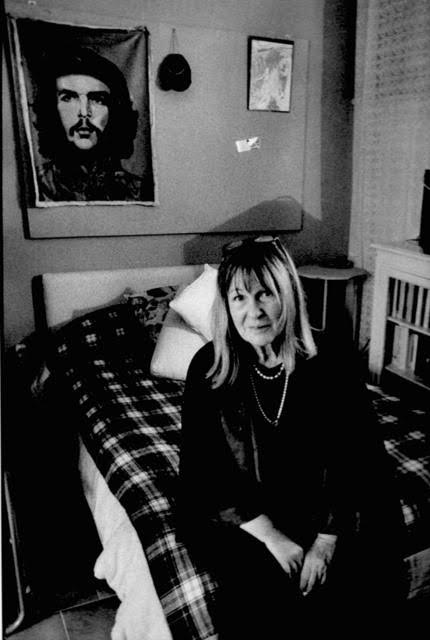
Letizia Battaglia was born in Palermo, Sicily in 1935. Married at 16, she took up journalism after her divorce in 1971, while raising three daughters. She picked up a camera when she found that she could better sell her articles if they were accompanied by images and slowly discovered a passion for photography. In 1974, after a period in Milan during which she met her longtime partner, photojournalist Franco Zecchin, she returned to Palermo to work for the left-wing L’Ora newspaper until it folded in 1990.
Battaglia (the name means “battle” in Italian) took close to 600,000 images as she covered the territory for the paper. Over the years she documented the ferocious internal war of the Mafia, and its assault on civil society. Battaglia sometimes found herself at the scene of four or five different murders in a single day. Battaglia produced many of the iconic images that have come to represent Sicily and the Mafia throughout the world. She photographed the dead so often that she was like a roving morgue. “Suddenly,” she once said, “I had an archive of blood.” Her photographs were described by the New York Times as “by turns gruesome, haunting, tragic and, often, achingly poetic.”
Battaglia also became involved in women’s and environmental issues and the rights of prisoners. For several years she stopped taking pictures and officially entered the world of politics. From 1985 to 1997 she held a seat on the Palermo city council for the Green Party. She was instrumental in saving and reviving the historic center of Palermo. She founded a publishing house, Edizioni della Battaglia, and still publishes a monthly journal for women, Mezzocielo.
____________________________________________
In my previous post on this film, I neglected to mention the excellent music score by Ray Harman, as well as the inspired use of two versions of the classic song, “Volare.”
Also, in addition to opening on Friday, November 22 at the Quad Cinema in New York, Shooting the Mafia is also opening the same day in Santa Monica, CA.
On Friday, November 29 it opens in San Francisco at the Landmark Opera Plaza Cinema; in Washington, DC at the West End Cinema; and in Phoenix, AZ at the Harkins Shea 14.
Big thanks to Susan Norget at Susan Norget Film Promotions for this updated release information, and especially for the screener link that enabled me to see Shooting the Mafia again, which provided an abundance of detail I would not have otherwise have had, and hopefully made this a better piece.
That’s all for now. See you at the movies. — Ted Hicks
“I was saved by photography. I was a young, intelligent, desperate woman. My encounter with photography allowed me to express my thoughts, my rebellion, my social and political commitment.” — Letizia Battaglia
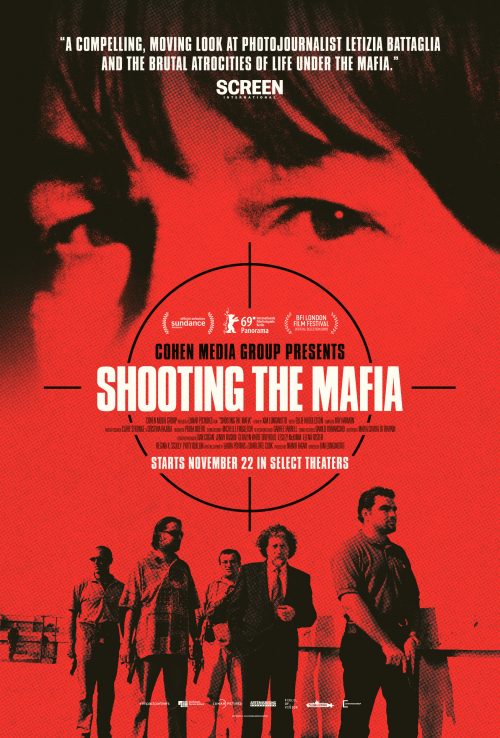
This astonishing documentary, directed by Kim Longinotto, is focused on the remarkable career and life of Letizia Battaglia, an Italian photographer and photojournalist best known for her coverage of the Mafia in her native Palermo, Sicily during the blood-soaked 1970s and 1980s. Letizia narrates the film throughout in voice-over and on-camera interviews, telling her story openly and directly. She doesn’t pull any punches. Archival footage and clips from classic Italian movies are used to support and comment on what she tells us. This film is more of a portrait of Letizia Battaglia than it is about the Sicilian Mafia, though that’s the most sensational aspect of her story.
Unless otherwise noted, all quotes in this piece are hers from the film.
Letizia was born in 1935 in Palermo. She describes a key event from her childhood. As a young girl, when she left the house on her own for the first time, a man exposed himself to her and masturbated. She ran home in shock. She wasn’t allowed out any more. “They stopped me from living, from growing. I was stunted. My father forced me to stay at home. He took away my freedom. All my dreams were shattered like a china cup on the floor. Why do such small things make us suffer all our lives. That awful man in the shadows. To have a father who controlled your whole life. I couldn’t go on the balcony in case a man saw me. All fathers at that time were obsessed. They were scared of other men who’d take their daughter away.”
Ironically enough, she met her future husband on the street. He was rich and eight years older than Letizia, who was sixteen. They married and had three daughters, but she was not happy. Like her father, her husband was controlling. She wanted to go to school, but he wouldn’t let her. She had greater ambitions. “I didn’t want to be just a mother.” They divorced in 1971.
Letizia began taking photographs at age 40. She got a job with L’Ora, a left-wing newspaper in Palermo. She was the first female photographer in Italy to work for a daily paper. “Little by little, I realized I preferred taking photos to writing. I didn’t want to be a journalist. With photography, I could tell my own story. I could feel it rather than understand it… I loved the way I could express myself with a camera rather than writing. I slowly fell in love with it… I loved being a photographer, showing what I’d seen, what I felt inside.”
“At first, I didn’t think about the Mafia. I thought I’d photograph children, women, streets…anything but the Mafia. Three days after I started, I witnessed my first murder. This was a story that lasted 19 years at the newspaper in Palermo.”
“At times, there were 5 murders a day. Once there were 7, all in the same place. We’d never known a slaughter like it. It was civil war in Palermo. In one year, they killed about 1,000 people. Every day I thought they might shoot me. I got used to it, accepted it. They smashed my cameras. I was spat at. I got death threats over the phone. I got anonymous letters. It was good to be a bit crazy. It gave me courage. I am brave, I see that now.”
When Letizia Battaglia says she is brave, this is a statement of fact, rather than ego.
“There were times when fear took over. I don’t want to think about pain. My photos of the Mafia, of the dead. I wanted to burn them…I dreamed of burning my negatives, but I have no right. I want to take away the beauty that others see in them. I want to destroy them… I look at my photos, it’s just blood, blood, blood.”
_______________________________________________
“Kids dream of being important. Perhaps being a killer is a game, but it’s how they hope to be powerful. The killer is a symbol for them.”
_________________________________________________
I made a note when I saw it that the film is like a thriller. It becomes most like one when the Mafia starts killing judges. At first, it was Mafia killing Mafia. Later, they killed men from the establishment. “First, they killed Judge Scaglione. Then it was one after another. It was too much.” Another judge was murdered near her newspaper office. We meet Judge Giovanni Falcone, who brought hundreds of Mafia members to court. A huge Mafia trial in Palermo in 1987 had 474 defendants who observed the proceedings from cages in the back and sides of the courtroom. This footage is something to see.
Letizia refers to Falcone as a modern hero.“We kept telling him, ‘They’ll kill you.’ He’d say, ‘Don’t worry. If I die, others will take my place.’”
Falcone, his wife, and a number of his bodyguards were killed in a highway bombing on May 23, 1992. Two months after Falcone’s death, his close friend and colleague Judge Paolo Borsellino was killed on July 19.
Paolo Borsellino (left) & Giovanni Falcone (right)
Letizia says of Falcone’s death, “I couldn’t take any photographs. I didn’t want to tell any more stories in blood. I loved Falcone so much. He was one of the really good people. I couldn’t photograph him dead. Now I think, ‘Why not?’” And then, to the off-camera film director: “Why are you making me think about this? I don’t want to. I realize now I’ve never been at peace. It’s always been like this. My life has always been a struggle.”
___________________________________________
Letizia Battaglia comes across as a definite piece of work, a truly individual character, a force of nature. She’s pursued her life with passion and enthusiasm, and a strong sense of justice. Someone says in the film, as we see Letizia being warmly greeted by people on the street, “Letizia is a legend. A flash of red hair, bobbing up and own at rallies. She’d always cause a stir.”
“It’s nice when your work is appreciated, but success tires me out. I prefer love. Recently I’ve met someone… I was 38 when he was born.” She’s referring to Roberto Timperi, a photographer. They’re together now. A previous long-term relationship was with another photographer, Franco Zecchini, who was 22 when he met Letizia in 1974 when she was 40.
Letizia with Franco Zecchin
Letizia with Roberto Timperi
__________________________________________
“I don’t feel guilty. I know my behavior hasn’t pleased my children, my lovers, my friends, but I’m not guilty of anything. I was committed to my work. I did my best. People who disapproved can fuck off.” (Like I said, she doesn’t pull any punches.)
“In my mind, I feel more powerful than ever. Stronger and more powerful. I think it’s beautiful being this old. I don’t miss anything. My mind’s sharp. I’m not afraid of the end. I’m so strong. I’m not afraid of the end.” She gives a small laugh and smiles at the camera, chin resting on her folded hands.
____________________________________________
_______________________________________________
After describing Shooting the Mafia to my wife Nancy, she said it sounded like a film that would only be made by a woman. I hadn’t thought of it like that, but she’s right. I can’t overstate my enthusiasm for this film. I hope that comes through in this piece. — Ted Hicks
_______________________________________________
“Suddenly, I had an archive of blood.” — Letizia Battaglia
_____________________________________________
Shooting the Mafia opens at the Quad Cinema in New York on Friday, November 22.

 ___________________________________________________
 ____________________________________________________