David Bailey is a fashion and portrait photographer who, along with Terence Donovan and Brian Duffy, helped to create the image of “Swinging London” during the 1960s. Per Wikipedia, “they were the first real celebrity photographers.” David Hemmings is said to have modeled his character in Michelangelo Antonioni’s Blow Up (1966) on Bailey. Beaton by Bailey documents a photo shoot of Beaton by Bailey (thus the title). Itwas directed by William Verity in 1971.
Chef Flynn (Cameron Yates, director) Flynn McGarry opened a restaurant he called Eureka in his home at age 11. His journey is amazing. Totally encouraged by his mother, Meg McGarry, Flynn has attracted much attention as a sort of Doogie Howser of gourmet chefs. In 2015, he was named one of Time magazine’s 30 most influential teens. He definitely wants to be taken seriously, and, as we see in Chef Flynn, he mostly is. This is an excellent and very appealing documentary. The filmmakers had access to many hours of home movies taken over the years, which was a great advantage. Last year Flynn opened Gem on the Lower East Side of New York. This is for hardcore foodies. He charges $155 per person for a 12-15 course tasting menu served over a 2 hour period in a dining room seating 12. Flynn McGarry will be 20 years old this November.
Cielo (Alison McAlpine, director & writer) If this film doesn’t fill you with a sense of awe, nothing will. It was shot in Chile’s Atacama Desert, the driest in the world. A lack of pollution or artificial light allows views of the night sky that are the ultimate in high-definition. There’s something mesmerizing about a sky full of stars and constellations. When I was a kid on the farm in Iowa, I’d sometimes go outside, lie down in the grass and just watch the sky. It was like I was looking for something I didn’t have a name for. During Cielo‘s 78 minute running time we meet people who work in the desert, such as astronomers and astrophysicists, and those who live there, including miners, algae collectors who fish in moonlight, and local storytellers. They all have something to say about the night sky. It inevitably inspires metaphysical musings. As the director says in her narration, this is “…where the sky is more urgent than the land.”
Garry Winogrand: All Things Are Photographable (Sasha Waters Freyer, director) All I’d known about Garry Winogrand before seeing this film was that he was a professional photographer. I especially love it in a documentary when I learn something about a person, place or thing that I knew little or nothing about. That’s definitely true here. Garry Winogrand was an irrepressible character — eccentric, idiosyncratic, and a great street photographer. And he had a great voice, which we hear on the soundtrack. But I didn’t expect to finally be so moved by the film. I always hope to be engaged by films I see, but it’s often takes me by surprise. I think that’s an indication of a great subject and a high level of filmmaking, as it is here.
Hal (Amy Scott, director) The goal of this documentary is to spark a re-evaluation of Hal Ashby’s film career, to give him his due. Ashby began as an editor for Norman Jewison, and received an Academy Award for editing In the Heat of the Night (1967). As a director, he had an unprecedented run of films in the 70s, one terrific movie after another. Just look at this list: The Landlord (1970), Harold and Maude (1971), The Last Detail (1973), Shampoo (1975), Bound for Glory (1976 – featuring the first Steadicam shot!), Coming Home (1978), and Being There (1979).
If his films in the 1980s were undistinguished, that’s disappointing, but it almost doesn’t matter when you’ve had a string of films like these. Amy Scott’s film makes a persuasive case that Ashby should be a member of the pantheon that includes the likes of Steven Spielberg, Martin Scorsese, and Francis Ford Coppola. Which seems obvious, when you consider his work. Hal Ashby died on December 27, 1988. He was only 59. Seven great films in the 70s, one after the other. Not bad, huh.
John McEnroe: In the Realm of Perfection (Julien Faraut, director) This film consists almost entirely of archival footage shot at the final of the 1984 French Open between McEnroe and Ivan Lendl. Julien Faraut has taken this footage, which was originally shot by Gil de Kermadec, France’s national technical director of tennis at the time, and fashioned it into an impressionistic essay that’s almost surreal at times. Then there’s the fascination of observing John McEnroe and his supernatural skill, as well as his famously short-fused behavior. I still don’t understand how the game is played, but this film is a trip.
Kusama: Infinity (Heather Lenz, director) Someone else I’d never heard of, Yayoi Kusama, has been called the most popular artist in the world, per a 2014 survey of museum attendence. I love this film and I love Kusama. She’s a wonderful character, seen usually wearing her signature polka dot clothing and shuffling with little steps from one place to another. Born in Japan to an abusive mother and womanizing father, she came to the U.S. in 1957 following a correspondence with Georgia O’Keefe, who encouraged her. Heather Lenz’s fine film is filled with Kusama’s truly innovative art and testimonies from many who know her. An amazing detail is that in 1977 she checked herself into a mental hospital in Japan, where’s she’s lived since. Her art studio is a short distance from the hospital. She’s been quoted as saying, “If it were not for art, I would have killed myself a long time ago.”
Love, Cecil (Lisa Immordino Vreeland, director) Cecil Beaton is another person I knew little about, other than his name and a vague awareness that was involved in photography and fashion. The documentaries I’ve seen have been a great education. Beaton was a singular individual. His fame would be assured if he’d only designed the costumes for the stage and film versions of My Fair Lady, but he did quite a bit more than that. He was a fashion, portrait, and war photographer. Six volumes of his diaries were published in his lifetime. He was a homosexual at a time when that was a criminal offense in England. He also had relationships with women, most famously Greta Garbo. Love, Cecil includes many interviews with Beaton filmed over the years. The feeling I was left with is that his life was a work of art.
Monrovia, Indiana (Frederick Wiseman, director) Fred Wiseman is one of the greatest documentary filmmakers, living or otherwise. His first film was Titicut Follies in 1967, and he’s been making films in his rigorous style ever since. He never employs narration, talking head interviews, or on-camera IDs. He just puts you in an environment and there you are. He has created an important body of work, documentaries that are documents, if you know what I mean. I was especially eager to see Monrovia, Indiana, since I grew up in a farming community in Iowa. But I was disappointed when I saw it at the New York Film Festival last October. I think my expectations were at odds with what was on the screen. I was a kid in Iowa during the 1950s, and this was Indiana today. Not the same, things change. When I saw it again a month or so later, I was able to do so without those expectations. I was able to see it for what it is, another great Fred Wiseman film.
Moynihan (Joseph Dorman & Toby Perl Freilich, directors) Daniel Patrick Moynihan was one of the good guys, as this documentary persuasively proves. A great quote at the beginning of the trailer below, attributed to Moynihan, is this: “Everyone is entitled to their own opinion, but not their own facts.” This is especially relevant to the current occupants of the White House.
The Opera House (Susan Fromke, director) A detailed study of how the Metropolitan Opera moved from its old location at 39th & Broadway in Manhattan to become the crown jewel of the newly constructed Lincoln Center in 1966. Using still photos, archival footage, and interviews, The Opera House takes us every step of the way. I wish more time had been spent on how Robert Moses, using his influence and connections to cut red tape, had caused the destruction of many city blocks and the forced displacement and relocation of many hundreds of tenants who were living in the neighborhood that was razed to provide space for the sprawling Lincoln Center campus. This is acknowledged, but to examine it in greater depth would take another movie. As it is, The Opera House, shows how warring factions of architects, administrators, and politicians somehow managed to create a great cultural institution. It’s quite a story.
Saving Brinton (Tommy Haines & Andrew Sherburne, directors) A must-see for film buffs and students of film history. I was immediately interested because of the subject, but also because it takes place largely in farming country in southeast Iowa, not far from Iowa City, where I went to college. The film follows Mike Zahs, a somewhat eccentric fellow, who discovers in a farmhouse basement many boxes of nitrate film prints from the late 19th and early 20th centuries. The film collection had belonged to William Franklin Brinton, and also included slides, journals, posters, and catalogs. From 1895 to 1909, Brinton travelled throughout the Midwest showing the films and slides . Mike Zahs makes it his mission to restore these films, which include footage of Teddy Roosevelt, the first moving pictures from Burma, and an ultra-rare film by Georges Méliés. Saving Brinton is a delight, a word I don’t usually use to describe anything, but it’s appropriate here. Zahs, with his full, unkempt beard, is a real character and fun to be with. The task of finding agencies capable and willing to take on the restoration of these films turns Saving Brinton into something of a thriller. The University of Iowa and the Library of Congress finally get involved. The films themselves are amazing to see. Saving Brinton leads up to a gala showing at the same theater in small-town Washington, IA where William Franklin Brinton first began his presentations. This is at the State Theater, which opened on May 14, 1897, and is amazingly the world’s oldest continuously operating movie theater. There’s something so unlikely and wonderful about all this that you can’t quite believe it.
306 Hollywood (Elan & Jonathan Bogarin, directors) I’ve said before that I especially like documentaries in which the filmmakers have a personal connection to what the film is about. 306 Hollywood is unique in its approach. In a New York Times review from last September, Ben Kenigsberg describes the set-up in this way: “After their grandmother Annette’s death in 2011, the sibling directors Elan and Jonathan Bogarín mounted what they conceived of as an archeological dig of her New Jersey home — an excavation of the objects and spaces she left behind.” They do this in a way that’s playful, surreal and fanciful, and at times evokes magical realism. The filmmakers videotaped interviews with their grandmother frequently over the last 10 years of her life. I don’t remember if they say why they did the interviews, but they’re crucial to the film. They provide the connective tissue of 306 Hollywood. Annette is a wonderful character — entertaining, vivacious, and sharply reflective of a lifetime of experience. I can’t begin to do it justice here. You just have to see it.
The following films cited in Part 1 & Part 2 can be streamed via Amazon:
Chef Flynn
Did You Wonder Who Fired the Gun?
Free Solo (available March 5)
Garry Winogrand: All Things Are Photographable
Hal
John McEnroe: In the Realm of Perfection
Kusama: Infinity
Love, Cecil
306 Hollywood (on iTunes 3/5/19, airing 3/18/19 on POV/PBS, on Amazon 7/1/19)
Watergate (available in 6 separate episodes on Amazon)
Monrovia, Indiana can be streamed for free (along with Wiseman’s entire catalog) via Kanopy, an on-demand service for universities and thousands of public libraries in the US, UK, Australian, New Zealand, and Canada. You just need a library card to sign up. If you’re in New York, go to the NYPL website to do this.
After reading Part 1 of this post, a friend of mine emailed me to say he hoped I’d be including RBG, an inspiring and hopeful study of Ruth Bader Ginsberg, in Part 2. It’s an excellent film, but I didn’t think of it as readily as the titles that made the final cut. Other fine films I wish there’d been room for are the Fred Roger’s bio-doc, Won’t You Be My Neighbor?, Amos Gitai’s important West of the Jordan River, and especially Say Her Name: The Life and Death of Sandra Bland, directed by Kate Davis and David Heilbroner.
That’s all for now. Next up is Best TV for 2018, though I might take a slight break to write a different post before that. Time will tell. In any event, see you soon. — Ted Hicks
Last year was another excellent year for documentary features. Of the 15 films on my list, my top picks are Free Solo, Watergate, and Did You Wonder Who Fired the Gun?
Free Solo (Jimmy Chin & Elizabeth Chai Vasarhalyi, directors) Though Free Solo opened in theaters last September and ran here for several months, I didn’t see it until earlier this month. Even though I read great things about Free Solo, and was urged by friends to see it, I resisted. Not sure why, though I have a fear of heights, and might have thought this could put me in a place I didn’t want to go. But when it was re-released in IMAX earlier this month, I decided to give it a shot. I’m glad I did, because it’s a great film. And the dizzying heights didn’t bother me at all. I’d heard of Alex Honnold and knew he was a “free solo” rock climber. They don’t use ropes or any other safety equipment. This seems insane, of course, but watching him in action is something else. His goal in Free Solo is to climb the 3,000 foot sheer granite rock face of El Capitan in Yosemite National Park. No one has done this before. Going into the film we know he survived, but it’s a real nail-biter nonetheless. Alex Honnold is a fascinating, perplexing character. We’re inside his head throughout as he talks on camera and in voice-overs. He’s clearly wired differently than most people. Alex is so skillful as a climber that he doesn’t feel like he’s taking risks in what he does, though we also hear of other free solo climbers who have died in this pursuit. It’s a sobering reminder of what the stakes are. Alex is also in a romantic relationship with a woman he met at a book signing, Sanni McCandless. This challenges his single-minded focus on climbing. Jimmy Chin and his filmmaking crew are all experienced climbers, which they’d have to be in order to film this. They’re frequently on camera, participants in the process of the film. I like it when documentaries acknowledge that a film is being made, rather than pretending it’s all happening on its own. This is an exceptionally well-crafted film with a compelling personality at its center. See it if you already haven’t.
Free Solo won Best Documentary at the British Academy Film Awards on February 10th, and has been nominated for Best Documentary Feature at the Academy Awards, to be presented on February 24th. It will be available for streaming via Amazon on March 5th of this year.
Watergate (Charles Ferguson, director) You might think that over the years you’ve heard everything there is to know about Watergate. I know I did. But this new documentary was directed by Charles Ferguson, and we’d seen his excellent film Inside Job at the New York Film Festival in 2010. It was a detailed autopsy of the 2008 financial meltdown, so I figured Watergate would be worth a look. It turned out to be worth more than that. Ferguson takes a vast amount of material — archival footage and interviews with the participants who are still alive — and weaves it into a comprehensive and comprehensible narrative of the entire event, making it seem fresh. Watergate is over four hours long, but there’s not a wasted minute in it. It’s fascinating, though the resonances with today’s political circus are disturbing.
Watergate had a brief run in theaters last Fall and aired on the History Channel. It is currently available on Amazon, broken into several segments.
Did You Wonder Who Fired the Gun? (Travis Wilkerson, director, writer, producer, editor, cinematography) I want to get this right. I saw it twice last year and knew it was an important film. It’s streaming on Amazon, so I watched it again yesterday to refresh my memory. I was startled to find that it hit me much harder this time. This is a deeply personal film for Travis Wilkerson. In 1946, Wilkerson’s great-grandfather, S. E. Branch, shot and killed Bill Spann, a black man, in his store in Dothan, Alabama. Did You Wonder Who Fired the Gun? is Wilkerson’s investigation into what happened and who these people were. He narrates in a voice that is quiet, calm, measured, and all the more disturbing for that, considering what he says. He’s telling it directly to us, the audience. The first words we hear are these: “Trust me when I tell you, this isn’t a white savior story. This is a white nightmare story.” The film that follows more than proves that.
Did You Wonder Who Fired the Gun? casts a much wider net than the killing in ’46. The thing I had remembered most strongly from seeing it last year were segments in which we hear Janelle Monae & Wondaland’s song “Hell You Talmbout.” Against a powerful percussive background we hear “Eric Garner. Say his name. Eric Garner. Say his name. Say his name. Won’t you say his name?” As the words are spoken, they appear with a jolt on a blank white screen. Other names are substituted: Sean Bell, Trayvon Martin, Sandra Bland, and more. At the time, I didn’t know this was Janelle Jonae’s song or its title. I just knew it felt like a punch to the head. This film is incredibly well-crafted, but it doesn’t sand down any edges to make it easier for us to see and hear. In notes I took yesterday, I wrote that watching it felt like a form of “blunt-force trauma.”
We also learn of Recy Taylor, who was raped by a group of white men in nearby Abbeville, and of Rosa Parks, an NAACP investigator sent to aid Recy. This was 10 years before Rosa became a symbol of the civil rights movement by refusing to sit in the back of the bus. Nancy Buirski had previously covered this in her excellent film, The Rape of Recy Taylor (2017).
S. E. Branch was initially charged with first-degree murder in the killing of Bill Spann, but was never tried. When Travis Wilkerson attempted to find records of the case in the Dothan court house, he came up empty. Nothing remained. It was as though it had never happened. As Travis says at one point, “My great-grandfather murdered that man, Bill Spann. He shot him in cold blood and got away with it.”
Wilkerson interviews his mother and his aunt Jill on camera to see what they remember. They are open and helpful. He has more difficulty trying to contact his other aunt, Jean, who is a politically active white supremacist.
Everything we learn about S. E. Branch just gets worse and worse. Travis tells us that S. E. kept four things under the counter of his store: two sets of brass knuckles, a bullwhip, and a loaded revolver. Later in the film, Travis relates a letter he received from his Aunt Jill with further revelations about his great-grandfather that go deeper and darker than he’d previously known. This is a Southern Gothic horror story, a heartbreaking, haunted movie. It’s filled with details that support this feeling. Some of these might seem random. Travis finds the hospital where Bill Spann died after being shot. In an aside, he tells us that the stain on the front door, which we see on screen, is from when someone blew his brains out while standing on the steps. At another point in the film we see a dead deer, filmed in crisp black and white, lying twisted in a ditch or field, eyeless with hordes of ants crawling over its body. This all feels appropriate to the subject.
From the beginning, there’s a low sound of static that runs throughout, like a needle on a scratchy recording. This adds to the sense of unease that pervades the film. There are also many shots from the POV of a car driving down empty roads, with filters that give an hallucinatory look, with clouds the color of burnt orange, like it’s Hell.
After many obstacles, Travis finally locates the cemetery in Lewisville, Alabama where Bill Spann is buried. As we see shots of the gravestones, we hear him say, “Two families in Alabama. One of them is white, and one of them is black. One of them is the family of a murderer, and one of them is the family of the murdered. One of them is buried in an unmarked grave, and one of them is filming it.”
The title of Did You Wonder Who Fired the Gun? is taken from Phil Ochs’ song, “William Moore,” about a 36-year-old white man who was murdered on a highway outside Atalla, Alabama in 1963. He was taking a letter supporting civil rights to the governor in Jackson, Mississippi.
Did You Wonder Who Fired the Gun? is an essential document. People need to see this. If you have, you know what I’m talking about. If you haven’t, I urge you to do so.
Once again, for those who want to take a deeper dive into some of the films on my Best Features list, here is a selection of interviews that will add to your experience of those films. Take your pick.
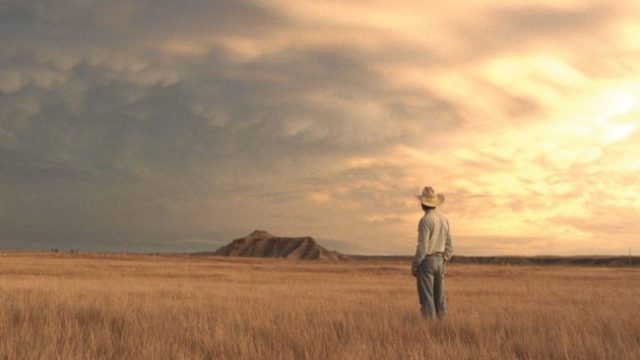
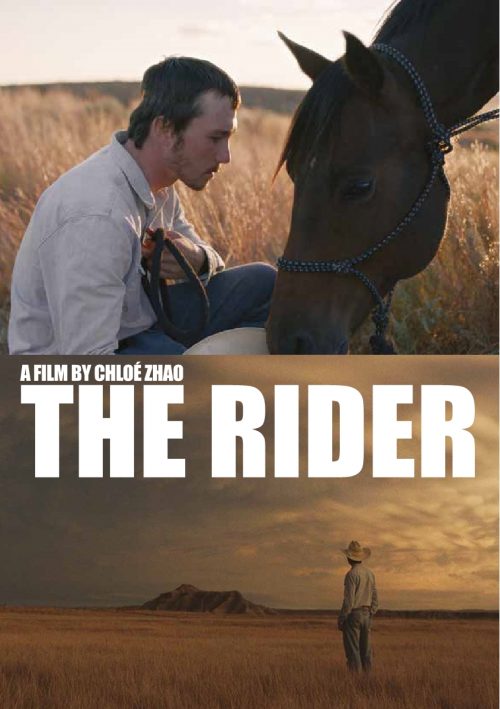
I think this should hold you for a while. I really enjoy putting this stuff together. I hope you like it, too. My take on last year’s documentaries is up next. I’ll close with this beautiful shot from The Rider. — Ted Hicks
It was a year of many exceptional films. The following three are my top picks, the best of the 373 features (including documentaries) I saw in 2018. (Yeah, I know, get a life.)
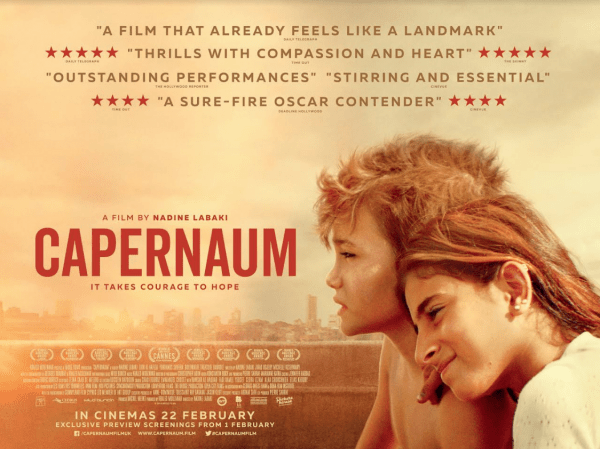
Capernaum (Nadine Labaki, director & co-writer) This is a beautiful, heartbreaking, and finally inspiring story of Zain, a tough 12-year-old boy, struggling to survive in the slums of Beirut, who takes his useless parents to court for having been born. It’s brutal to watch, but worth it for the smile at the end.
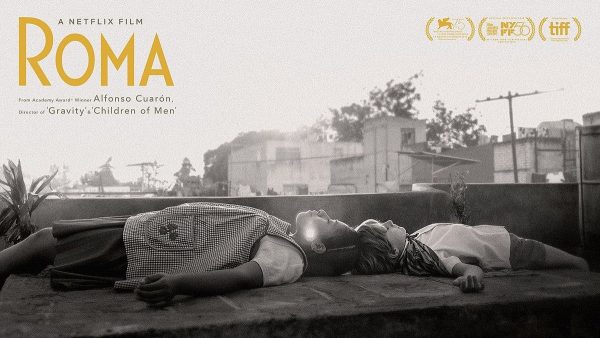
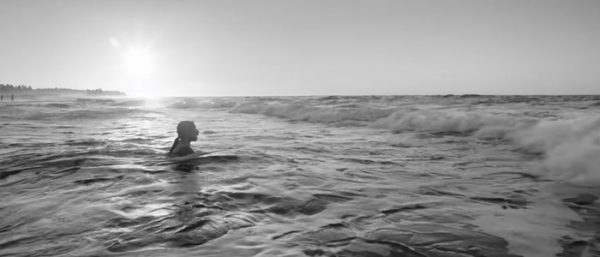
Roma (Alfonso Cuarón, director & writer) This film, set in the Roma district of Mexico City, is close to the director’s life. It tells an intimate family story that has epic implications. Shot in razor-sharp black & white and wide screen, with an intricate sound design, Roma is best seen on a theater screen, but most will probably watch it on Netflix (just not on an iPhone, I beg you). There is a scene near the end in the surf at a beach that is like nothing I’ve seen before. A rising feeling of life in the balance is truly frightening.
The Rider (Chloé Zhao, director & writer) When I first saw this film last Spring, I was knocked back by its beauty and quiet power, and by its feeling and humanity. Here’s what I wrote about it last July: For me, this is the best film of the year so far. I responded more strongly to The Rider than anything else I’ve seen to date. It concerns a promising young rodeo rider, Brady Blackburn, who suffered a near-fatal injury when a bull stepped on his head before the film begins. He’s told he can never ride or rodeo again. The Rider shows how he struggles to deal with this. Chloé Zhao is a Chinese filmmaker who was born in Beijing, attended boarding school in London, finished high school in Los Angeles, and studied filmmaking at NYU in New York City. Like her first feature, Songs My Brothers Taught Me (2015), The Rider was shot on and around the Pine Ridge Indian Reservation in South Dakota. It has a documentary aspect that reinforces the reality that’s created here. All of the characters are convincingly played by non-actors. Brady is played by Brady Jandreau; his father by his real father; his sister by his real sister. Brady had the same injury as his character has in the film. His friends in the film are his friends in real life. One doesn’t need to know this to appreciate the film, but it adds to the authenticity you feel. The Rider doesn’t go the way you’d think it might, given its premise. It’s truer than that. It’s also, as has been pointed out by others, visually stunning and deeply moving.
Here are the rest of the best of what I saw last year, in alphabetical order. I don’t claim that all of these are great films (though some of them are), but they all got my attention and engaged me in one way or another. When movies work for me, it’s an interactive experience.
Black ’47 (Lance Daly, director & writer) This is essentially a familiar vengeance tale we’ve seen played out across many genres, but placing in the context of the Great Famine in Ireland in the year 1847 sets it apart. Its story of one wronged man, Martin Feeney, wreaking havoc against multitudes is very well done. Hugo Weaving is especially good as a conflicted British soldier sent to track Feeney down.
Black Panther (Ryan Coogler, director & co-writer) This film became a cultural event and raised the bar on the superhero genre. Excellent all around.
Blaze (Ethan Hawke, director & co-writer)
Burning (Lee Chang-dong, director & co-writer)
Can You Ever Forgive Me? (Marielle Heller, director; Nicole Holfcener, co-writer) Melissa McCarthy and Richard E. Grant are wonderful in this. I’ll never forget Grant in the phenomenally alcoholic Withnail and I (1987). His character here has some echos of that film. Melissa McCarthy’s surprising performance shows a greater range than I would have expected, based on what I’ve seen her in before. Guess I shouldn’t be too quick to typecast people.
Cold War (Pawel Pawlikowski, director & co-writer)
I love the following scene of Joanna Kulig dancing with abandon to “Rock Around the Clock.”
The Day After (Hong Sang-soo, director & writer) This prolific director keeps delivering film after film several times a year, each one a polished gem. They all seem like the same film, in a way, but they’re great. There’s a lot of talk and not a lot seems to happen, but that’s deceptive.
The Death of Stalin (Armando Iannucci, director & co-writer) I was surprised to find out after that this extremely funny, very black farce follows the sequence of events around Stalin’s death quite closely. Dark and nasty and a total hoot. The entire cast is excellent, Steve Buscemi especially.
The Favourite (Yorgos Lanthimos, director) * This was the opening night film at the New York Film Festival and I loved it. The following description on IMDb is from Fox Searchlight Pictures: “Early 18th century. England is at war with the French. Nevertheless, duck racing and pineapple eating are thriving. A frail Queen Anne (Olivia Colman) occupies the throne and her close friend Lady Sarah (Rachel Weisz) governs the country in her stead while tending to Anne’s ill health and mercurial temper. When a new servant Abigail (Emma Stone) arrives, her charm endears her to Sarah. Sarah takes Abigail under her wing and Abigail sees a chance at a return to her aristocratic roots. As the politics of war become quite time consuming for Sarah, Abigail steps into the breach to fill in as the Queen’s companion. Their burgeoning friendship gives her a chance to fulfill her ambitions and she will not let woman, man, politics or rabbit stand in her way.”
This film is quite nasty, and very funny as well. The performances are exceptional. There’s a hilarious dance scene that a friend of mine said “seemed to be a sort of Monty Python spoof of the era’s courtly dances.” The Favourite also reminds me a bit of Richard Lester’s wonderful Three Musketeers films. I’ve had mixed feelings about the previous Yorgos Lanthimos films I’d seen. The Lobster (2015) was off the wall, but I liked its bizarre premise. I had an aggressively negative reaction to The Killing of a Sacred Deer (2017), so I wasn’t sure what to expect with The Favourite. But like I said, I loved it. It’s steeped in period detail. I don’t know if that detail is totally accurate, but everything looks amazing. You can overdose on the production design, which made me think of Barry Lyndon (1975). Lanthimos also makes extensive use of extreme wide-angle, fisheye lenses. These shots have a surreal, panoramic quality suggestive of dioramas in museums.
First Reformed (Paul Schrader, director & writer) * Throughout his career as a director and screenwriter, Paul Schrader has been concerned with protagonists — often anguished and doubting — who have been boxed in by their struggles to find meaning in their lives and beliefs. They frequently find expression through violence, as with Travis Bickle in Taxi Driver and Jake LaMotta in Raging Bull, or, as with Jesus in The Last Temptation of Christ, by being crucified. In First Reformed, the Reverend Ernst Toller, strongly played by Ethan Hawke in a tightly contained, claustrophobic performance, continues Schrader’s exploration of this kind of character. Even his first name, Ernst, makes a tight and constricted sound when you say it, as opposed to Ernest, which is what I initially thought the name was. Toller is the minister of the First Reformed, a small church with a shrinking congregation in upstate New York. The church is an historical landmark, significant for being a stop on the Underground Railroad. Toller gives tours of the church to handfuls of people, which end at the gift shop. He’s also involved in preparing for the 250th anniversary of First Reformed, a celebration to be attended by the mayor, governor, and other dignitaries. Then there’s the parishioner (played by Amanda Seyfried), concerned for her husband, a fanatical environmentalist, who has a suicide vest in the house. First Reformed is a rigorous film, and deadly serious. There aren’t many laughs. None, actually, and no easy answers. At a Q&A at the Walter Reade Theater last May, Schrader explained the absence of a music score by saying he didn’t want music cues to tell the audience how to feel. He said, rather poetically, “You can’t hold the hand of the viewer when you’re asking them to walk into the mystery.”
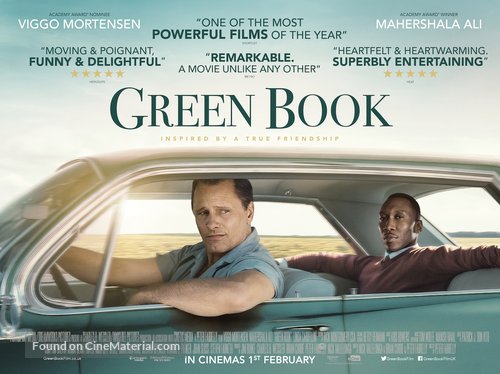
Green Book (Peter Farrelly, director & co-writer)
The Guardians (Xavier Beauvois, director & writer) * I really loved this film. I saw it twice and it was just as strong the second time. The Guardians is set in a farming community in France during World War I. Most of the men are away fighting, so it’s left to the women to do the farming. There are frequent scenes of farm work — plowing, planting, harvesting, etc. These are lengthy and mostly wordless. Having grown up on a farm in Iowa, I appreciated the time and respect the filmmaker gave to this activity. Husbands and sons return on leave, then go back to the front again. During church services, the priest reads he names of those who’ve been killed. Seasons pass and life goes on. It’s a great movie.
The Guilty (Gustav Möller, director) * In this riveting Danish film, police officer Asger Holm (played by Jakob Cedergren) has been assigned to an emergency call center. The entire film takes place inside this center. We hear the voices of the callers, but we never see them. The focus is tightly on Asger as he handles each call. The film kicks into gear when he gets a call from a woman who may have been kidnapped by her ex-husband. In a series of calls, Asger attempts to help the woman without alerting her kidnapper. By the end of the film, things have flipped a couple of times as Asger (and the audience) learns more. The Guilty is terrific. It’s a thriller that never leaves Asger, a cop on the phone at a desk. It reminds me of another film I like a lot, Locke (2013), which takes place entirely inside a car with Tom Hardy as he drives through the night, constantly calling people and taking calls. That was a thriller, too.
Hearts Beat Loud (Brett Haley, director & writer) * This is another film I love. It is, as the poster proclaims, a “feel good” movie, but it earns it. Frank Fisher (wonderfully played by Nick Offerman) owns a vinyl record store in Brooklyn. His daughter Sam (Kiersey Clemmons) is about to leave for California and pre-med study at UCLA. Frank had been in a band when he was younger. He and Sam are talented musicians; they write songs and jam together. In a great sequence, we see them as they record a song that goes viral after Frank puts it on Spotify, unbeknownst to Sam. Frank feels he and Sam are now a band (which he calls We’re Not a Band) and wishes she would delay college to work on this with him. The cast includes the always great Ted Danson as a bar owner and Frank’s friend, Sasha Lane as Sam’s girlfriend, Toni Collette as Frank’s record shop landlord, and Blythe Danner as Frank’s mother. There’s not a lot of big drama, and things don’t work out the way they might in a more conventional film with this premise. It feels very natural. This is a really, really good movie.
Hotel by the River (Hong Sang-soo, director & writer)
Incredibles 2 (Brad Bird, director) * It’s hard to believe it’s been 14 years since the first Incredibles movie. That’s an unusually long amount of time to wait for a sequel, but I have to say, it was worth it. I loved the first one, and this is even better. It’s one of those infrequent cases where a sequel surpasses the original, as did The Godfather: Part II (1974), Aliens (1986), and Terminator 2 (1991). Advances in animation technology since 2004 raised the quality of Incredibles 2 to a very high level. Plus it’s impossible not to get swept up by the momentum of the storytelling. Brad Bird‘s work is exceptional. He directed The Iron Giant in 1999, an animated film with a lot of heart that transported me back to my childhood. His live-action feature debut, Mission Impossible: Ghost Protocol (2011), is the best of that seemingly inexhaustible series.
Leave No Trace (Deborah Granik, director & co-writer) * This is a very strong, deeply affecting film that doubles down on the promise of Debra Granik’s previous feature, Winter’s Bone (2010). Just as that film provided a breakout role for Jennifer Lawrence, Leave No Trace does the same for Thomasin McKenzie. She’s excellent as Ben Foster’s thirteen-year-old daughter, Tom. Foster plays Will, a former soldier with PTSD. They’ve been living off the grid deep in the forest on public land in Oregon. Their struggle to maintain this way of life forms the crux of the film. Leave No Trace is very understated, free of the more conventional drama you might expect. The film respects all of the characters; there are no villains per se. Foster is excellent as Tom’s father. But he’s almost always excellent, as his work in The Messenger (2009), Hostiles (2017), and especially Hell or High Water (2017) will attest. Film critic Matt Zoller Seitz has described him as “one of those actors who make even a bad film worth seeing.”
The Miseducation of Cameron Post (Desiree Akhavan, director) I liked this much more than Boy Erased, which has a similar premise. I’m not sure why, but this film felt more even-handed and more authentic.
Museo (Alonso Ruiz Palacios, director & co-writer)
A Private War (Matthew Heineman, director) Rosamund Pike gives a great performance as celebrated war correspondent Marie Colvin, who was killed under fire in Syria in 2012. I’m more impressed with her every time I see her. This is the first narrative feature from Matthew Heineman. His previous work has been in documentaries, notably the powerful City of Ghosts (2017), which was about anonymous citizen journalists in Syria documenting the struggle against ISIS. He knows the territory.
Searching (Aneesh Chagantry, director & co-writer) Told entirely via images and sounds on screens — iPhones, computers, televisions, security cameras, and so on. A bit of a stunt, but effective and clever. A reveal near the end is a letdown, but otherwise I was with it all the way. John Cho is excellent as a an increasingly anxious father trying to locate his missing daughter.
Shoplifters (Hirokazu Kore-eda, director & writer) Another great film from Kore-eda, who specializes in stories of families and groups. He is a true humanist.
Sorry to Bother You (Boots Riley, director & writer) * Cassius Green (played by Lakeith Stanfield) takes a job with a telemarketing company in Oakland, California where he’s encouraged to use his “white voice” to increase his sales. That’s just the tip of the iceberg. This film is insane. The white voices are dubbed by actual white voices. You could say the film is social satire, but that doesn’t begin to convey the anger that runs through it. It’s also a comedy, a farce, a horror film, and probably a thousand other things. Plus it’s great. Something is revealed in the latter half of the film that will have your jaw on the floor. I don’t dare say anything more about that, though I’d like to. I can only hope that in the wake of Jordan Peele’s Get Out, we’ll see more films that are this full-throttle.
The Spy Who Dumped Me (Susanna Fogel, director & co-writer) I had my doubts going in, but this really worked. It’s quite violent, but since it’s R-rated, the violence has some consequences, which is different for a comedy. Kate McKinnon has been the guiding light on Saturday Night Live the last several years. She’s brilliant and fearless. She and Mila Kunis are great together. The story is obviously absurd, but they go to great lengths to sell it, and as far as I’m concerned, they succeed nicely.
The Third Murder (Hirozaku Kore-eda, director & writer) This is a departure for Kore-eda in terms of subject matter. He draws you into a story that slowly reveals itself, up to a point, though it never quite removes the aura of mystery and sense of unease that pervades the film. The tone and method also reminds me of the films of Kyoshi Kurosawa, another great Japanese director.
The 12th Man (Harald Zwart, director) This is an epic tale of survival against overwhelming odds, based on a true story.
24 Frames (Abbas Kiarostami, director) From one of the world’s great filmmakers. He left a monumental body of work when he died in 2016. I don’t even know how to classify 24 Frames. It’s not exactly a documentary. It’s not a narrative feature. What is it? An essay? Whatever, it’s a film that makes you really look. And it’s beautiful. There’s something Zen about it. Here are notes I made when I saw it last February. “Saw Kiarostami’s final film, 24 Frames, today. The trailer doesn’t begin to scratch the surface. Comprised of 24 scenes, each 4 1/2 minutes long, fixed frame, but with a lot slowly going on inside it. I think this is an important piece of work, though I’m now sure how or why (too soon, need to process). Suffice to say, it’s quite extraordinary. Definitely see it when you can.”
Wildlife (Paul Dano, director & co-writer) Adapted by Paul Dano and Zoe Kazan from a novel by Richard Ford, Wildlife is set in 1960 in Great Falls, Montana. The story is told in a straight-forward style that has a literary feel, rendered in carefully composed shots that make the streets and landscapes seem like paintings. But it’s very much alive; there’s nothing static about it. Carey Mulligan and Jake Gyllenhaal have gotten most of the attention. They’re great, but Ed Oxenbould is also outstanding as their son. He’s really the heart of the film.
Most, if not all, of these films are available for streaming from sources such as Netflix, Amazon, Hulu, and countless others. And that about covers it for now. See you next time. — Ted Hicks
It’s been a good year for film and television, but pretty grim otherwise, both nationally and globally. I just hope that the creature in the White House finally implodes without taking the rest of us with him. That said, here’s hoping for better times ahead. More movies and more seasons of Babylon Berlin and My Brilliant Friend.
“Through a Different Lens,”the exhibit of Stanley Kubrick photographs at the Museum of the City of New York, was originally slated to end on October 28, but has been extended to January 6. This is a great show. If you’re in the New York City vicinity, and haven’t checked this out, I urge you to do so before it leaves. I wrote about the exhibit earlier this year in the first installment of my 4-part Stanley Kubrick saga, which can be accessed here.
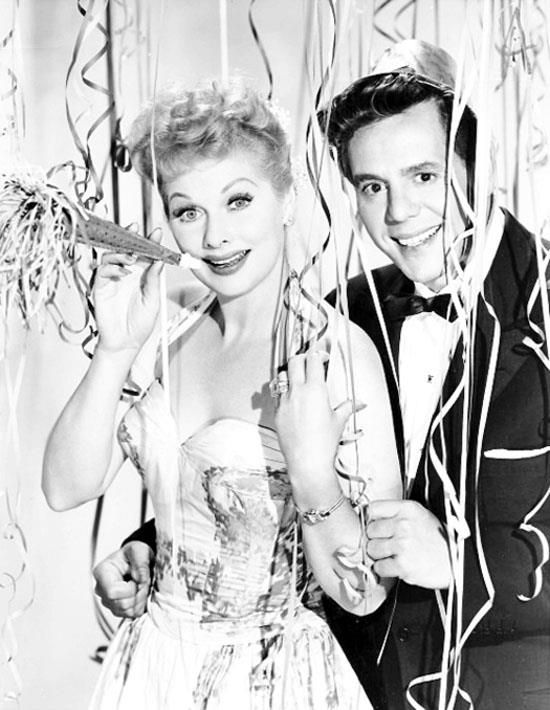
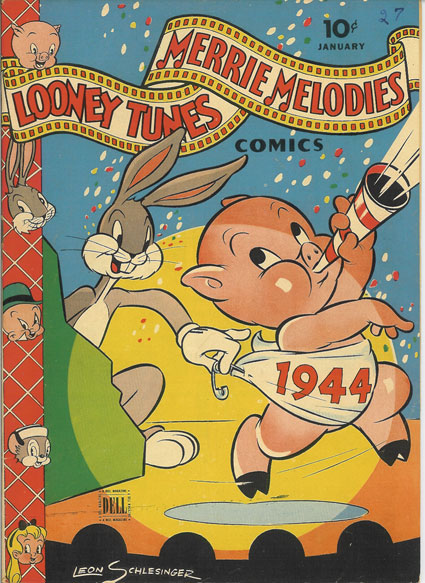
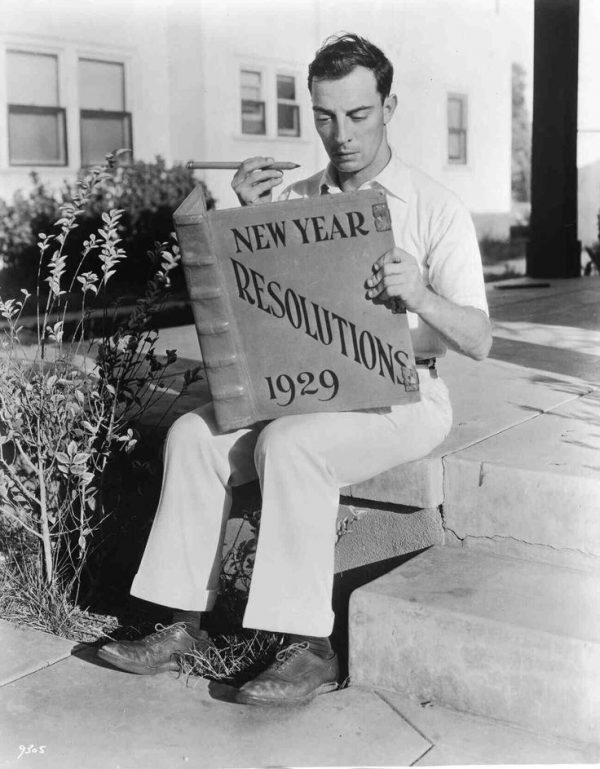
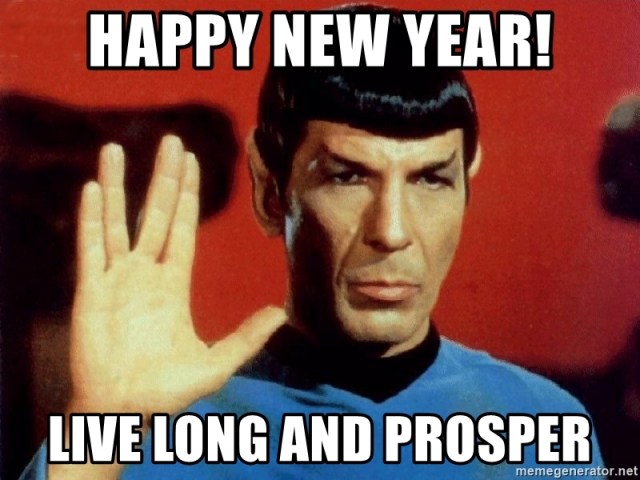
While looking for images to include in this post, I ran across the following. They may not all be literally New Year’s greetings, but I like them. Particularly this one depicting a fresh-faced young lad observing a bunch of drunken pigs celebrate the new year. I’m just trusting my gut here.
The Man I Love (1947) was the fourth feature directed by Raoul Walsh that Lupino appeared in, following Artists and Models (1937), They Drive by Night (1940), and High Sierra (1941). See Lupino and Walsh in the photo below.
The plot, per Wikipedia, is this: “Homesick for her family in Los Angeles, lounge singer Petey Brown (Ida Lupino) decides to leave New York City to spend some time visiting her two sisters and brother on the West Coast. Shortly she lands a job at the nightclub of small-time-hood Nicky Toresca (Robert Alda) where her sister Sally (Andrea King) is employed. While evading the sleazy Toresca’s heavy-handed passes, Petey falls in love with down-and-out ex-jazz pianist, legendary San Thomas (Bruce Bennett), who never recovered from an old divorce. Variously solving the problems of her sisters, brother and their next-door neighbor, the no-nonsense Petey must wait as San decides whether to start a new life with her or sign back on with a merchant steamer.”
The part is perfect for Lupino. Petey (great name) is not about to be pushed around, especially by a cheap hood like Toresca. The scene below is a good example. Lupino brings a toughness and also vulnerability to this character, as she does in many of her films. She isn’t movie-star glamorous, but has a sexy presence that has more to with her attitude than her measurements. And she can throw a mean slap.
There’s also a lot of great jazz and blues music in this film. For the title song, Lupino’s voice is dubbed by Peg LaCentra, though she’d do her own singing the following year in Road House.
Martin Scorsese has said The Man I Love was the main inspiration for his New York, New York (1977).
Director Sam Peckinpah (credited as David Peckinpah) was the “dialogue director” for Private Hell 36 (1954), in which Lupino acted, co-wrote and co-produced.
Peckinpah was a writer on the Ida Lupino/Howard Duff television series Mr. Adams and Eve (1957-1958). According to one source, Lupino hired Peckinpah to work on the series after she found him living in a shack behind her property. I don’t know if this is true, but it’s an interesting story. In any event, he did write for the show.
Years later, Peckinpah cast Lupino to play Steve McQueen’s mother in his rodeo film Junior Bonner (1972). She was great.
________________________________________________
Here is an episode of Mr. Adams and Eve, Camel cigarette commercials included.
Ida Lupino was the subject (for real) of the television program This Is Your Life on March 3, 1958. Here’s the video.
_________________________________________________
Ida Lupino was married three times. The first to actor Louis Hayward in 1938; they separated in 1944 and divorced in 1945. Her second husband was producer/writer Collier Young, who she married in 1948. They divorced in 1951, but continued their creative relationship in their production company, The Filmakers, for some years after. Her longest lasting marriage was to actor Howard Duff, from 1951 to 1983. See Duff and Lupino in the photo below.
The Bigamist (1953) was directed by Lupino, written and produced by Collier Young. It starred Young’s first wife, Lupino, Edmund O’Brien, and Joan Fontaine, who had become Young’s second wife. This must have made for some interesting lunch breaks.
Ida Lupino became an American citizen in 1948. She was a dedicated Democrat.
_________________________________________________
A recent Film Comment podcast discussing the films for Ida Lupino can be accessed here.
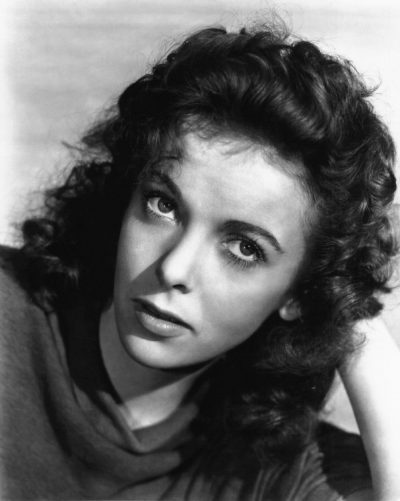
In commemoration of Ida Lupino’s 100th birthday this year, Film Forum in New York recently ran a two-week retrospective of her films. She’s probably better known as an actor, but it’s her career as a director, writer, and producer in feature films and television that deserves more attention. I knew she had directed some features, most notably The Hitch-Hiker (1953), but was basically unaware of the scope of her work as a filmmaker. As I saw Ida Lupino’s films in this series and found out more about her, I was overwhelmed by the extent of it. This post will be far from complete, but I’ll try to give some sense of who she was, what she did, and how special she was, both on screen and behind it.
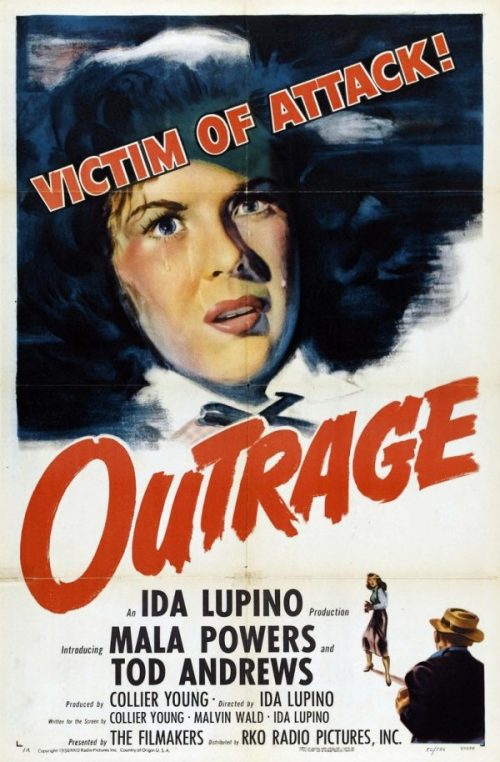
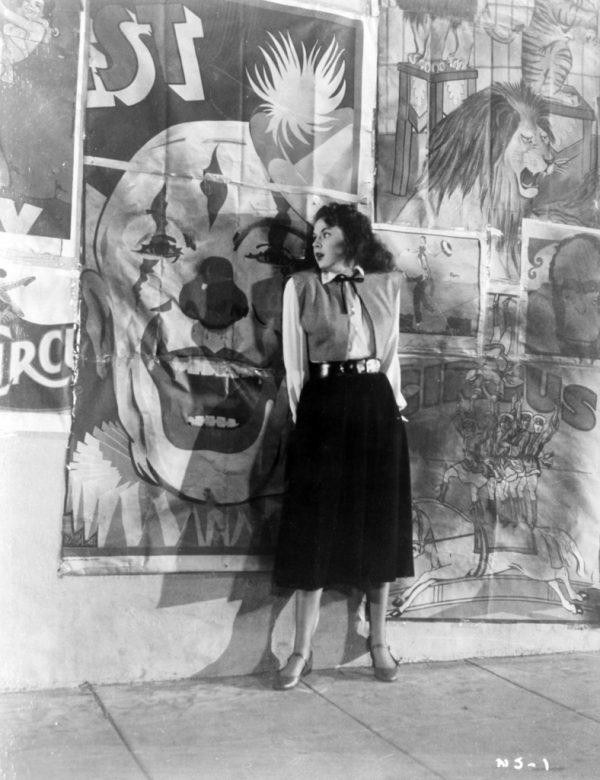
Earlier this year I’d seen Outrage (1950) at the Museum of Modern Art. Directed and co-written by Lupino, the film is about a young woman, Ann Walton (Mala Powers), who is raped on a deserted street while walking home alone from work one night, and the aftermath of that. I’d never heard of this film, but I immediately knew it was something different. This was pretty edgy stuff for 1950. The word “rape” couldn’t be said in films at that time. “Viciously attacked” was used instead. Outrage is tough, direct, and unsentimental. This is an apt description of Lupino’s acting and filmmaking.
In the shot below, note the surreal imagery of the deserted street that engulfs Ann as she fearfully tries to get home.
Ida Lupino was born in England on February 4, 1918. She died on August 3, 1995 in Los Angeles at age 77. Here is some of what she did in the meantime.
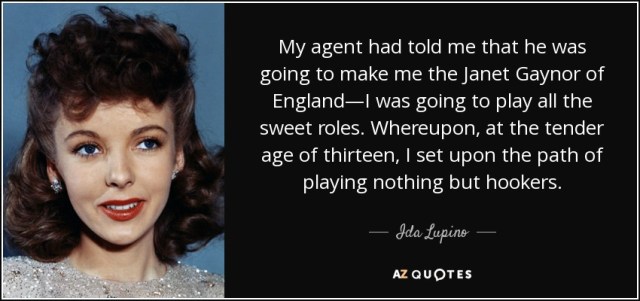
According to her Wikipedia entry, “Lupino wrote her first play at age seven and toured with a traveling theater company as a child. By the age of ten, Lupino had memorized the leading female roles in each of Shakespeare’s plays.” True or not, this makes a good story. She made her film debut in an uncredited role in 1931 at age 13. The following year she appeared in Her First Affaire, directed by Allan Dwan. In 1933 she had leading roles in no less than five films, so her career was picking up speed. Per Wikipedia, “Dubbed ‘the English Jean Harlow,’ she was discovered by Paramount in the 1933 film Money for Speed, playing a good girl/bad girl dual role. Lupino claimed the talent scouts saw her play only the good girl in the film and not the part of the prostitute, so she was asked to try out for the lead role in Alice in Wonderland (1933). When she arrived in Hollywood, the Paramount producers did not know what to make of their sultry potential leading lady, but she did get a five-year contract.”
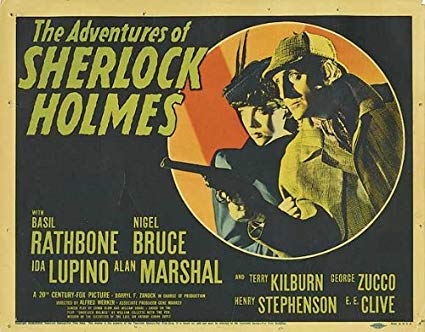
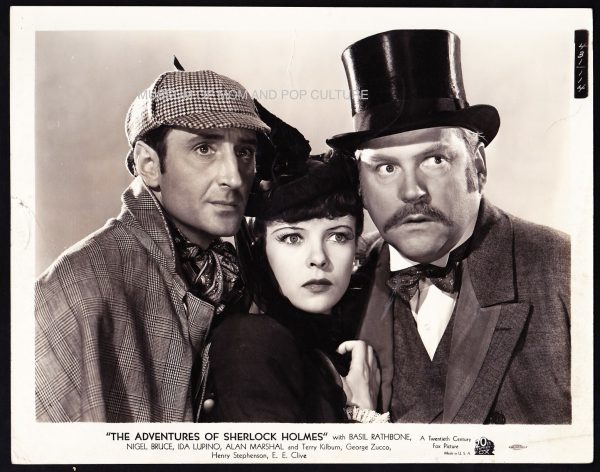
In 1939 she appeared with Basil Rathbone and Nigel Bruce in The Adventures of Sherlock Holmes, a film probably more familiar now to American audiences than the 24 previous films she was in during the 1930s.
In 1940 and 1941 Lupino appeared in two films directed by Raoul Walsh. The first was They Drive by Night, with George Raft, Humphrey Bogart, and Ann Sheridan. The second was High Sierra, with Bogart in one of his iconic roles, gangster Roy Earle. Though Lupino acted in a wide variety of films, I think of her as more strongly linked to noirish films such as these. This is true as well for the films she later directed, wrote and produced.
Below are two clips from The Drive by Night with Lupino as the duplicitous Lana Carlson. In the first she murders her boorish husband. In the second she freaks out on the witness stand after attempting to frame George Raft, who had earlier spurned her advances. This one is a little over the top, but I like it. Following that is a selection of scenes from High Sierra.
In 1942, Lupino was in Moontide with Jean Gabin, who was a huge star in France. This was his first American film, with a screenplay by John O’Hara and direction by Fritz Lang. Lang started the film, but was replaced by Archie Mayo. Moontide isn’t a great film, but it has a drifting, dreamy quality. Lupino and Gabin are very appealing together.
In 1948 Lupino starred with Cornel Wilde, Celest Holm, and Richard Widmark in another film noir, Road House, directed by Jean Negulesco. Jefty Robbins (Widmark) owns a road house in Upstate New York, near the Canadian border. Pete Morgan (Wilde), ostensibly Jefty’s best friend, manages the business. Lily Stevens (Lupino) is a nightclub singer brought in by Jefty to sing at the road house. His plans to marry Lily fall through when she falls in love with Pete. This sets Widmark on a campaign of terror against the two. Widmark uncorks the same giggling psychotic laugh he used in Kiss of Death, his debut film of the previous year.
A point of interest in this film is that Lupino does her own singing, which was not usually the practice. In the following clip, Lupino sings “One for My Baby.” Her voice is very distinctive, husky, “smoky,” and a little rough. She sounds great.
In a 1945 fan magazine interview, Ida Lupino said the following, which would prove to be prescient: “I see myself, in the years ahead, directing or producing or both. I see myself developing new talent, which would be furiously interesting for me. For I love talent. Love to watch it. Love to help it. Am more genuinely interested in the talents of others than I am in my own.”
But Lupino later downplayed her directorial ambitions as being the result of “being bored to tears standing around the set while someone else seemed to do all the interesting work.”
In a 1995, after her death, Martin Scorsese paid tribute to Ida Lupino in the New York Times, calling her “a woman of extraordinary talents, and one of those talents was directing. Her tough, glowingly emotional work as an actress is well remembered, but her considerable accomplishments as a filmmaker are largely forgotten and they shouldn’t be. The five films she directed between 1949 and 1953 are remarkable chamber pieces that deal with challenging subjects in a clear, almost documentary fashion, and they represent a singular achievement in American cinema.”
Ida Lupino was the second woman, after Dorothy Arzner, to be admitted to the Directors Guild of America.
The book Film Noir – The Directors (edited by Alain Silver and James Ursini, Limelight Editions 2012), contains chapters on 28 directors. Lupino is the only woman included in this collection.
Lupino and her second husband, writer/producer Collier Young, formed their own company, The Filmakers (yes, that’s how they spelled it), “to produce, direct, and write low-budget, issue-oriented films.” Christian Huber in Cinema Scope magazine writes that “The Filmakers’ goal was to tell ‘how America lives’ through independent B pictures shot in two weeks for less than $200,000…a combination of ‘social significance’ and entertainment.”
Per Wikipedia: “Her first directing job came unexpectedly in 1949 when director Elmer Clifton suffered a mild heart attack and could not finish Not Wanted, a film Lupino co-produced and co-wrote. Lupino stepped in to finish the film, but did not take directorial credit out of respect for Clifton. Although the film’s subject of out-of-wedlock pregnancy was controversial, it received a vast amount of publicity, and she was invited to discuss the film with Eleanor Roosevelt on a national radio program.”
Just as “rape” couldn’t be said in her film Outrage a year later, “pregnancy” couldn’t be said in Not Wanted. The young woman who becomes pregnant is told she’s “going to have a baby.” Those were different times.
Lupino’s first official credit as director was for Never Fear (1949), which she also co-wrote and co-produced with Collier Young. The film concerns a young woman who has polio and how she deals with it. Lupino contracted polio briefly in 1934, so she had a personal connection to this material. This film, along with Hard, Fast and Beautiful (1951), are the two films directed by Lupino that I missed in the retrospective (before I realized that I should have seen everything).
Lupino’s interest in subject matter the studios weren’t touching continued with The Bigamist (1953), written and produced by Collier Young. Edmund O’Brien stars as man with two wives, one in San Francisco, played by Joan Fontaine and one in Los Angeles, played by Lupino. It’s shot in an almost documentary style.
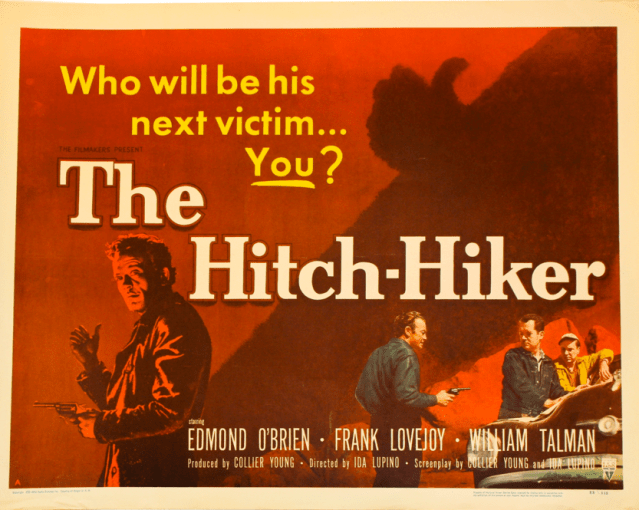
Before I got into the rest of this, The Hitch-Hiker (1953) was only film directed by Lupino that I’d been aware of. I first saw it two years ago at Film Forum and again last month. It’s highly regarded and justly so. Two average guys (Edmund O’Brien and Frank Lovejoy) on a fishing trip unwittingly pick up a psycho hitch-hiker (William Talman) who forces them to drive him to Mexico so he can escape all the cops on his trail. It’s as tense as tense gets. Talman, who I knew as the DA on the Perry Mason TV show, is very scary here. He has one eye that won’t close, which is also scary, given the context. This is an extremely uncomfortable film to see. As Christopher Huber wrote in an article in Cinema Scope magazine, “In a sense, all Lupino’s films are prison pictures: the protagonists are trapped by their weaknesses and fears as well as social pressures, often signified by what is repressed.” The Hitch-Hiker is Lupino’s most overtly noir film. It was co-written by Lupino and Collier Young, and produced by Young. A bit of trivia is that the associate producer was Christian Nyby, who directed The Thing from Another World in 1951, though many say that Howard Hawks was the real director of that film.
Private Hell 36 (1954) was one of the last films made by The Filmakers before they ceased production in 1955. Though it was written by Lupino and Collier Young, and produced by Young, it was directed by Don Siegel, who was just two years away from directing Invasion of the Body Snatchers (1956). Lupino stars with Steve Cochran and Howard Duff.
Per Wikipedia, the plot is this: “L.A. police detectives Cal Bruner (Steve Cochran) and Jack Farnham (Howard Duff) get in over their heads when they decide to split up thousands of dollars they found on a recently killed counterfeiter. To make matters worse, they are assigned by their police captain to look for the missing cash. Things get even worse when one cop gets romantically involved with Lili Marlowe (Ida Lupino), a money-hungry nightclub singer. Farnham decides to turn honest and hand the money over to his superiors, but the other cop decides to take it all.”
Private Hell 36 is another bleak and brutal vision on the film noir landscape. It’s great.
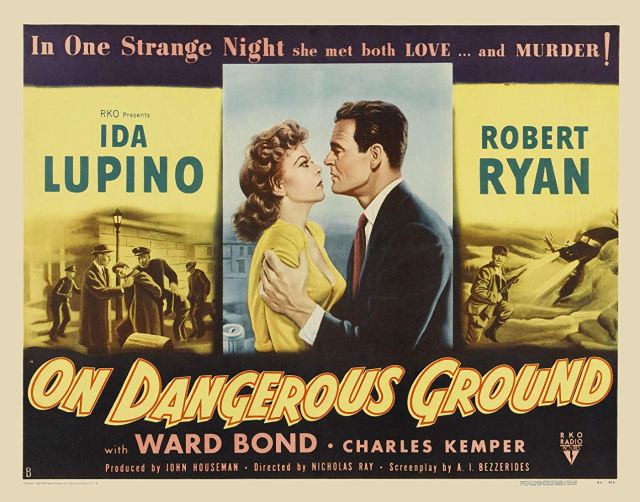
Ida Lupino had been appearing in other films all this time. One of the best was On Dangerous Ground (1951), directed by Nicholas Ray and starring Lupino, Robert Ryan, and Ward Bond. This is a favorite of mine. Ryan is a New York City cop who has become brutal and sadistic. After beating up one too many suspects, he’s’ sent on a case upstate in the country to help with the search for a killer. There he meets blind Ida Lupino and through her regains some humanity. It’s tough and tender, with a lot of feeling. The following clip conveys some of that. On Dangerous Ground was written by A. I. Bezzerides, produced by John Houseman, with music by Bernard Herrmann.
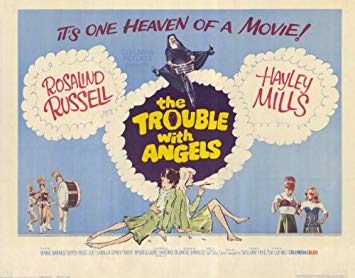
The last feature film directed by Ida Lupino was The Trouble with Angels (1966) with Rosalind Russell and Hayley Mills, set in a Catholic boarding school for girls. One could say this is a change of pace from her earlier work.
The scope of her work in television was a revelation to me. Four Star Playhouse, was a half-hour anthology series created by Lupino, Charles Boyer, David Niven, and Dick Powell. They would alternate starring in each weekly drama. It aired from 1952 to 1956. Lupino appeared in 19 of the 129 episodes produced. Blake Edwards made his directing debut on the show and also wrote a number of episodes.
Something I remember from growing up in the 1950s is Mr. Adams and Eve, the sitcom Lupino starred in with her then-husband, Howard Duff. They played married movie stars Howard Adams and Eve Drake. I don’t remember the episodes, but I know we watched the show. Mr. Adams and Eve was broadcast from January 1957 to July 1958.
Ida Lupino directed more than 100 episodes from 1959 to 1966 of television series such as Alfred Hitchcock Presents, Have Gun – Will Travel, Thriller, The Untouchables, The Fugitive, The Donna Reed Show, Gilligan’s Island, The Rifleman, 77 Sunset Strip, and Bewitched. This is just a partial listing. I’m rather astounded by this.
Lupino continued to act in films and TV until 1978. I fondly remember her in Sam Peckinpah’s Junior Bonner (1972). She and Robert Preston play Elvira and Ace Bonner, the estranged parents of Steve McQueen’s Junior Bonner, a rodeo rider. Lupino and Preston have a great scene together on an outdoor wooden staircase. This is a laid-back, easy-going film, a departure for Peckinpah.
I have far more material on Ida Lupino than I can reasonably fit into this post. I’ll do a follow-up in a couple of days, because she deserves more space. In the meantime, here’s the availability of some of the films referenced in this post.
Amazon Prime: Not Wanted, The Bigamist, The Hitch-Hiker, On Dangerous Ground
You-Tube: Outrage
Home Video for Purchase: Hard, Fast and Beautiful; Private Hell 36; Road House; Moontide
That’s all for now. Stay tuned for more on Ida Lupino. — Ted Hicks
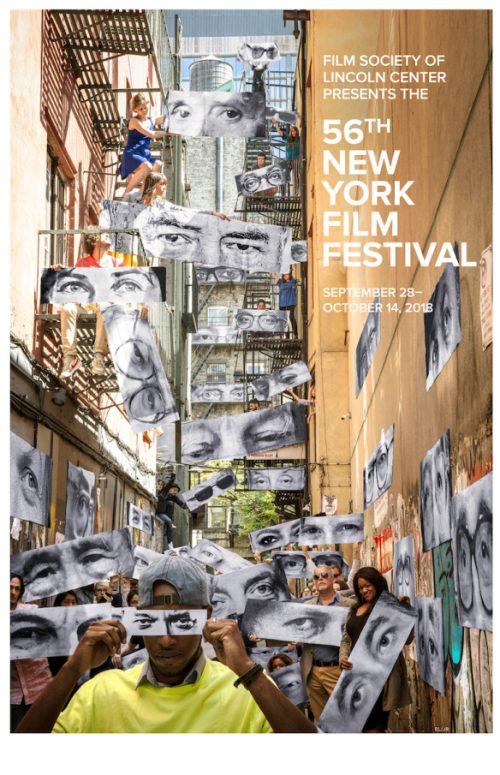
The 56th New York Film Festival kicked off this past Friday and continues until Sunday, October 14th. It’s my big film event of the year. There are 30 features in the Main Slate section this year, and dozens more in the various sidebar programs. When I started attending this festival in 1977, the opening and closing night films were shown at Avery Fisher Hall. The rest were shown at Alice Tully Hall, which remains the main venue for Main Slate selections. Back then it was possible to see every film on the schedule if you wanted to. The addition of screens at the Walter Reade Theater and the Elinor Bunin Munroe Film center down the block has created venues for inceased programming during the festival. Even if someone was crazy enough to want to see everything, you just couldn’t do it. An embarrassment of riches, as the saying goes. I’m seeing 24 films this year. That’s probably enough.
Here are the six I saw this past weekend. I want to get this in before the end of the day (at midnight my computer turns into a pumpkin), so these brief impressions will be my immediate reactions to the films. (As is now obvious, I did not succeed in finishing this last night, pumpkin or not.)
The Favourite (Yorgos Lanthimos, writer/director) This was the opening night film and I loved it. The following description on IMDb is from Fox Searchlight Pictures: “Early 18th century. England is at war with the French. Nevertheless, duck racing and pineapple eating are thriving. A frail Queen Anne (Olivia Colman) occupies the throne and her close friend Lady Sarah (Rachel Weisz) governs the country in her stead while tending to Anne’s ill health and mercurial temper. When a new servant Abigail (Emma Stone) arrives, her charm endears her to Sarah. Sarah takes Abigail under her wing and Abigail sees a chance at a return to her aristocratic roots. As the politics of war become quite time consuming for Sarah, Abigail steps into the breach to fill in as the Queen’s companion. Their burgeoning friendship gives her a chance to fulfill her ambitions and she will not let woman, man, politics or rabbit stand in her way.”
The film is quite nasty, and very funny as well. The performances are exceptional. There’s a hilarious dance scene that a friend of mine said “seemed to be a sort of Monty Python spoof of the era’s courtly dances.” The Favourite also reminds me a bit of Richard Lester’s wonderful Three Musketeers films. I’ve had mixed feelings about the previous Yorgos Lanthimos films I’d seen. The Lobster (2015) was off the wall, but I liked its bizarre premise. I had an aggressively negative reaction to The Killing of a Sacred Deer (2017), so I wasn’t sure what to expect with The Favourite. But like I said, I loved it. It’s steeped in period detail. I don’t know if that detail is totally accurate, but everything looks amazing. You can overdose on the production design, which made me think of Barry Lyndon (1975). Lanthimos also makes extensive use of extreme wide-angle, fisheye lenses. These shots have a surreal, panoramic quality suggestive of dioramas in museums.
Here’s a trailer that gives a good sense of the tone and sensibility of The Favourite. The film opens on November 23rd.
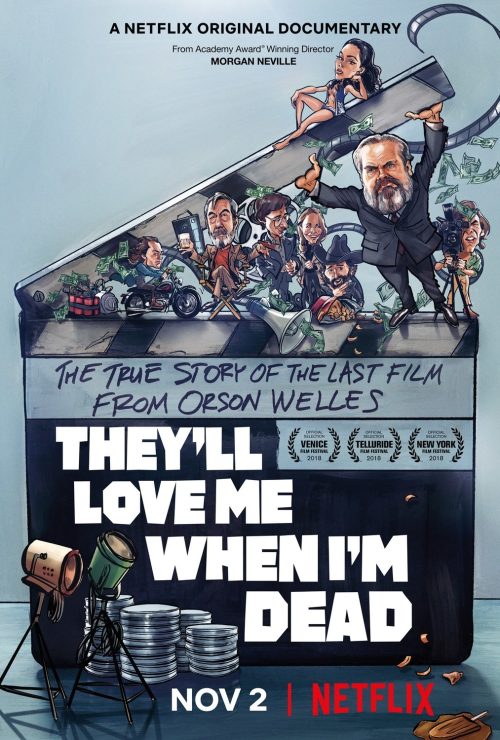
They’ll Love Me When I’m Dead (Morgan Neville, director) This is a documentary about the making (and unmaking) of Orson Welles’ legendary unfinished film, The Other Side of the Wind. Welles began production in 1970, which continued in fits and starts until 1976, after which it was lost in a limbo of legalities and speculation. Efforts to complete it in some fashion over the years invariably stalled out, until things were somehow sorted out, with Netflix providing funds to make it possible. I didn’t like this documentary very much. I found it very chaotic, though I suppose you could say that reflects the chaos of Welles’ film itself. Also, the editing — using many clips from Welles’ films — is too clever by half. Still, it’s interesting to see archival footage of Welles in various interview situations. He’s always fascinating.
The Other Side of the Wind (Orson Welles, director/co-writer)As I said, Welles is always fascinating. I have deep affection for him and love his films, especially Citizen Kane, The Magnificent Ambersons, and Touch of Evil. Which makes it all the more disappointing and distressing that when I finally saw The Other Side of the Wind on Saturday afternoon, I didn’t like it at all. It seemed completely chaotic to me, and not in a good way. But in retrospect I have to admit that the style and structure of the film — telling the story via an assemblage of footage shot from many sources in black & white and color and different aspect ratios — was way ahead of the game in predicting the glut of “found-footage” films that followed in the wake of The Blair Witch Project (1999). I’m kind of working this out as I’m writing. There’s no way of knowing what The Other Side of the Wind would be like had Welles been able to actually finish it himself down to the last edit, instead of others trying to second guess what he would have done.
The audience reaction for They’ll Love Me When I’m Dead and The Other Side of the Wind was very enthusiastic on Saturday, which made me question my response to the films. I had to rush to see my next film and couldn’t stay for the Q&A. I regret missing this, because I’m sure it would have given me more to work with, especially since it included Frank Marshall, Peter Bogdanovich, Morgan Neville, and Martin Scorsese. Hopefully it will be eventually online and I can see what I missed. Both films will be released by Netflix for streaming on November 2nd. Then you can see for yourself. I probably should take another look as well.
________________________________________________
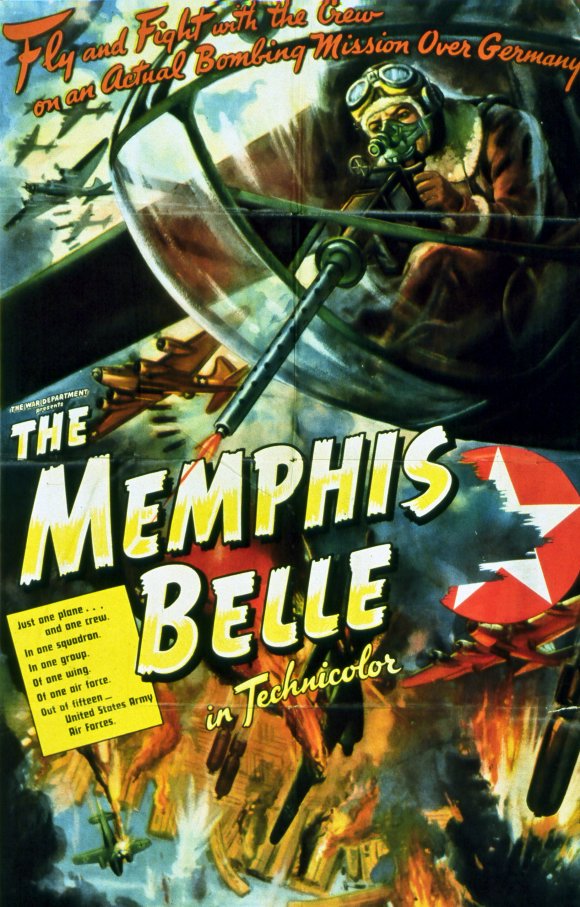
The Memphis Belle: A Story of a Flying Fortress(William Wyler, director) and The Cold Blue (Erik Nelson, director) In 1943, William Wyler, filming in 16mm, flew with the crews of B-17 Flying Fortress bombers on combat missions over Germany. He used the footage to tell the story of the 25th and final mission of The Memphis Belle and its crew. Wyler’s film was released in 1944, and is considered to be one of the best WWII documentaries. For years it existed in poor quality prints and videos, but has received a splendid 4K digital restoration. The Cold Blue is a new film by Erik Nelson, who drew from the over 15 hours of footage shot by Wyler. It details the making of The Memphis Belle, and is supplemented by interviews with surviving veterans who talk of their experiences as very young men who flew during the war. I have a particular interest in this subject. My dad was a navigator on a B-17G in 1944 and ’45. I was born while he was stationed in England flying bombing missions. Seeing both films resonated strongly with me.
There were Q&As following the screenings, both of which included Wyler’s daughter, Catherine. The second Q&A was moderated by Mark Harris, author of Five Came Back: A Story of Hollywood and the Second World War. This excellent book is about five major directors — John Ford, George Stevens, John Huston, Frank Capra, William Wyler — and the documentaries they made to promote the war effort.
The Cold Blue will be shown on HBO sometime next year. Release plans for The Memphis Belle have yet to be announced.
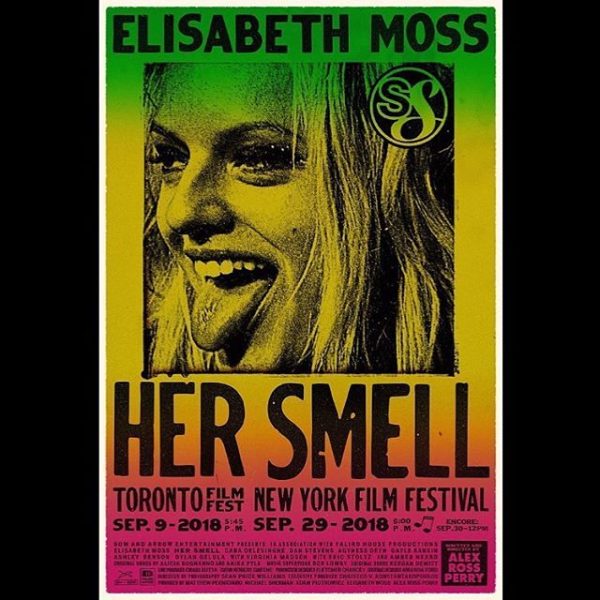
Her Smell (Alex Ross Perry, director & writer) Elizabeth Moss stars as Becky Something, the leader of an alt-rock/punk/grunge band called Something She. Becky is destructively out of control, making life impossible for everyone around her, which includes the three women in her band. She made me think of Courtney Love, though in a Q&A after the film, the director and Moss said they’d modeled her on a number of people. The opening act, a sequence lasting 25 minutes, drops us in Becky’s in-your-face world right from the start. The cinematography by Sean Price Williams is frantic and reflects the deliberate chaos of Becky’s life. It’s hard to watch and she’s hard to take, but I couldn’t look away. In a subsequent section, with Becky recovering in a house in the country, the camerawork is completely different, very stable, locked down for long takes. Elizabeth Moss gives a totally committed, kick-out-the-jams performance. I first saw her in Mad Men where her character’s amazing evolution was the spine of the show. This is the third Alex Ross Perry film she’s been in, following Listen Up Philip (2014) and Queen of the Earth (2015).
There was a brief Q&A with Alex Ross Perry and Elizabeth Moss after the screening moderated by Dennis Lim. I wish it had been longer.
There’s a lot to absorb in this film. I saw it only yesterday, but I think I need to see it again in order to see it better.
_________________________________________________
I’ve got 18 films to see before NYFF56 ends next Sunday. I’m particularly looking forward to Alfonso Cuarón’s Roma, Julian Schnabel’s At Eternity’s Gate (with Willem Dafoe as Van Gogh and Oscar Isaac as Gauguin), a restoration of Edgar Ulmer’s Detour, and Watergate, a 4-hour documentary by Charles Ferguson. I’m also hoping to score a ticket for Frederick Wiseman’s Monrovia, Indiana, the latest documentary from this 88-year-old master.
That’s all for now. See you at the movies. — Ted Hicks
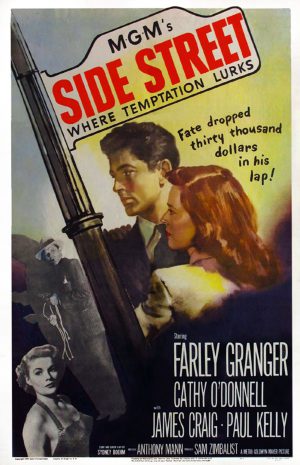
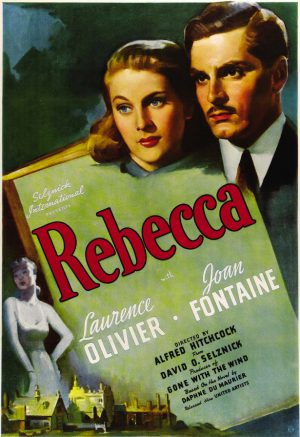
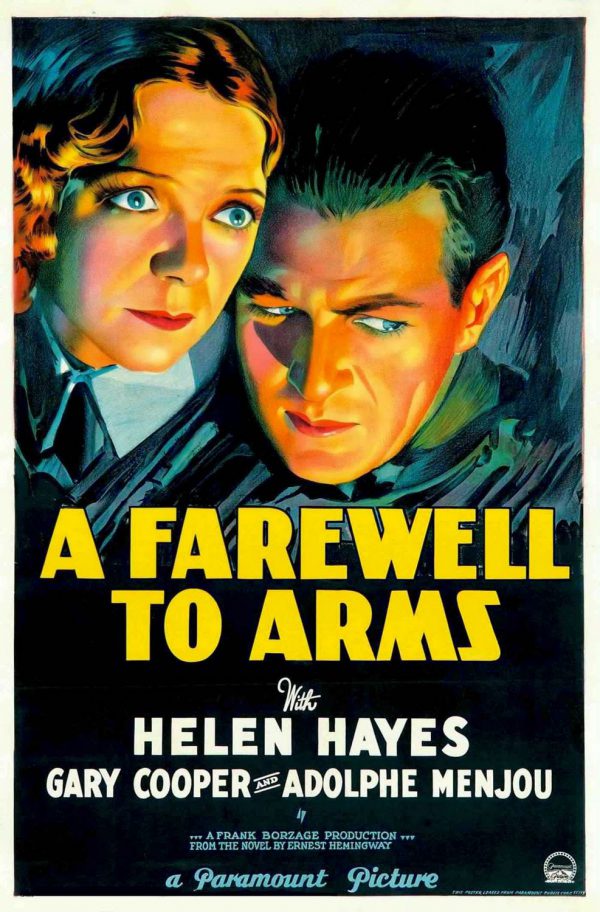
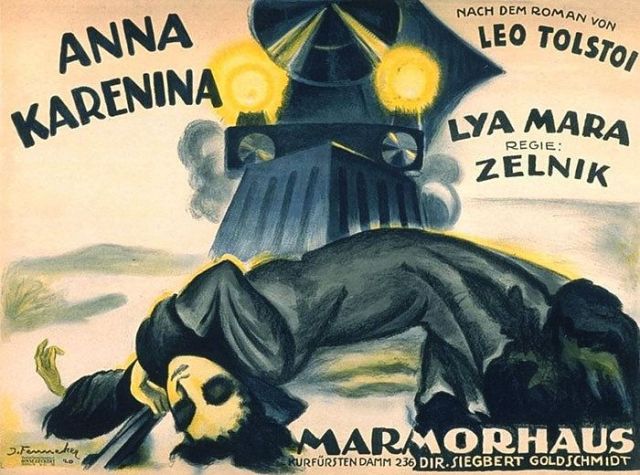
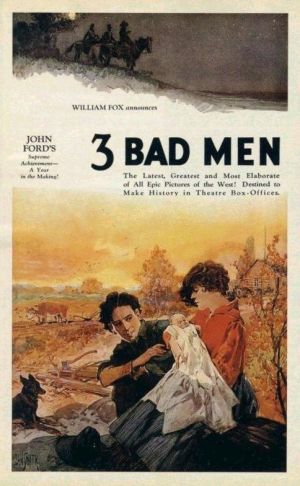
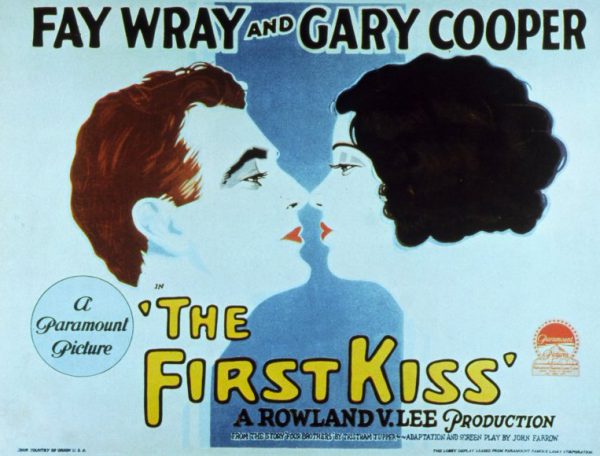
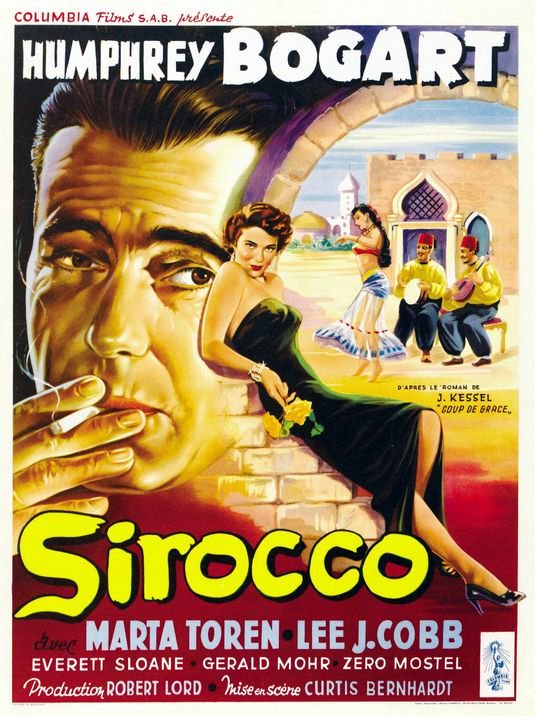
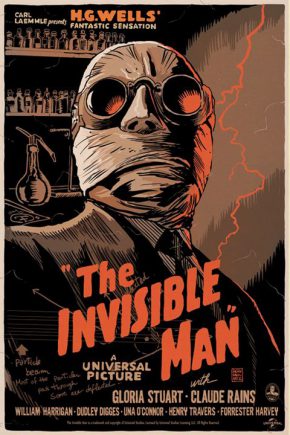
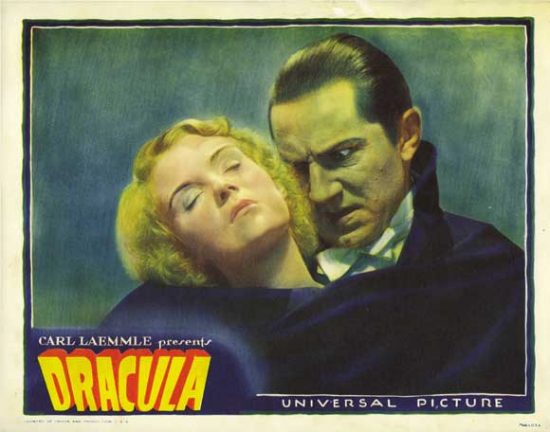
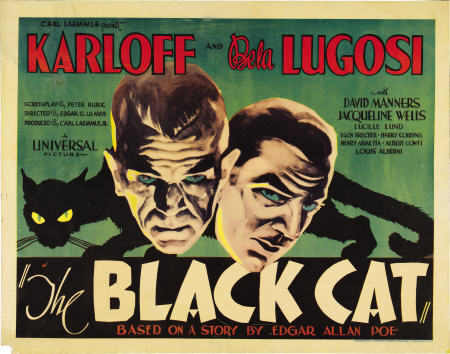
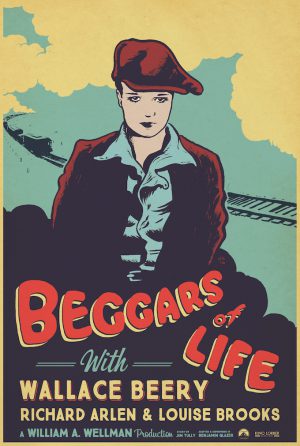
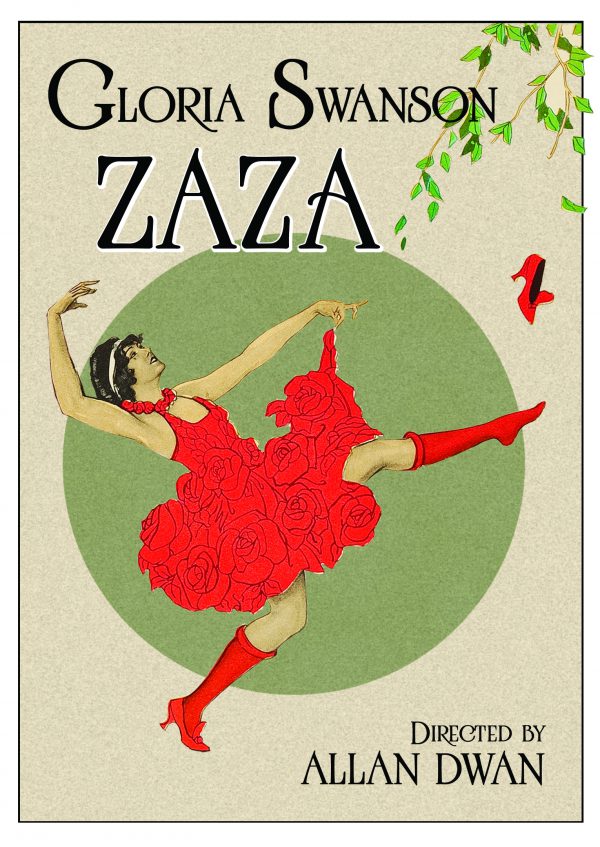
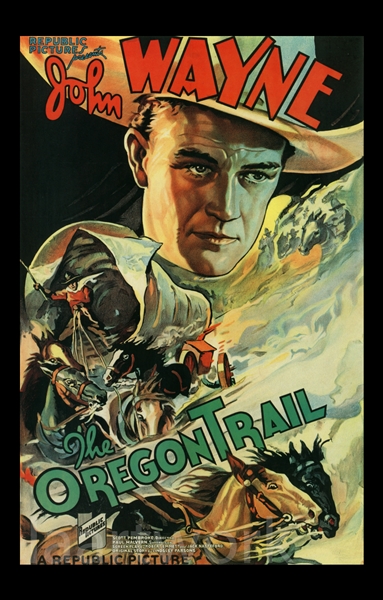
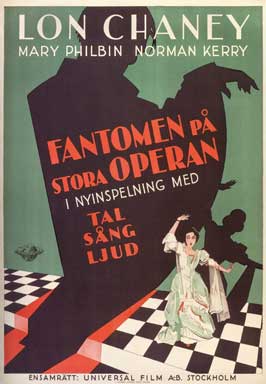
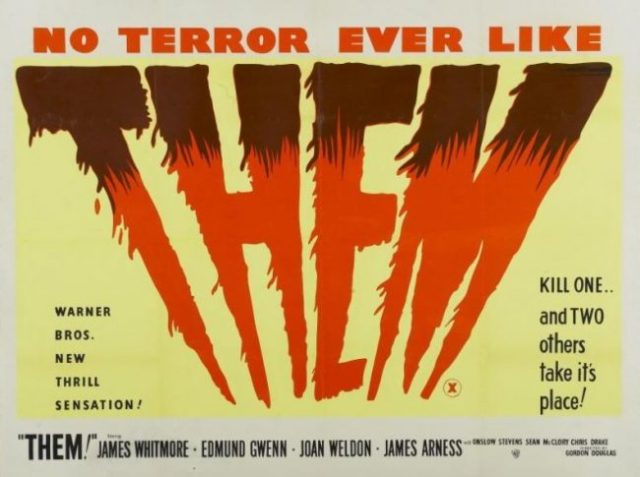
As with last year’s “Movie Poster Potpourri,” there’s no particular theme or category for this collection of film posters, other than they’re dynamic and dramatic. They all got my attention in one way or another. These are for films both well-known and obscure. It’s easy to see why vintage posters have become so collectable. Many of the ones in this post are artistic, often beautiful, or just in your face in ways today’s film posters don’t begin to touch. This is a bit of a grab bag, but I think they’re all pretty cool.
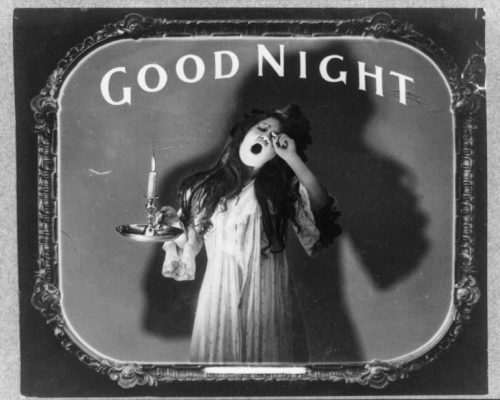
I’ve also included a few slides that used to be shown in theaters during the silent movie era, plus an incredible Clara Bow cover for the magazine “Motion Picture Classic” (don’t know the year), and the cover of the first issue of “The Edison Kinetogram,” published in London in 1910.
Title and year for films are listed below in the order they appear above (countries for foreign posters are also indicated):
The Fighting Streak (1922), Deadwood Pass (1933), Cimarron (1931), The Walking Dead (1936), I Was a Teenage Werewolf (1957), Somewhere in the Night (1946), Side Street (1950), The Wild Party (1929), Red Hair (1928), Red Headed Woman (1932), Psycho (1960), Quality Street (1937), Rebecca (1940), A Farewell to Arms (1932), Anna Karenina (Germany, 1920), The Atomic Man (1955), Flash Gordon’s Trip to Mars (1938), Spies (1928), Riddle Gawne (1918), Renegades (1930), 3 Bad Men (1926), The First Kiss (1928), Love Letters (1945), Invisible Stripes (Sweden, 1939), Stranger on the Third Floor (1940), Sirocco (France, 1951), King Kong (1933), The Invisible Man (1933), Dracula (tinted lobby card, 1931), The Black Cat (1934), Beggars of Life (1928), The Kid (1921), Zaza (1923), Fanny (France, 1932), Fighting for Justice (1932), The Oregon Trail (1936), The Phantom of the Opera (Sweden, 1925), Phantom of the Opera (U.S. 1925), Them (1954).





























 Films etc.