Breaking Bad — “The Perfect Batch” Panels

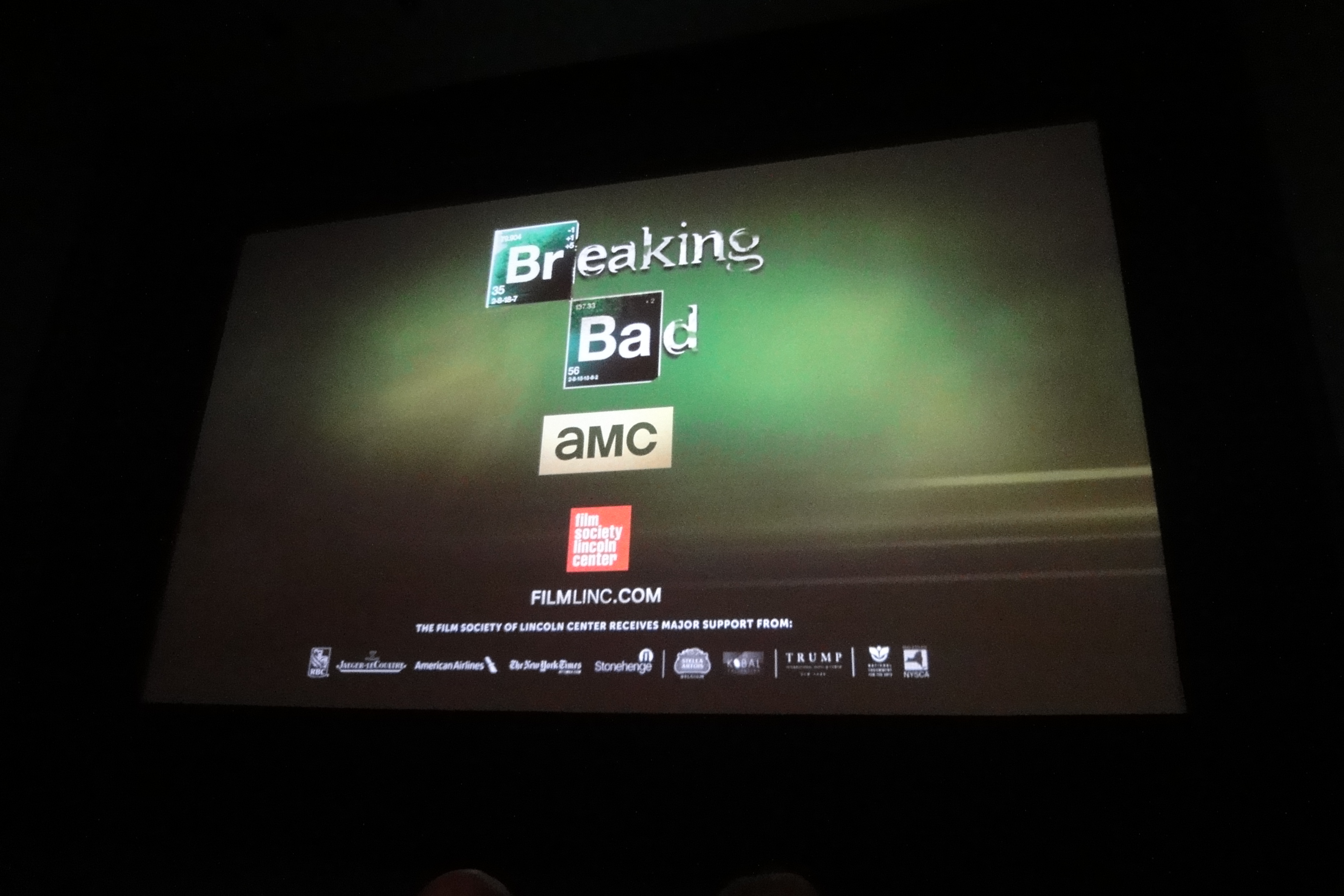
To end their week of Breaking Bad events, the Film Society of Lincoln Center hosted “The Perfect Batch: Breaking Bad Cast Favorites” at the Walter Reade Theater on Thursday, August 1, and Friday, August 2. There were two programs each night, with cast members selecting two episodes to be shown at each, followed by discussions on stage. I was unable to get tickets to these screenings, which sold out within minutes of going on sale. So far I haven’t been able to find out which episodes were shown, but the Q&A sessions with cast members are now online. These weren’t available in time to include in my previous Breaking Bad post last week, but I wanted to add them here. – Ted Hicks

Note: If you haven’t seen the first five seasons yet, these discussions contain spoilers.

Posted in Home Video, TV | Leave a comment

Friction Fiction #3 — “The Return of Doktor Flesh”

Parental Advisory2I don’t want to offend anyone’s sensibilities, so please be aware that this story would probably get an R-rating if it were a movie. If that’s not a problem, then here you go!

********************************************************************************

THE RETURN OF DOKTOR FLESH

by Ted Hicks

Doktor FleshDavid Chandler, Jr. sat alone in his living room, watching the snow drift down outside, large flakes illuminated by the streetlights and reflected in the headlights of vehicles slowly moving up and down the unplowed street. He was still badly hungover from the night before. A pain throbbed and pressed behind his eyes. Another beer might help.

He rose and walked slowly to the kitchen where he took a can of Bud from the refrigerator. A movement caught his eye and he stopped dead. A cockroach was crawling up the side of the sink. Keeping his eyes on the roach, Chandler very slowly reached for a paper towel. He smashed the roach in one swift, decisive movement, looking quickly to see that he had in fact gotten the little bastard, then crumpled it  tightly in the paper towel.

He returned to the living room and sat at his writing desk, the unopened beer in one hand and the wadded paper towel in the other. Chandler wanted the beer, but he had to get rid of the roach first. He squeezed the paper ball as hard as he could. He believed you couldn’t kill them enough. No matter how crushed, they might return to life, so he always flushed them down the toilet. They might live on in some maimed, crippled fashion in the sewers, but he didn’t have to see them.

He turned from the window and the falling snow. He looked past the kitchen and down the hall. Light from the bathroom cut into the hallway. Chandler knew he’d have to go there sooner or later, and not just to flush the cockroach. For that matter he could open the window and throw the roach out into the snow and it would be just as gone from his life.

Reluctantly Chandler began to rise, then sat back down. Earlier that evening there’d been an argument, then something happened, an accident, and now his mother lay dead on the bathroom floor. They’d been arguing, as always, over Doktor Flesh.

****

            His mother is peering intently into his bathroom mirror. She has her eyes and nose squinched up in a way that drives Chandler crazy. She is doing something to her eyebrows. “You could use better light in here,” she says.

He stands in the doorway watching her. She stops and turns to face him. She has removed her blouse. She is wearing a bra with openings that expose her large nipples.

“Listen, Junior,” she says, “you can stand there all night, but I’m not giving you the rights. I’ll never give you the rights, I’ll never sell you the rights. How many times do I have to tell you?” She turns back to her work in the mirror.

“But why?” he asks, trying not to beg. “Why not? What would be so terrible?”

She turns again and gestures with a silver tweezer that makes him think of a weapon. “Look,” she says more sharply, “try to understand this. You’re not going to turn your father’s work into a bunch of comic books. You’re not a good enough writer to begin with, even if they’d let you write them, which they probably wouldn’t. But it’s not happening.”

But this is my big chance! he wants to say, but doesn’t. He knows she’ll say that at forty-four it’s a bit pathetic to see writing comic books as his last chance to be somebody. She’ll tell him once again that none of his writing has ever been successful, not even in those workshops he keeps taking, and that maybe he should just grow up and try to be the best data-entry clerk he can be. She’ll tell him that the late, great David Chandler, Sr. is the one and only writer in the family.

****

Chandler stared at the rows of worn paperbacks on the shelves above his desk. The joke was that his mother talked as though his father had been some sort of fucking William Faulkner. In the late Forties and Fifties, David Chandler, Sr. had written forty-seven paperback originals, each featuring Doktor Heinrich Flesh, an evil, bloated genius, a bloody monster whose fiendish exploits became as popular as those of Sax Rohmer’s Fu Manchu.

Chandler took one of the books from the shelf and looked at its cover. It was typical of the series, a lurid scene rendered in garish colors turned slightly muddy by the printing process. Doktor Flesh, dressed in black, eyes hidden by small, round  glasses, the mirrored lenses shining in the light, stands leering over a half-naked woman with long blonde hair who is bound tightly with wide, studded straps. Doktor Flesh is pulling on a leash attached to a metal collar around the woman’s neck. At his side is his mistress in black leather, Lydia Chelm, caressing an elaborate torture device. In the background, chained to the wall beneath a burning torch, Inspector Nigel Baskett of Interpol looks on in abject horror.

Chandler knew this was crap, but the books had a trashy appeal that was undeniable. They were periodically re-issued, and currently were back in vogue.

On the desk was the latest letter from Martin Bobb at Necro Comics. They were impatient to clear the rights to use the characters. When that was done there’d be a contract for Chandler to sign. They understood that he wanted to write the stories himself, and they’d give him a shot at that, but they’d pay him just to use his name. It was a hook – the new adventures of David Chandler, Sr.’s famous characters, written by David Chandler, Jr.

Jesus. For this his mother was dead in the bathroom. What a fuckup. He put the paper towel containing the roach into the waste basket by the desk. So what. It was only a roach. Maybe he didn’t have the right to kill it anyway. One of God’s creatures and all that. He snapped the tab off the can of Bud and began to drink.

The hell with it. Chandler stood and walked straight toward the bathroom. Then his resolve faltered. He hesitated several steps from the doorway. He felt a coldness spreading in his chest. Chandler stepped slowly forward and looked around the door frame.

His mother was still on the tile floor by the toilet. Where else would she be? Her head was propped at an awkward angle against the tub. A thin line of dried blood ran from her nose. There was blood on her bra. Her eyes were open. Chandler let out his breath. He felt unsteady for a moment, then straightened up. Time to man up, he thought.

He went to the bedroom and got his jacket from the closet. He was on his way out the front door when he stopped and went back to his desk. He fished the wadded paper towel from the waste basket and opened it. The cockroach was still inside, one of its legs moving feebly, or was it? He returned to the bathroom, leaned over his mother, and flushed the roach down the toilet.

Chandler went downstairs to the bodega on the corner where he bought four large bags of ice. The man behind the counter said, “Hey, Mr. Chandler.  It’s snowing!  What you want ice for?”

Chandler said nothing and waited for his change.

“Maybe you’re having a party? Girls, huh?”  The man laughed, making a fist and pumping his forearm slowly back and forth.

Yeah, right, Chandler thought. Asshole.

“My refrigerator’s on the blink,” he finally said. He took his change and left.

Back in the bathroom he emptied two of the bags into the tub. He turned to his mother. He felt funny about picking her up without her blouse on. He looked around and found it hanging on a hook behind the door. After a couple minutes of trying to get his mother’s arms into the blouse and avoid her glassy eyes, he gave up and put it back on the hook. Those guys in funeral homes knew how to do this. Must be some trick to it. They weren’t kidding about dead weight.

With a clumsy effort he put his mother in the tub. Thank god she wasn’t stiff yet. He emptied the remaining ice over her. Chandler sat on the edge of the tub and packed the ice around her as carefully as he could. He remained sitting there, drumming his fingers on the side of the tub, and turned to look out the open bathroom door. Now what? He needed to think about this.

Chandler went to the kitchen and got another beer. In the living room he sat at his desk looking out the window into the night. It was still snowing. A snowplow was making its way slowly down the street. He saw his own reflection superimposed on the window, looking back at him like some fucking ghost. Maybe he shouldn’t get too hammered. There was too much to do. Christ, maybe he definitely should get hammered and stay that way.

The beer began to create the frequent need to pee, and for awhile he used the kitchen sink to avoid returning to the bathroom. The next time he said fuck it and strode purposefully into the bathroom.

He tried to focus only on the toilet bowl, but out of the corner of his eye he thought something was different. He turned. His mother’s jaw had dropped and her mouth was gaping open as if in surprise. Still holding himself, the image flashed through Chandler’s mind of pissing into her open mouth. He began to laugh, then stopped short as he saw his mother’s staring eyes. How could he think such a thing? He turned back to the toilet and as he peed, rapped the knuckles of his free hand against the wall above the toilet. Rat-a-tat-tat.  Those eyes. Those eyes. Windows to the soul. Where was her soul? Where was his?

Chandler rushed across the hall to his bedroom and came back with a pair of sunglasses, wrap arounds from his hipster days that he didn’t have the balls to wear anymore. He positioned them on his mother’s face and stood back. Weird effect, but at least he didn’t have to see her eyes.

He left the bathroom and got another beer. He began to take the Doktor Flesh books from the shelves above his desk and carefully arrange them on the living room floor.  When he’d finished he pulled up a chair and stared at the grand design spread out before him. Chandler leaned forward and the nearly full can of beer slipped from his hand. He tried to catch it with his other hand, but it had already hit the floor. Beer began to soak into the row of books closest him. Oh hell, he had to be more careful. These books were original editions. He stood suddenly, and the chair fell over behind him.

****

            David Chandler moaned and twisted in the bed. In his nightmare blood dripped from the knife gripped in his hand onto the naked body of his mother lying at his feet, and he was shouting. He woke with a start and anxiously turned on the light beside the bed. His throat was dry and he was very thirsty. He became aware that the sheets and his naked body were spotted with blood. In his sleep he had given himself many small cuts and nicks with the knife he saw was gripped in his right hand.

As he brought the knife closer to his face, a hand gloved in black leather reached out and took it from him. He looked up and saw Lydia Chelm kneeling by the bed. She turned to smile at him, her eyes dark and piercing, her hair drawn tightly back from her face, stretching the skin on her skull. She threw the knife over her shoulder where it stuck in the floor, then reached forward and cupped his balls in her leather glove, gripped and twisted.  Chandler gasped as she looked at him and brought the index finger of her free hand to her lips and whispered “Shhhhhh.” She smiled sweetly, and opened her mouth. Chandler saw that her teeth were filed to perfect razor points.

She dipped her head to take him in her mouth and bit down hard. Chandler screamed as she twisted her head savagely back and forth. Over the curve of Lydia’s shuddering back he saw Doktor Flesh in the dim light, smiling back at him, his lenses glittering.

***********

Chandler slowly woke lying on his bed, nauseous and disoriented. He suddenly jerked awake, sat upright and reached down to grab at his crotch. The sudden movement caused brutal pressure in his brain. He lay back and let his eyes go out of focus. He realized he’d pissed the bed. There was that familiar smell and wetness. Hadn’t done that for a long time. Fuck it. What the hell. He lay there and tried to think.

Ugly fucking dream, that’s for sure. It occurred to him that maybe everything from the night before was a dream. Just another drunken binge. He had a moment of hope. His mother was still alive and he was still in the dead end of his life. Well, that was better than the way he remembered it.

He struggled out of bed, pulled on his flannel robe and slippers and stepped across the hall to the bathroom doorway. He knew he was fucked before he got there. There was a bad smell, getting worse, something turning sour. She was lying in the tub like he’d left her, gaping jaw, the wrap-around shades, looking like she’d just been thrown from a motorcycle.

As he leaned forward to close her jaw he saw that a mushy substance had partially filled her mouth and run down her chin. What the fuck was that? More blood had run from her nose and had turned black. He took some toilet tissue to wipe her chin clean, then tried to close the jaw. He couldn’t budge it. He poked the flesh of her bare arms and shoulders.  Stiff as a board.

Chandler turned and shuffled down the hall. It had stopped snowing during the night and now the living room was filled with harsh sunlight. He saw the Doktor Flesh paperbacks spread across the floor.  He had forgotten doing that.  The pages of two of them were wet and swollen. He bent and carefully picked them up. Something had spilled on them. Beer. He hoped they weren’t ruined.

In the kitchen he opened the refrigerator door slowly, expecting to be screwed there as well, but there was one beer left, thank god. He went back to the living room and looked at the books still on the floor. He put on a Beatles album. Chandler began picking the books up from the floor. When he’d finished replacing them on the shelves, he sat down at his desk.

What was he going to do? He couldn’t just sit here drinking beer.  That’s what he wanted to do, but there was the smell, for one thing. He didn’t know anything about decomposition. He never thought he’d need to know anything about it, except maybe for some story he might write, but he could just make that up. What about his mother? Doktor Flesh had an acid vat in his cellar for this kind of thing. That guy in that teenage Frankenstein movie had an alligator in a tank. Yeah, well, this was a New York apartment.

Maybe he could get some acid, sulfuric acid. Where would he get it? Could anybody get it, just walk in off the street and say “Give me ten gallons of acid”? She was already in the tub. He could do it right there. But would it fuck up the plumbing? Eat through the tub? Maybe he could cut her up and take the pieces out in small garbage bags like on The Sopranos.

He shook his head. He knew he couldn’t do any of that. He was fucked and he knew it. His mother’s housekeeper would start wondering where she was pretty soon.  Somebody, the cops probably, would come around to check with him pretty soon, someday, any day, whenever. What was he going to do then?

He sat up straight in the chair. Okay, the first thing was to call in sick. He obviously wasn’t going to work today. He laughed. Maybe never. Then get more beer, some food, more ice, maybe some deodorizers, etc etc etc, blah blah blah.

Chandler made the call to his job. He brushed his teeth at the kitchen sink, fuck shaving, later for that, got dressed and went out into the fresh snow and sunlight.

****

            He felt better by the time he returned to his apartment. Braced by the cold of the winter day and the brightness of the snow, loaded down with his supplies, he felt a sense of some accomplishment, some purpose, even some hope. He began putting beer in the refrigerator.

Later, in the bathroom with his mother, he set out the dozen Air-Wick bottles that he’d bought. The final effect was a little heavy, to be sure, but Chandler felt it successfully masked the smell created by whatever bacterial processes were going on in his mother, or at least made it seem like something else. Something else.

Chandler sat down uneasily on the closed toilet seat. He’d become aware of a bowel movement pressing on him, and while he knew it wouldn’t make any difference, not really, he just couldn’t do it here with his mother in the tub beside him. Christ, he’d have to go out again, find some establishment that didn’t restrict its restrooms to customers only, or maybe he’d have to order something just to take a dump.

Grow up, grow up. Be a man about this. Your mother used to change your diapers.  She won’t care. Especially since she’s dead. He raised the seat and dropped his pants. He sat down on the toilet and began to cry.

****

            He was on his knees beside the tub, washing blood from his mother’s face with the almond soap she’d given him when he heard a knock at his apartment door. A rush of adrenalin surged through him. He didn’t move.  He waited. There was another knock, and a voice called out, “David? Are you there?”

Chandler couldn’t believe it. It sounded like his girlfriend, his ex-girlfriend. He knew it was her. He went out to the door and said, “Who is it?”

“David, it’s Annie. Hi!”

He tried to slow his breathing. He didn’t move.

“David?” she said again.

Leaving the chain in place, he opened the door a crack. He saw her heart-shaped face peering in at him. “Hi,” she said, then frowned. “Can’t I come in?  What’s wrong?”

What’s wrong? he thought. He wanted to laugh. Anyway, he hadn’t seen or heard from her in six weeks, and now she was at his door as though nothing had happened.

“This isn’t a good time,” he said. “I’m in kind of a mess here.”

He saw her fidget where she stood. “What are you talking about?  Please let me in.  This is silly. I want to see you.”

Chandler slowly unlatched the chain and opened the door. Fuck it, it wasn’t like this was the first stupid thing he’d done lately. She stepped inside, leaving little tracks of snow.  She was wearing jeans and cowboy boots and a leather bomber jacket with the collar turned up, and held a pair of furry ear muffs in her hand. He saw her nostrils flare.

“My god!  What’s that smell?” she said, looking around the living room.

“I told you I had a problem here. I’m cleaning something up.” He looked at her. She was beautiful as usual. “Listen, I’m surprised to see you. How’d you know I’d be home?”  He paused. “I didn’t hear the buzzer. How’d you get in, anyway?”

“Somebody was coming in, so I just followed. I just took a chance you’d be here.”

“Well,” he said, “it’s nice to see you.” What was he doing? He couldn’t let her stay here. “But believe me, this is a really really bad time. Can we get together later?”

“I guess so,” she said, “but since I’m here I need a favor. I need to use your bathroom, okay?”

“Oh no, no!” he said loudly. “It’s the plumbing. That’s the problem, it’s the plumbing.  You can’t go in there!”

“It’ll just take a second,” she said, giving him that look that told him how stupid and unreasonable he was being. And before he could stop her, she darted around him and went down the hall to the bathroom.

Chandler moaned and sat down at his desk. Man, she’d come up just to use his fucking bathroom. It just went from bad to worse. There was nothing he could do. He leaned forward, held his head in his hands and waited. He heard her shocked cry.

Chandler looked up as she ran from the bathroom and stumbled to a stop across the room from him. This was like some sitcom. Her eyes were wide and her jaw worked up and down until she finally spoke.

“That’s your mother! What happened? What did you do?”

He stood and made what he hoped were calming motions with his hands. “I can explain that, Annie. It wasn’t my fault?”

He took a step toward her and saw her catch her breath. “But what happened?  How long has she been there? She’s swelling up!

Chandler stopped and pulled his hand across his mouth.

“Have you called the police?” When he didn’t answer, she said more frantically, “David, you’ve got to call the police!”

“I think it’s too late for that, Annie,” he said. He saw the look on her face as he stepped forward.

****

            He knew enough this time to close the eyes and tie the jaw shut with a dish towel so it wouldn’t fall open later. He’d laid Annie on her back on top of his mother in the tub. Need more ice, he thought. He looked at her sadly, then picked up the small hammer he’d used. He was washing off the blood and hair when he heard his apartment buzzer, the one Annie should’ve used.

Chandler laughed shortly, shook his head, and went to the intercom by his front door.  He pressed the button and said, “Who is it?”

“Hey, David. It’s Martin Bobb! I need to see you about the contract. Can I come up?”

David Chandler, Jr. shook his head and took a breath. He balanced the claw hammer in his hand and spoke into the intercom. “Sure!” he said.  “Come on up!”

Doktor Flesh2

Posted in Fiction | 2 Comments

“Born in Chicago” — Black & White Blues

Howlin Wolf2TheSlowDrag-MuddyWaters

************************************************************************************** I recently saw Born in Chicago, a fascinating documentary that lays out how black blues musicians in Chicago during the 1960s, including Howlin’ Wolf (above left), Muddy Waters (above right), Willie Dixon and many others, influenced and mentored hungry young aspiring players, mostly white and Jewish, like Mike Bloomfield, Barry Goldberg, and Elvin Bishop, who went on to bring the blues to a wider, i.e. white, audience.

Chicago Blues Reunion-posterWhat became Born in Chicago was initially intended to be a DVD recording of a concert by the Chicago Blues Reunion, a band which includes Nick Gravenites, Barry Goldberg, Harvey Mandel, and Corky Siegel among its members, all veterans of the 60s Chicago blues scene. The filmmakers eventually realized there was a much larger story to tell, and the film grew from there.

Given its subject matter, Born in Chicago sounded like something I would want to see. When I read “Blacks and Whites Made the Blues,” Larry Rohter’s excellent article about the film in the New York Times the day before the screening, I was convinced of that. An added bonus was the news that record producer Marshall Chess, who narrates and appears in the film, keyboardist Barry Goldberg, and harmonica virtuoso Corky Siegel would be in attendance for a discussion following the screening. Siegel Schwall album cover3I was especially excited that Corky Siegel would be there. I first became aware of him in 1968, when I found an album by a group called the Siegel-Schwall Blues Band in the BX of an Air Force base where I was stationed in northern California. I hadn’t heard of them, but the energy of the blurred cover photograph got my attention. As it turned out, I was expecting something more like Cream or Savoy-Brown, and didn’t have the patience for the more authentic blues of numbers such as “Slow Blues in A” and “That’s Why I Treat My Baby So Fine.” I wasn’t ready then, but I really love them now.

Chess Records Best of albumI had a sketchy sense of the history this film covers, but nothing that put it together the way Born in Chicago does. Marshall Chess, who narrates the film as well as being interviewed on-camera, is a direct link to the Chicago-based record company, Chess Records, which has been called “America’s greatest blues label.” Chess Records was founded in 1950 by Marshall’s father, Leonard Chess, and his uncle, Phil. Its importance, like that of Sun Records, cannot be overestimated. Chess was home to such artists as Howlin’ Wolf, Willie Dixon, Chuck Berry, Muddy Waters, and Etta James, all of whom contributed to the distinctive Chicago blues sound and, along with Elvis Presley, Carl Perkins, Roy Orbison, Jerry Lewis, and Johnny Cash at Sam Phillips’ Sun Records in Memphis, Tennessee, to the growth of rock ‘n’ roll.

A prominent figure in Born in Chicago is guitarist Mike Bloomfield, who was among the first of the young white musicians who began hanging out in black blues clubs in the 60s, soaking up the music and learning as much as they could. I don’t think they were trying to be civil rights pioneers (that movement was just beginning); I think they just loved the music and wanted to get to the source. Bloomfield, who grew up in a wealthy Jewish family on the North Side of Chicago, fell in love with the blues when he was still a teenager, hanging out in blues clubs on Chicago’s South Side, a predominately black area. During these rounds he got to know Paul Butterfield, a relationship that would prove important to his career. Butterfield, like Bloomfield, came from a privileged background. He was the son of a lawyer and painter, had attended private school, and studied classical flute. But Butterfield wanted to play blues harmonica, and began frequenting the same clubs, where he met Bloomfield, Elvin Bishop, Nick Gravenites, and Charlie Musselwhite.

Charlie Musselwhite & Mike Bloomfield

Charlie Musselwhite & Mike Bloomfield

Paul Butterfield

Paul Butterfield

***********************************************************************************

As to why young Jewish guys would want to play the blues, Mike Bloomfield has been quoted as saying, “It’s natural. Black people suffer externally in this country. Jewish people suffer internally. the suffering’s the mutual fulcrum for the blues.” Marshall Chess says something similar in Larry Rohter’s New York Times article: “I think there’s something in the pain of the blues, something deep, that touches something ancient in Jewish DNA.”

The Paul Butterfield Blues Band was formed in 1963, and included guitarist Elvin Bishop, and two members of Howlin’ Wolf’s band, Jerome Arnold on bass and Sam Lay on drums. Bloomfield joined the band in 1964. The title cut of their second album, “East-West” (released in 1966) is a thirteen-minute instrumental tour de force, an early jazz/blues/rock fusion mixed with Indian raga that’s quite amazing.

Bloomfield met Bob Dylan at a club in Chicago. Dylan’s account of this meeting in Born in Chicago is quite amusing, and also reflects his high regard for Bloomfield’s playing. After hearing the Butterfield band play at the 1965 Newport Folk Festival, Dylan asked them to back him the next day for his first electric performance. With very little rehearsal, Bloomfield, Sam Lay, and Jerome Arnold played a four-song electric set with Dylan that became quite controversial. Bloomfield went on to record with Dylan, and is prominent on Highway 61 Revisited, especially on “Like a Rolling Stone.” Per the Wikipedia entry, “Bloomfield’s sound was a major part of Dylan’s change of style…”

*********************************************************************************

Through a deft mix of interviews and performance clips, Born in Chicago sharply conveys the strength and beauty of this music, which was very specific to a time and place. The interviews provide a kind of oral history and commentary from people who were there at the beginning, and those who came after. We hear from Marshall Chess, Nick Gravenites, Corky Siegel, Keith Richards, Eric Burdon, Jack White, and others. A standout is Mike Bloomfield’s interview segment, seen in an archival clip (he died in 1981 at age 37). Young white musicians learned from older black artists, most of whom came from South, and passed it on. Born in Chicago shows us what this music meant to those who played it, and to those who loved it. – Ted Hicks

Born in Chicago had a single screening on July 26 at a Film Society of New York theater near Lincoln Center. According to the film’s director, John Anderson, distribution plans are still being worked out. If you’re at all interested, watch out for it, as it’s a valuable document with a lot of great music to boot.

Posted in Film, Home Video, Music | 1 Comment

Breaking Bad — “I Am the Danger”

Breaking Bad poster - Walt

(Though the term “spoiler alert” is overused, that’s what this is. If you haven’t seen Breaking Bad, or are still in the early seasons, be advised that the links, clips, and interview segments below may contain spoilers. Proceed with caution.)

Becoming a Breaking Bad fanatic didn’t happen overnight for me. I’d decided I didn’t want to watch this new series even before the first episode premiered in January of 2008. I didn’t think I’d be interested in a protagonist who cooked and sold crystal meth. I don’t know why this bothered me, since I loved The Sopranos, which was populated mainly by murderously violent criminals, and Omar Little, a stone cold killer, was one of my favorite characters on The Wire, one of the greatest television series ever. So I’m not sure why Breaking Bad‘s premise — a high school chemistry teacher in Albuquerque learns he has terminal cancer and becomes a high-end drug dealer so his family will have money after he dies — put me off to the point of not even being willing to check it out.

At the time I wasn’t aware of Vince Gilligan’s work on The X Files, a series I’d liked a lot, so when I saw that he was the creator of Breaking Bad, it didn’t mean much. I didn’t know who he was or what he’d done. Bryan Cranston I knew from Malcolm in the Middle, and wasn’t sure how well the actor who was the largely clueless, doofus dad in that comedy series was going to work in such a different setting. Well, I found out in both cases. Based on the continuing achievement of Breaking Bad, Vince Gilligan is definitely an equal with the three Davids: Milch (NYPD Blue, Deadwood), Simon (Homicide: Life on the Street, The Wire, Treme), and Chase (The Sopranos). They’ve all created great work that has lasting value. Bryan Cranston’s portrayal of Walter White is amazing, simply astounding. As Vince Gilligan put it in his pitch to networks when he was trying to get Breaking Bad off the ground, the series would show the transformation of  Walter White from Mr. Chips to Scarface. We see the journey of a fundamentally decent man who becomes capable of the most heinous acts, which he repeatedly justifies by claiming that everything he does is for the welfare of his family. Watching him walk this line is both frightening and fascinating. Here is a scene between Walter and his wife, Skylar (the equally excellent Anna Gunn) from episode six of season four. It contains the signature lines, “I am the danger,” and “I am the one who knocks,” which are chilling in context.

As I said before, I came late to the party. I was hearing great things about the series, and began to think I might be missing something, that I should catch up with it at some point. I still hadn’t seen it by April or May of last year. By that time, four seasons had already been telecast, and the prospect of starting from the beginning was daunting. But then a friend of mine sent us DVD sets of the first three seasons, and it became a little harder to keep putting it off. A couple of weeks after receiving the DVDs, my wife and I started watching and were hooked immediately. We burned through those three seasons, and then the fourth, which I knew I had to buy. We finished the fourth season a couple of weeks after season five began airing on July 15, which I was recording. We quickly caught up, and then had to suffer the hardship of having to wait a week between each new episode. The term “binge viewing” has lately caught on, and it’s an excellent description, because that’s what it feels like.

Vince Gilligan-Moving Image 7-28-13The final eight episodes begin airing on Sunday, August 11. There’s been a blitz of Breaking Bad activity here in New York City the past week or so. The Film Society of Lincoln center ran marathon screenings of the first five seasons, one season a day. This was described as an “experiment in communal binge viewing.” The screenings were free and drew overflow crowds. Last Sunday night we went to the Museum of the Moving Image in Astoria, where we saw Vince Gilligan being interviewed by Charlie Rose in a sold-out event. That interview can be viewed here: http://www.charlierose.com/watch/60247981

A Times Talk event took place on Tuesday at the New York Times building with Vince Gilligan and cast members interviewed. It was sold out, but we were able to watch it at home via live streaming. It was terrific. The cast’s comments, often very funny, offered an opportunity to go behind the scenes with them, and gave me the feeling we were getting to know them apart from their characters on the show. The affection they obviously feel for one another is contagious. Here’s a link to the discussion (this takes you to an NYT Arts page; you can start the video from there; the intro takes several minutes, but the wait is worth it): http://artsbeat.blogs.nytimes.com/2013/07/30/live-video-bryan-cranston-vince-gilligan-and-others-on-the-end-of-breaking-bad/?ref=arts&_r=0

After we finished watching this, I checked my email and discovered I’d won a pair of tickets Breaking Bad-Walter Reade 7-31-13for an advance screening of the first of the final eight episodes, which begin airing on August 11. This took place at the Walter Reade Theater the following night on July 31, which also happened to be my birthday. What an unexpected present. It was great. Vince Gilligan and the cast were in attendance, along with — and this was surreal — Keith Richards, Lou Reed, David Chase, and Warren Buffett, among others in the crowd. We had to sign confidentiality agreements to get in, so I can’t reveal anything about the episode even if I wanted to. All I can say is, it definitely does not disappoint.

Bryan Cranston has made Walter White’s transformation from a high school chemistry teacher to hardened criminal truly something to behold. It’s hard to single anyone out, because the entire cast is so good, but my favorites are Aaron Paul as Jesse Pinkman, Walter’s partner (and surrogate son) in the meth business (for me the moral center of the show), and Jonathan Banks as Mike Ehrmantraut, a fixer and deadly hitman, scary and oddly lovable.

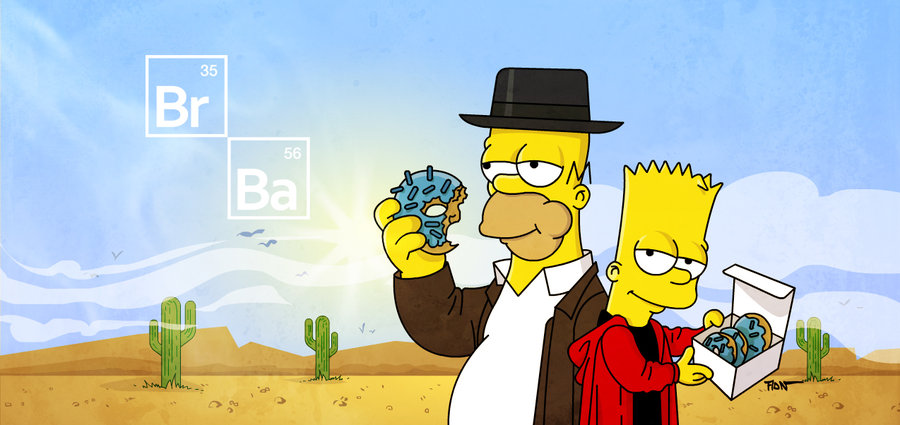
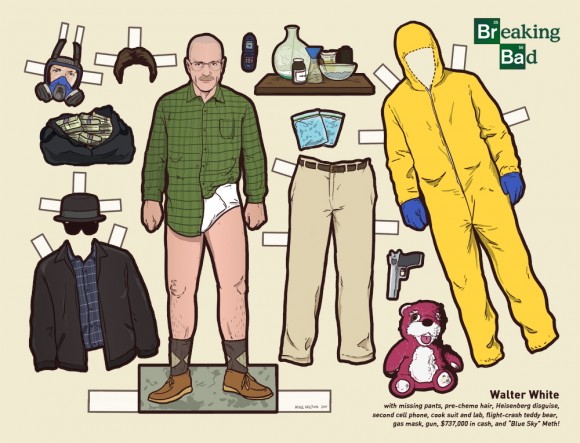
Breaking Bad-SimpsonsBreaking Bad is an amazing series. I don’t think there’s been a false step in the 54 episodes that have aired to date. The show is challenging, inventive, and surprising at nearly every turn. By now it’s become part of the culture, much as The Sopranos did before it. You know you’ve arrived when Walter White paper dollyou’re referenced on The Simpsons and people are coming up with Walter White paper dolls.

All great feature films and television shows succeed mainly because they create rich, dimensional characters, and put them in compelling situations that connect with an audience. Breaking Bad is both immensely entertaining and deeply disturbing. Vince Gilligan has said, “We want to make people question who they’re pulling for, and why.” He has also said that the larger lesson of the series is that “actions have consequences.” Breaking Bad, along with The Sopranos and The Wire, is a sustained narrative accomplishment equal to the best works of literature.  The series is almost over, but I’m thrilled to have been along for the ride. – Ted Hicks

Episodes of Breaking Bad are available for streaming via Netflix and Amazon.

Here’s a link to the official AMC Breaking Bad website.

Posted in Home Video, TV | 4 Comments

Friction Fiction #2 — “Do Not Be Afraid”

The following story was written some time ago while I was a member of the Riverside Writers’ Group, an excellent fiction workshop led by the equally excellent Bill Roorbach in the late ’80s here in New York City. It’s autobiographical, in the sense that all fiction is autobiographical to one degree or another, though I’ve never been abducted by aliens (as far as I know), nor have I ever met Tuesday Weld.

*************************************************************************************

UFO2by Ted Hicks

The man and woman wearing matching motorcycle jackets were walking down the street hand in hand, yelling at each other. Taylor watched them from his fifth floor apartment, disturbed and yet excited by the violence in their voices. He pulled his head in and closed the window, wondering how many blocks they’d get before one of them punched the other in the face. Well, at least they were together.

Taylor sat back down in front of the television where he’d been watching Bugs Bunny cartoons when the angry shouts had brought him to the window. But now he couldn’t concentrate, and after a few more minutes of watching Bugs and Elmer going round and round, he turned it off and put the disk away with his other cartoon DVDs.

He thought about the couple in the street. Taylor was nearly forty-five and he didn’t even have anyone to fight with. Whose fault is that? he thought. Maybe if he’d do something besides feel sorry for himself. He turned from the bookcase filled with DVDs and walked once around the room, trying to focus on something.

Taylor went to the bathroom and looked in the mirror. His beard was coming in nicely. He stroked under his chin. He was good-looking enough, or so he’d been told; he dressed okay; he was an interesting guy; he just didn’t seem to have much luck with women. But what was luck, anyway? Don’t we make our own luck? He made some goofy faces in the mirror, then stopped, frowned, and sat down on the closed toilet seat. He couldn’t figure it out.

He thought about Marie. Marie had lived with him for six months, and he hadn’t missed her until she’d left. Maybe if he’d missed her a little while she was still there, things might have turned out differently, though he doubted it. It was like when he’d gotten those two kittens a few years before. That lasted all of a month. Taylor had wanted them around when he wanted them around, but they were there all the time.

He’d had a fantasy about getting rid of the kittens, dumping them in the Hudson tied in a bag, or just turning them loose in the park. And that put the image in his head that every time he’d leave his building, these starving cats would come mewling around his feet while he hurried away pretending not to know them. Finally he’d just given them away, and then, typically, missed them terribly.

Taylor ran his hand along the rim of the tub. When he was out of work a few months before, suicidal images had taken on a disturbing clarity, a shape and hardness that had threatened to overtake his fantasies. He’d had a clear picture of being naked in the tub, his wrists slashed, watching the tub fill with blood. Then he’d started wondering how much blood was in the human body and how deep it would get in a tub this size. It would have to be enough to cover his crotch, because the idea of someone breaking in and finding him dead with his penis poking out of the congealing blood was just too humiliating to contemplate. Or he could put a plastic bag over his head and go out like that, but that way seemed too real, too possible, and it frightened him.

Taylor stood up. He had to get out of the apartment for awhile. He changed to his running gear. He would go to Central Park and run a few laps around the reservoir, which might at least make him feel like he was doing something.

On his way out Taylor made sure his phone was on. He didn’t get many calls, but you never knew. Lately he was getting calls from people misdialing a fast food chicken place that had a number close to his. He often thought about pretending to take the order and promising a quick delivery that would never arrive, or quoting absurd, insulting prices, but he never did.

Taylor was feeling okay by the time he reached the park, though he thought it odd that the reservoir track was deserted this cool Sunday morning. It was overcast, the grey clouds hanging low. Taylor pictured, as he often did, being abducted by a flying saucer, picked up from this track, and taken to a distant galaxy where he would be studied having sex with a young and willing Tuesday Weld as she was in 1968 in Pretty Poison. What a great movie.

Taylor was coming around the north side of the reservoir. He could see the midtown skyline in the distance to the south. By the time he heard the sound, it was already all around him. He stopped and turned, then looked up. A large silver ball the size of his parent’s house was descending from the heavy clouds until it was just above him. An apparatus extended downward and quickly, gently, drew Taylor up into the sphere. He lost consciousness with excitement.

When he came to, Taylor was strapped to a comfortable chair in front of a smooth, bare desk. Watching him from across the small, circular room was a slim reptilian creature, humanoid in shape, wearing a Daffy Duck t-shirt and faded denim jeans ripped in the knees. The alien came forward and sat down across the desk from Taylor.

“We thought you would be less anxious if you saw something familiar,” it said in a calm, soothing voice, pointing to the cartoon image on its shirt.

Taylor nodded. He tried to smile. He suddenly felt foolish in his running clothes. The alien leaned slightly forward.

“Do not be afraid. You are wondering if this is really happening, and if so, how is it possible that this is so close to a fantasy you often have? Months ago we put this idea into your mind. We have targeted you, and others like you, people with no one to love and little hope for happy or meaningful lives, people who won’t be missed and won’t mind going. You will be taken to worlds beyond your imagination while we study and help you. You will be leaving this…” — the alien gestured and a three-dimensional image of the earth appeared just above the desk — “…behind forever.” The alien gestured again and the earth winked out.

Taylor felt giddy relief spreading through his body, like he’d just been fired from a horrible job he didn’t have the guts to quit. The alien spread its clawed hands on the desktop and continued.

“If you think that this isn’t real, that it is childish wish fulfillment, and that you are in fact insane, well, if that were so, what difference would it make?”

The creature paused dramatically.  “And now there’s someone here who wants to meet you.”

The alien looked to its left. Taylor followed its gaze, his grip tightening on the arms of the chair. He held his breath as a panel in the curved wall slid open with a whisper. Tuesday Weld walked naked through the door.

Tuesday Weld

Posted in Fiction | 3 Comments

“The Conjuring” — Ooga Booga Not So Much

According to its opening weekend box-office of $41.5 million, The Conjuring was the number one movie in America last week. Having seen the film, I can only conclude that this represents a triumph of marketing over actual content. In addition to bringing hordes of people to the theaters, the film received generally strong reviews from sources such as The New York Times and Variety.

It was Justin Chang’s rave review in Variety several weeks ago that really got my hopes up. Then I saw the movie. Far from being the “…sensationally entertaining old-school freakout and one of the smartest, most viscerally effective thrillers in recent memory” or the “…exuberantly creepy supernatural shocker…” his review claims, the film I saw last Friday was inept and clumsy, more annoying than frightening. Most disturbing was the disconnect I felt between my reaction, all the positive reviews, and the many thousands who flocked to see this film. Was I that far out of the loop? Did I see a different film entirely?

The Conjuring presents itself as the “true” story of the exorcism of a haunted house, based on actual persons and events. In 1971, Roger Perron, a long-haul trucker (played by Ron Livingston, who will be forever dear to me for his role in Mike Judge’s 1999 film, Office Space) and his wife Carolyn (an excellent Lili Taylor, giving the best performance in the film) move into an old, secluded farmhouse in Rhode Island with their five young daughters. The family dog refuses to enter the house. Hello? This is not a good omen. The dog senses something that quickly becomes all too apparent to the Perrons: the house is possessed by evil spirits that mean them harm. Doors open by themselves, unexplained sounds are heard, bruises appear on Carolyn’s body without apparent cause, pictures come crashing down from the walls, that sort of thing. And because money is tight, they can’t afford to move.

Patrick WilsonAt this point, Roger and Carolyn, desperate for help, call in Ed and Lorraine Warren, ghost hunters who investigate hauntings and other paranormal activity (the real Ed Warren died in 2006; Lorraine still walks among us and was a consultant on this film). Ed, a “demonologist,” is played by Patrick Wilson, wearing period-appropriate sideburns that nonetheless distracted me every time he was on the screen, though his sweater-vests may also be to blame. Lorraine, a clairvoyant and medium, is played by Vera Farmiga, an otherwise terrific actress (Down to the Bone – 2004, The Departed – 2006, Up in the Air –2009), who’s basically wasted here, along with everyone else. These are all good actors, but I never for a minute felt that any of the them believed a single word they were saying (though the kids were pretty believable).

The entire film felt almost completely inauthentic to me, despite the effort to pass The Conjuring off as an account of actual events. The story wasn’t told in a way that allowed me to buy into what I was seeing. I don’t mean that I have to come out believing that ghosts actually exist, but I need to believe they do in the context of the film itself. A willing suspension of disbelief, so to speak, is required for a film like this — or any film, really — to work. No matter how far out — vampires, zombies, a Martian invasion, time travel, teleportation, whatever — it needs to be presented in a concrete way that feels real. David Cronenberg’s The Fly (1986)and Guillermo del Toro’s Pan’s Labyrinth(2006) are excellent examples of films that work, despite being quite fantastical.

The closing credits of The Conjuring included photos of the real Ed and Lorraine Warren, and the Perron family, as though this would somehow lend validity to  the movie we’d just seen. This felt really cheap to me. Another effort to give the film a bogus seriousness it neither possesses nor deserves can be seen in the “warning” poster below, which was apparently displayed at a theater where The Conjuring was playing. Though in all fairness, I’ve not been able to find out where this was, or who was responsible, so the studio may not have been behind it. This kind of hype is a throwback to gimmicks frequently used to sell horror films in the 1950s.

Conjuring-warning posterThis brings up another point. Note where the warning poster says that someone called Father Perez will be “available after the film to provide spiritual support and/or conduct a personal blessing should you feel the need.” Aside from being total bullshit and offensive to boot (unless it was written tongue-in-cheek, which I can only hope), the religious element of this statement underscores something fundamental to all ghost stories, which is the existence of an afterlife. Almost always, in American films at least, this is seen as a Christian afterlife (usually in Roman Catholic terms). Vampires are repelled by crosses and burned by holy water; demons are cast out by priests. My favorite scene in Roman Polanski’s The Fearless Vampire Killers (1967) cleverly plays with these conventions. When a crucifix is brought out to ward off a vampire who was a Jew in life, the vampire dismissively waves his hand and says, “Oy vey, have you got the wrong vampire!” The Conjuring sees ghosts, demons, and possession from a Christian point of view (the Warrens are deeply religious) and plays it completely straight, as though none of this was open to question. There’s something about the way this is done that I found extremely off-putting. I’m not sure why, exactly, because I’ve never had a problem accepting this aspect in films such as The Exorcist, for example.

I don’t quite understand the rush to see The Conjuring, though as I said earlier, strong marketing must have played a big part (it will interesting to see how well it does in its second week). Certainly a lot of what’s currently in theaters hasn’t connected with audiences. Hugely expensive films (costing $130 to $225 million) have already tanked, including After Earth (did anyone really want to see this?), R.I.P.D. (ditto), and the awesomely useless LonRanger (which I actually saw, no excuse). For me, World War Z is clearly the best of all the “big” summer releases so far. I liked it a lot, though I don’t hear people talking about it much. World War Z reportedly cost $190 million to make plus another $100 million to market. As of July 22, its domestic box-office was nearly $188 million, with foreign at $457+ million. So World War Z is hardly a flop, but Hollywood gets more excited when you have a film like The Conjuring that costs only $20 million to make (this is now considered low-budget), and already seems to be a hit.

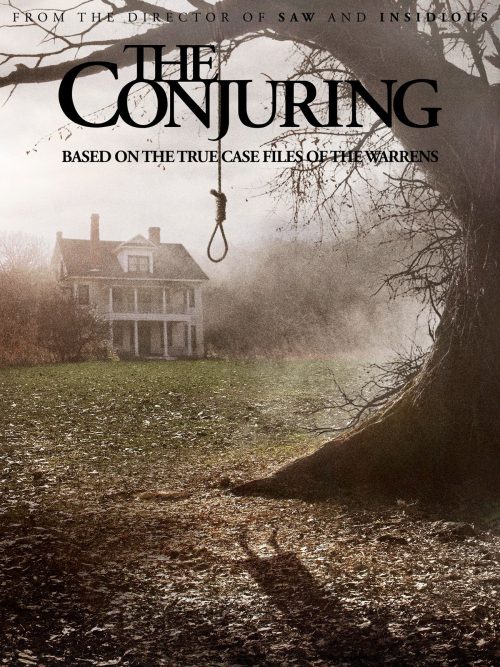
The most effective thing about The Conjuring is the poster at the head of this review. I wonder if critics and audiences who have embraced it as a superior horror film have ever seen The Univited (1944), Dead of Night (1945), Curse of the Demon (1957), The Haunting (1963), Rosemary’s Baby (1968), or The Others and The Devil’s Backbone (both 2001). These are well-made, intelligent films that get under your skin with truly unsettling moments, and are worth getting excited about.

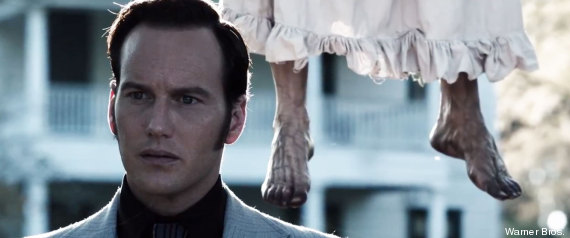
I’ll close with another shot of Patrick Wilson and his side burns, plus someone in the background he doesn’t seem to notice. — Ted Hicks

Patrick Wilson2

************************************************************************************

P. S. While there may be a shortage of good multiplex movies to fill the need this summer, all is not lost, as plenty of excellent “smaller” films that have been recently released, including Museum Hours, Fruitvale Station, The Act of Killing, The Attack, A Hijacking, and Much Ado About Nothing. All are well worth seeking out.

Posted in Film | 4 Comments

Friction Fiction #1– “Just Like He Looks”

I have a number of short stories I’ve written over the years, and would like to start sharing them here. I’ll be sneaking these in under the “etc” part of my “Films etc.” blog title. My good friend David Blacklock, best man at my wedding and currently captain of a charter boat in the British Virgin Islands, came up with the title “Friction Fiction” for the fiction section of a web magazine he had some years ago, and has graciously allowed me to use it as a heading for the stories I plan to post from time to time. It’s better than anything I could come up with. I just hope they live up to the name.

Here’s the first one: Just Like He Looks.

************************************************************************************

JUST LIKE HE LOOKS

Man in coffin4

I died suddenly, unexpectedly. A massive heart attack toppled me from the tractor seat to fall under the blades of the plow I was pulling, the tractor continuing on across the field and through the fence into the ditch where it tipped over trying to climb up to the road. What a joke. At least I died with my boots on, instead of out playing golf some Sunday morning. Jesus, I was only forty-seven, in the prime of life, as they say, though it occurs to me now that “prime” is also a word used to describe certain cuts of meat. Okay, I was overweight with a history of chest pains that were never conclusively diagnosed, so maybe that, along with all the cigarettes and a constantly nagging wife, had been setting me up for this all along.

Whatever, I’m dead and that’s that. But where’s the long tunnel you hear about with the bright light at the end and all my dead relatives and friends to greet me? I died two days ago and I’m still here, which is kind of a surprise. I’m in the funeral home lying in a casket with my hands folded on my chest wearing the only suit I own, which I’ve only worn to other people’s funerals, so maybe it’s appropriate I’m wearing it now, though I’d feel a hell of a lot better in my work clothes.

I can barely see. They’ve got me in here with my eyes closed, of course, and I don’t dare open them, not now anyway. Still, some light seeps through, though I can’t make out much. The casket lid is open, which means they were able to fix me up well enough to be seen, though I’d have thought getting run over by that plow would’ve messed me up pretty bad. I just hope they’re not screwing my wife for more than it’s worth. She’s never been any good with money.

Figures are passing by, pausing briefly to make inane comments, saying things I suppose they think they should. There seems to be a big crowd, but it’s a small farming community, so when somebody kicks, most everyone turns out. It’s a sort of social occasion, with a meal at the church tomorrow after I’m in the ground.

Two figures are beside my casket. I hear a voice I recognize as Tom Allen’s.  “Christ, Charley,” he says, so must be talking to Charley Walters, since the only other Charley in town is Charley Terwilliger, eighty-six and in a nursing home thirty miles away drooling and wearing diapers, but I guess he’s outlived me now.  What a deal.  “Christ, Charley,” Tom says, “They sure fixed him up great, didn’t they?  He looks just like he looks, doesn’t he?”

“Yeah, except for the skin,, they never quite get the skin right, you ever notice? But you’re right, I heard he was really cut to shit by that plow, a real mess, that’s what Dave Doolin said, and he talked to one of the guys who found him out there.”

“Jesus, Charley, keep your voice down. What if his wife or kid heard that? Anyway, it’s too bad. He was a nice guy.”

“Yeah, I guess.”

Their voices drift off. I realize I never did like Charley much. More people pass by. I hear variations on “He really looks good, he looks just like himself” so many times it’s starting to piss me off. Soon people aren’t coming by any longer, and their voices have faded away, but I’m still aware of the buzz of conversation in other parts of the room. Now’s my chance.

Very slowly I open first one eye, then the other. Slowly, carefully, I unfold my hands from my chest. I tentatively grip the rim of the casket, then more surely begin to rise up. This must look like something from one of those horror movies my kid is always watching. I peek over the edge. In this large, softly lighted room the crowd has  split into small groups of people talking. None of them seems to be looking in my direction.

Then I see Squeak Dixon standing by himself a couple of feet from my casket, his back to me. Bracing myself I reach out and grab Squeak around the neck. I have the advantage of surprise, to say the least. Squeak flails his arms uselessly and makes a couple of gargling gasps as I choke his life away.

I tip his body back into the casket as I rise from it. Quickly I straighten Squeak out, and fold his hands over his chest. Looking down at my bare feet on the carpet, I realize they’d put me in there without shoes or socks. Cheap bastards. Well, hell, if this crowd didn’t see me switch places with Squeak, they’re not likely to notice a little detail like that.

As I’m patting my hair to make sure it’s in place and smoothing my suit, Bob Woodrow comes over to stand beside me. We both look down at the body in the casket.

Bob says, “No kidding, it’s really amazing what they can do, isn’t it? He looks really great.”

“Yeah,” I say as I adjust the knot of my tie. “He looks just like he looks.”

Posted in Fiction | 4 Comments

Famous Monsters & Me — Pt. 3: Pulp Fiction

Amazing Stories-July 1926Amazing Stories cover2As I’ve already established in the first two installments of “Famous Monsters & Me” (posted last year on May 17 and December 11), at an early age I developed an intense love of science fiction and horror in all its forms — films, books, magazines, comics, and television. I grew up on a farm two miles west of  Nemaha, Iowa, where I attended grammar school and junior high. Nemaha was a very small town then (around 170 or so in the 1950s), and even smaller now (85 per the 2010 census). Oddly enough, or maybe not, this was where I had my first real exposure to science fiction pulp magazines of the 1930s and 40s.

I can’t remember the exact year of this momentous encounter, though I’m guessing sometime from 1956 to 1958. I’d biked into town from the farm on a hot, sunny day, so it was either summer or a Saturday, or both. I met up with a friend of mine, Mike Breon, who was a year behind me in school. I’m not sure how we knew this, but we’d heard that Gene Mack, who ran the tavern in Nemaha back when it had one, had a collection of old science-fiction magazines, and we wanted to see them.

In a town that size, everybody pretty much knows everybody. I remember Gene as a really good guy, very friendly and easy going. A lot of people called him Lefty Mack, probably because he’d been a good baseball pitcher for the Storm Lake Whitecaps, a semi-pro team, when he was younger. Like my dad and most of my classmates’ fathers, Gene was a World War II veteran. I knew him as a big man who shuffled when he walked and spoke slowly. His hands shook, possibly from MS or Parkinson’s, or maybe shell shock from the war. A classmate of mine, Marlys Waters, recently communicated this about Gene: “(He) must have loved kids. He was very artistic and in a 5-minute session at the local coffee shop/beer joint, he showed me how to draw a fox using a pencil. I learned how the legs were bent rather than my childish drawings where the legs were always straight. I must have been in 1st or 2nd grade.” I love that story and what it says about Gene.

When Mike and I approached him about the magazines, he gladly took us around to his garage and showed us boxes of old pulps from the 1930s and 40s. Then he left us there to go through this treasure trove, which we did for several hours. When he came out later to see how we were doing, we asked if we could borrow some of the issues to read at home. I still remember what he said, which was, “You can have ’em, boys.” Not all that earthshaking, I know, but it was like we’d just been given bars of gold. Sounds like the setup for a Twilight Zone episode, doesn’t it?

I don’t remember the magazines we browsed through, or the ones I took with me, but I kept them for years. I regret getting rid of them, just as I regret not hanging on to several years worth of Famous Monsters of Filmland (including the first issue!) and a nearly complete run of Rolling Stone in the original tabloid format (I think I’m fairly intelligent, but sometimes not so smart). I may not remember the specific magazine issues from that hot, dusty day, but this is a good excuse to show some typical covers from that period.

Amazing Stories cover1Amazing Stories cover4

Thrilling Wonder Stories 1939Startling Stories-cover

*************************************************************************************

These are juvenile, to be sure, but there was a kind of gee-whiz purity to the storytelling, and the covers alone still engage my imagination, even if mainly in a nostalgic way. There’s a fellow I see frequently on Broadway near Lincoln Center who has a table on the sidewalk loaded with vintage paperbacks and pulp magazines for sale. These publications have become pricey collectibles, along with a lot of other stuff that seemed disposable at the time. Click on this link to see more of these covers, probably more than you could possibly want.

Pulp magazines were published from 1896 through the 1950s. Per the Wikipedia entry on pulps, “the term pulp derives from the cheap wood pulp paper on which the magazines were printed.” The development of an inexpensive method to convert wood pulp into paper, and the increasing mechanization of the printing process, made it relatively easy to crank out thousands of these low-priced magazines. A distinctive feature of the pulps was their ragged, untrimmed edges.

Amazing Stories-April 1926438px-Radio_News_Nov_1928_CoverThe premiere issue of Amazing Stories, the first magazine devoted exclusively to science fiction, was published in April 1926 by Hugo Gernsback, who has been called, along with H. G. Wells and Jules Verne, the “Father of Science Fiction,” in recognition of his part in popularizing the genre and making it widely available. The first issue reprinted stories by Wells, Verne, and Edgar Allan Poe. Gernsback was born in Luxembourg in 1894 and came to the United States in 1905, where he became a writer, editor, magazine publisher and inventor. Interestingly enough, after founding radio station WRNY in 1925 in New York City, he became involved in the first experimental television broadcasts in the late 1920s. The cover of another of his magazines, Radio News, shows Gernsback on the cover of the November 1928 issue watching a television broadcast.

Gernsback initially called the genre “scientifiction,” which doesn’t exactly roll off the tongue. He switched to “science fiction,” the name we know today, around 1929. Forrest Ackerman later coined the even more commonly used term, “sci-fi.” When he was 9 years old in 1926, Ackerman bought one of the first issues of Amazing Stories and became immediately hooked.  He started a group called the “Boy’s Scientifiction Club,” and science fiction fandom was born. The introduction of a letters column in Amazing Stories in 1927 is further credited as a key factor in the development of a widespread science fiction community.

Hugo Gernsback was a major influence on the growth and appreciation of science fiction in this country. In recognition of this, since 1953 the “Hugo Awards” have been presented annually at the World Science Fiction Convention. I used to frequent a sci-fi bookstore called Uncle Hugo’s when I lived in Minneapolis. His name is immediately associated with the genre, but that doesn’t mean everybody loved him. Per one source, “Gernsback was noted for sharp (and sometimes shady) business practices, and for paying his writers extremely low fees or not paying them at all.” Writer Barry Malzberg refers to Gernsback’s “venality and corruption, his sleaziness and his utter disregard for the rights of authors…” So there’s that, but as Joe E. Brown says at the end of Some Like It Hot, “Well, nobody’s perfect.”

Science fiction was but one of many pulp fiction genres flooding the newsstands in the 1920s, 30s, and 40s. Others include detective & gangster stories, Westerns, war, romance, and fantasy. Here are some typical covers from those genres. Note the Black Mask cover below at left, which features  Dashiell Hammett’s The Maltese Falcon. Writers who were either already established or became well-known appeared in pulps, including Isaac Asimov, Robert Bloch, Ray Bradbury, Edgar Rice Burroughs, Raymond Chandler, H. P. Lovecraft, Jim Thompson, and many others.

Black Mask-192944 Western Magazine

Spicy Adventure Stories 1936Detective Tales

*************************************************************************************

Amazing SF cover1Amazing SF cover2The pulps had basically disappeared from newsstands in the 1950s when they evolved into digest formats (Astounding Science Fiction switched as early as 1943). The digests were what I started reading in the 50s. I remember having copies of the F&SF magazine cover2Galaxy SF cover2 specific issues pictured here, so seeing them again has an added resonance for me. The content was also evolving, becoming less juvenile (though there was still plenty of that). Truth be told, though, the cover art of the pulps is probably of more interest and longer-lasting value today than the stories themselves.

I don’t read that much science fiction these days, and when I do, it’s usually the older stories. Science fiction just can’t keep up with reality anymore, let alone predict it. The pace of technology today is far beyond most of what was imagined in the past. Science fiction is right now; we don’t have to wait for it. Of course, we still don’t have colonies on the moon or Mars, and haven’t developed an interstellar drive yet. All of which feels kind of like a broken promise (except the interstellar drive part; I never really expected that). When the first Sputnik went up in 1957, I thought, “This is it! We’re on our way.” But space exploration today is largely done by drones and robots, which is a big disappointment to someone indoctrinated by countless books and magazines, as well as films and TV shows like Destination Moon, War of the Worlds, The Day the Earth Stood Still, Space Patrol, Star Trek, and Tom Corbett, Space Cadet. Though maybe I should be thinking, “Hey! Robots!” But somehow it’s not the same.

I have a deep nostalgia for the science fiction of my youth. Though maybe I’m just nostalgic for when I was a kid. After all, time-travel stories are my favorites. But I’m glad that a part of being that kid was knowing someone like Gene Mack, and having a thrilling afternoon with moldy magazines. — Ted Hicks

(I want to acknowledge my former classmates Marlys Launspach Waters, Ron Platt, and Gary Davis for their memories of Gene Mack, who died in 1984 at the youthful age of 60.)

Posted in Books, Film | 6 Comments

“Sing Me the Songs That Say I Love You” — Fare Thee Well

Kate McGarrigle photo“A Celebration of Kate McGarrigle,” a tribute concert honoring the music and memory of the Canadian singer-songwriter was held at Town Hall in New York City on May 12 and 13, 2011. She had been diagnosed with cancer in 2006, and died on January 18, 2010 at age 63, leaving a rich body of work and a wide circle of friends and family. Musicians who took part included Kate’s two children, Rufus and Martha Wainwright, her sister and performing partner Anna McGarrigle, Emmylou Harris, Norah Jones and many others, all of whom had strong connections to Kate, either personally or through her music, often both. The concert was filmed by Lian Lunsen, who turned the footage into a powerful documentary, Sing Me the Songs That Say I Love You: A Concert for Kate McGarrigle, which opened at Film Forum in New York last week on June 26. Lunsen, an Australian actress turned filmmaker, had previously made another concert film, the excellent Leonard Cohen: I’m Your Man (2005).

I wasn’t too familiar with Kate McGarrigle or her music before this. I’d heard of Kate and her sister Anna, and knew they were musicians who performed and recorded together. And that was about it. Later I learned that she was the mother of Rufus and Martha Wainwright, who were born when Kate was married to Loudon Wainwright III from 1971 to 1977. My wife helped me sort out these relationships when we saw Loudon along with Rufus, Martha, Lucy Wainwright Roche, and the Roches performing songs from Loudon’s extraordinary album, “High, Wide & Handsome: The Charlie Poole Project,” at the Highline Ballroom in New York in 2009. Lucy Wainwright Roche was born when Loudon was married to Suzzy Roche, after he and Kate McGarrigle were divorced. I was beginning to get the sense of an incredibly talented and somewhat eccentric musical family, but it wasn’t until I saw Sing Me the Songs That Say I Love You that I began to better know Kate McGarrigle.

In a New York Times review of the concert at Town Hall, Jon Pareles says of Kate McGarrigle’s music that she “…wrote 20th-century parlor songs: folksy-sounding, latter-day descendants of Stephen Foster tunes, hymns, waltzes and popular arias.” This is true enough, as far as it goes, but doesn’t begin to account for why I was so moved by the film and the music. I suspect it was that Sing the Songs powerfully conveys, via the performances as well as interviews and home movie footage interspersed throughout, a profound sense of loss that was felt by everyone involved. Of course, we’re hearing Kate and Anna’s songs filtered through the knowledge that Kate is no longer on the earth, which can’t help but affect our reactions to them.

Sing Me the Songs - stillRufus and Martha are at the center of the film. Loudon Wainwright III used to joke that he’d probably be better known for his 1973 song, “Dead Skunk (in the Middle of the Road)” than for anything else he’d done in his long career. The irony of this is that he may end up being known more as Rufus Wainwright’s father. Rufus seems unique to me, an almost ethereal talent. Many times in the film his voice becomes a current of pure emotion, painfully beautiful. Martha, while not nearly as well-known as Rufus, is a wonderful singer in her own right, with a voice that can convey intense feeling. Here is Martha singing the last song her mother wrote, “Proserpina.” This song is performed in the film, but a clip of that footage is not currently available. I’m including this video from another source because both the song and Martha’s singing are so powerful and moving.

Sing Me the Songs That Say I Love You has been expertly shot and edited to maximum effect. Transitions from color footage to black & white are seamless and create a layered texture. Close-ups, which are used extensively, give a feeling of intimate proximity to the singers. Everyone is in top form here, probably because of what it all means to them, and what’s at stake. This includes Emmylou Harris, Norah Jones, Anthony Hegarty, Krystle Warren, and Teddy Thompson. Someone I’d not heard of before, Justin Vivian Bond, gives an electrifying performance of “The Work Song.” I know “electrifying” can be a cliché, but believe me, it applies here. I was also curious (and somewhat skeptical) when I saw that Jimmy Fallon was in the lineup. What was he doing in this crowd? Well, I definitely found out. Fallon sings “Swimming Song” early in the film, and he’s great! This is one of the few songs performed that was not written by Kate — it’s one of Loudon’s. Fallon’s rendition is funny, endearing, and oddly moving. In other words, it fits in perfectly with the rest.

This film doesn’t attempt to be a biography of Kate McGarrigle. We learn very little of the details of her life. Loudon Wainwright III, for example, appears only twice, both times briefly seen in home movies with his kids, like a passing memory. His name is mentioned only once, on stage by Anna. I suppose all families are complicated, but not usually this talented. What Sing Me the Songs That Say I Love You does do is give us Kate’s music in abundance, sung by the family and friends who loved her. And that seems like more than enough.

It’s unusual for anything, let alone a music documentary, to get as close to the bone as this film does in conveying an almost overwhelming feeling of love and loss. See it if you can. I think you’ll be glad you did. – Ted Hicks


Posted in Film, Home Video, Music | 4 Comments

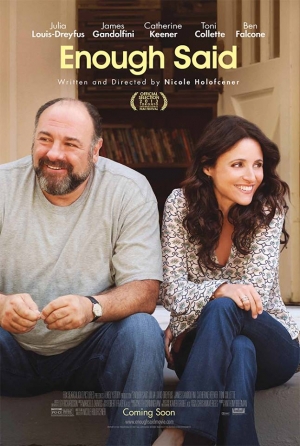
James Gandolfini and Richard Matheson — Jersey Boys

It was quite a shock to hear last Thursday that James Gandolfini had died the day before, June 19th, in Italy of a heart attack — much too young at age 51. And then to learn a few days later that writer Richard Matheson had died on June 23rd was just too much. Matheson had a longer run — he was 87 — but it was no less of a jolt. Matheson’s death may have even reached a deeper place in me, because he’s been in my life since I first read his amazing, deeply unsettling horror novel, I Am Legend, in 1954, and had stayed with him throughout his long career in books, television, and feature films.

Both were born in New Jersey; Gandolfini in Westwood on September 18, 1961, and Matheson in Allendale on February 20, 1926. Gandolfini grew up in Park Ridge, NJ, where he went to high school. He received a BA in communications studies from Rutgers University in 1982, where he also worked as a bouncer at an on-campus bar, an interesting detail considering the types of tough-guy characters he frequently played during his career. He eventually became involved in acting while living in New York City. Richard Matheson was raised in Brooklyn. In 1943 he joined the army and was in the infantry during World War II. After the war he earned a BA in journalism at the University of Missouri in 1949, then moved to California in 1951.

NY_NYPBecause of The Sopranos, Gandolfini will probably be identified now and forever with the character of Tony Soprano, and always have a strong connection to the state of New Jersey. The New York Daily News and the New York Post both referred to him as Tony Soprano in their headlines announcing his death. I’d seen him in supporting roles prior to The Sopranos, most notably in his fifth feature film as a mob soldier who dukes it out with Patricia Arquette in True Romance (1993), written by Quentin Tarantino and directed by the late Tony Scott. In that film he brought some dimension, different and quirky, to what could have been a standard character that we’ve seen many times before. But it was his portrayal of mob boss Tony Soprano that put James Gandolfini on the map, and helped make HBO the gold standard of television programming in the process.

I’d subscribed to HBO a few years earlier, mainly so I could see Garry Shandling’s brilliant series, The Larry Sanders Show, before it ended its run. So I was all set when The Sopranos made its debut on January 10, 1999. I’m not clear on this, but I don’t think I started watching it right away. I know I’d already seen Analyze This, a feature film that opened in March of ’99, with Robert De Niro as a mobster in analysis with Billy Crystal as his shrink. I was skeptical of The Sopranos‘ premise, thinking that this had already been done in Analyze This, and wondering where they could go with a series. Well, I found out, along with the rest of us who watched rabidly through eighty-six episodes and six seasons from 1999 to 2007, when it went off the air with one of the most famous and controversial series finales ever. Last Saturday, my wife and I started re-watching The Sopranos from the beginning. We’d burned through the first season by Wednesday night, and now it’s on to the second. The show is still great, maybe even greater. Even though other actors were considered for the part of Tony Soprano before James Gandolfini landed the role, it’s virtually impossible to imagine anyone else as that character.

The impact of The Sopranos, and the character of Tony Soprano in particular, has often overshadowed Gandolfini’s fine work in feature films. He brings a lot of heart and soul to the role of Winston (aka Lester), a gay hit man in The Mexican (2001), an otherwise rather lackluster film directed by Gore Verbinski, with Brad Pitt and Julia Roberts in the leads. The following clip features Roberts and Gandolfini as they talk in a coffee shop.

One of my favorite films of Gandolfini’s, both for his performance and the film itself, is the little-seen and underrated Lonely Hearts (2006), written and directed by Todd Robinson. The story of the true-life “Lonely Hearts Killers” had been filmed twice before, first as The Honeymoon Killers (1969) with Tony Lo Bianco and Shirley Stoller, and then as Deep Crimson in 1996 by Mexican director Arturo Ripstein. James Gandolfini and John Travolta co-star in Lonely Hearts as the two Long Island detectives who finally crack the case. There’s something sad and mournful about this noirish film. From what I could find, it grossed less than $200,000 in the U.S. and Canada, which hardly seems possible, and difficult to account for. How can any film make so little money? Believe me, Lonely Hearts is well worth seeing.

Other excellent James Gandolfini performances include playing Big Dave Tolliver in the The Man Who Wasn’t There (2001), directed by the Coen Bros.; Where the Wild Things Are (2009), directed by Spike Jonze, in which Gandolfini beautifully brings to life the character of Carol, a lonely Wild Thing with anger-management issues; as C.I.A. director Leon Panetta in Zero Dark Thirty (2012); and in Not Fade Away (2012) as the father of a boy trying to form a rock ‘n’ roll band in the wake of the Beatles and the Rolling Stones in 60s Jersey, also the debut feature film written and directed by Sopranos creator, David Chase. In 2009 Gandolfini appeared on Broadway in the hit play, God of Carnage, for which he was nominated for an appropriately-named Tony Award. And then there’s this great clip from an appearance on Sesame Street.

There was a funeral service for James Gandolfini in New York City on Thursday, June 27 at the Cathedral of St. John the Divine near Columbia University. Unfortunately I didn’t attend (no excuse, got up too late), but “Variety” has posted an account which quotes heartfelt remarks from David Chase. The New York Times obituary has more details about his life and career.

**************************************************************************************

Last December I wrote about Richard Matheson in a post titled “Famous Monsters and Me — Part 2: Books and Comics” (which includes his first published story, “Born of Man and Woman,” a stunning debut). You can check out the full post, but here’s a segment:

Night Stalker-poster“All of this material was filling up my head with crazy, wonderful stuff. I wasn’t aware of film directors then, but I knew the book authors, especially Richard Matheson. He has had a huge impact in the fields of science fiction, horror, and fantasy. Matheson has written novels, short stories, film and television scripts. His work in television alone is astounding. He wrote 16 episodes of The Twilight Zone, including the classic ‘Nightmare at 20,000 Feet’ with William Shatner going bonkers when he sees a demon on the wing. I doubt I’ve ever been on a flight and not thought of that episode, especially if I was seated over a wing.  Matheson wrote the short story and script of Duel, the TV movie that helped put Stephen Spielberg on the map. He wrote The Night Stalker for TV, which gave us a hardcore vampire in the modern world, followed by The Night Strangler, which led to the series Kolchak: The Night Stalker. These are just a few examples of his work. Matheson is a giant. His fingerprints are everywhere. I can’t imagine the landscape without him.”

Stephen King has been quoted as saying that Richard Matheson is the author “who influenced me the most as a writer.” That’s quite a statement. Of all his work, Matheson’s I Am Legend, the book that caused my head to explode with possibilities, has cast possibly the longest shadow. One can’t overestimate its influence on genre writing and filmmaking. George Romero has said that I Am Legend, and the first film version of that novel, The Last Man on Earth (1964), were an inspiration for his 1968 epic, Night of the Living Dead, in itself a game changer that has spawned a staggering number of zombie films and books.

House of Usher poster1Matheson was incredibly prolific in the 1960s and early ’70s writing for films and television, as well as novels and short stories. He wrote several screenplays for Roger Corman’s series of films based (loosely) on works by Edgar Allan Poe, starting with House of Usher in 1960, followed by The Pit and the Pendulum (1961), The Raven and The Comedy of Terrorsboth in 1963. His television work, besides The Twilight Zone, includes episodes of Star Trek, Have Gun – Will Travel, Lawman, Combat!, and Wanted: Dead or Alive.

Duel-poster3Steven Spielberg credits Richard Matheson for giving him his first real break by writing the story and screenplay of Duel (1971), a hugely important event in Spielberg’s career. Dennis Weaver plays a  businessman driving through the desert who becomes increasingly unhinged as he’s pursued by a seemingly demonic truck that wants him dead. If this was a Stephen King story, the truck would quite literally be from Hell. We never see the driver; the truck takes on a life of its own. The situation is all the more terrifying and out of control because Weaver never knows why this is happening to him, and neither do we. The relentlessness of Duel is seen again in Spielberg’s Jaws and the opening 20 minutes of Saving Private Ryan.

Duel was originally shown on television as an ABC Movie of the Week. The running time of the TV version was 74 minutes. Spielberg subsequently shot new scenes to bring the running time to 90 minutes for theatrical distribution in Europe and Australia, which is the version you can see here.

There’s an interesting 1994 interview with Matheson from the New York Times. When asked what influenced his writing, he says, “When I first joined my local library, I read endlessly. I immediately headed for the fantasy section, fairy tales, you name it.” I identified strongly with this, as it mirrors my own early reading experiences. He’s also asked what influenced his novel The Shrinking Man, to which he replies, “I went to see a picture with Ray Milland and Aldo Ray, and in this one scene Milland in an angry mood leaves his apartment and mistakenly picks up Aldo Ray’s hat. The hat went way down over his ears, and my immediate thought was what if a guy put on his own hat and that happened.” I love that. It’s great to get a sense of how his mind worked.

Matheson’s obituary in the New York Times refers to him in the title as a “Writer of Haunted Science Fiction and Horror.” That’s accurate enough, but his value to me in my formative years, and still today, goes way beyond that. We’ll always have his work to experience and re-experience, as well as that of James Gandolfini. Thank God for that, but the loss still hurts. I knew neither one of these guys personally, but it sure feels like I did. – Ted Hicks

13th Annual Screen Actors Guild Awards - ArrivalsMatheson - head shot

Posted in Books, Film, Home Video, TV | 5 Comments