Additional materials for four of the films covered in the previous post are below.
__________________________________________
Desperate Souls, Dark City and the Legend of Midnight Cowboy
Here are two interviews with director Nancy Buirski about Desperate Souls. The first, done by Chuck Braverman for Westdoc Online, was recorded on June 9, 2023, less than three months before her death on August 29. The second, at the Independent Picture House in Charlotte, North Carolina, was recorded on August 25, just four days before she died. The cause of death has not yet been revealed. This feels a little weird, but hopefully won’t overshadow what she has to say in both interviews.
Nancy Buirskie interview #1 (24:31)
Nancy Buirski interview #2 (38:42)
_________________________________________________
I Went to the Dance
The Making and Digital Restoration of I Went to the Dance (25:07)
________________________________________________
Squaring the Circle: The Story of Hipgnosis
Interview with director Anton Corbijn for Collider (16:42)
_____________________________________________
Still: A Michael J. Fox Movie
Interview with director Davis Guggenehim (10:47)
Q&A with Michael J. Fox and Davis Guggenheim at Sundance 2023 (17:42)
____________________________________________
That’s all for now. See you next time. — Ted Hicks
I didn’t see very many feature documentaries last year. This was not by design, it just turned out that way. I’m sure I missed some great ones, but of those I did see, the following eleven titles are my favorites. I’m not sure if it means anything, but six of them have music subjects. I stretched the parameters a bit to include two I saw early in January.
______________________________________________
Artie Shaw: Time Is All You’ve Got(Brigitte Berman, 1985) This is an excellent study of a major figure in big band swing and jazz. My folks, especially my mom, really loved big band swing of the 1930s and ’40s. Through them, I developed a deep appreciation of it as well. I was more familiar with Benny Goodman, Glenn Miller, Woody Herman, and others than I was with Artie Shaw. I knew his name, but not much else until I saw this film. Through extensive on-camera interviews we get a picture of a complicated, multi-talented musician and author. He was a self-taught musician. He could never seem to settle down, repeatedly forming and disbanding successful groups. He was married eight times. His wives included Lana Turner, Ava Gardner, and Evelyn Keyes. Apparently he was hard to get along with. But he was one hell of a clarinet player. He died at age 94 on December 30, 2004 .
I couldn’t find a trailer for Time Is All You’ve Got, but here is a clip of one of his biggest hits, “Begin the Beguine.” It’s really great.
There are two scenes in the film that really stand out. We see Shaw in close up listening to one of his recorded songs. He’s deep in thought with eyes closed, moving to the music, following it with his hands. Berman holds on each shot until the song is over. I don’t recall seeing anything like this before. These are very strong moments. Berman was at the showing at Film Forum that I saw. In the lobby afterwards, I told her how much I liked those scenes. She said that Shaw had wanted her to take them out, which thankfully she didn’t do. Maybe he felt they were revealing too much of something.
Artie Shaw: Time Is All You’ve Got received an Academy Award in 1987 for Best Documentary Feature. Per James Barron in the New York Times: “After that, Berman spent more than a decade wrangling in courts in the U.S. and Canada after Shaw demanded a share of the profits — 35 percent, said Berman, adding that at one point she offered a smaller cut. Shaw rejected that, she said, and the case was settled without a payout in 2003.” This is ironic, since there basically were no profits. The film hadn’t recovered its production costs at that point. Last year, a 4K restoration was done. The run at Film Forum earlier this month is being called its theatrical premiere. Better late than never.
New York Times review by Glenn Kenny can be accessed here.
New York Times article by James Barron can be accessed here.
Artie Shaw: Time Is All You’ve Got is not yet available for streaming, though I’m sure it will be at some point.
______________________________________________
Desperate Souls, Dark City and the Legend of Midnight Cowboy(Nancy Buirski, director) This is a deep dive into the making of Midnight Cowboy (1969), placing it in the context of the times, particularly showing a side of New York City seldom seen outside of underground films. This is typical of Buirski’s forensic approach to her subjects. In 2016, at Lincoln Plaza Cinemas, I saw her terrific film, By Sidney Lumet (2015), one of the best studies of a film director I’ve ever seen. She let the film clips run on at length, rather than skimming the surface of many clips, which is the more usual approach. Buirski died last August 29, 2023, at age 78. This was a shock and a sense of real loss. I’d seen her at Film Forum that April when she introduced a screening of Desperate Souls. She doesn’t take the more typical route of clips and talking heads in her films. She goes deeper than that. Most of her films have a strong civil rights agenda and a desire for justice. These include The Loving Story (2011), The Rape of Recy Taylor (2017), and A Crime on the Bayou (2020). I hadn’t known that she was a founder of the Full Frame Documentary Film Festival, held annually in Durham, North Carolina. As I said, her passing is a real loss. We’ll never seen the films she might have made. Her work was far from over.
Desperate Souls, Dark City and the Making of Midnight Cowboy is available for streaming on Amazon Prime and Kino.
____________________________________________
I Went to the Dance (Les Blank, Chris Strachwitz, directors, 1989) This is my favorite of all the documentaries I saw last year, the best. Originally released in ’89, it’s back in theaters after a 5K restoration. I love cajun and zydeco music, but didn’t know much of the history, the sources and influences. I Went to the Dance does a great job of laying it all out in a detailed and incredibly entertaining, toe tapping fashion.
I Went to the Dance is not yet available for streaming, but I hope they take care of that soon.
_____________________________________________
Jerry Lee Lewis: Trouble in Mind (Ethan Coen, director, 2022) Since 1984, Ethan Coen and his brother Joel have co-directed a large number of films, original and quirky in the extreme. Joel went solo with The Tragedy of Macbeth in 2021. Ethan’s Drive-Away Dolls will be released soon. In the meantime, Ethan made this film about Jerry Lee Lewis, and it’s a blast. The film is made up entirely of archival material, including performance footage, TV appearances, interview segments on talk shows. No talking heads shot for this film and no narration. It’s pretty much wall-to-wall Jerry Lee, unhinged and out of control.
I can’t find a trailer, but here are two clips that will give you a taste. The first is “Breathless,” performed on Dick Clark’s Saturday Night Beech-Nut Show in 1958. The second is at a venue in Bristol U.K. in 1983, Jerry Lee doing Chuck Berry’s “Lucille.” I particularly like this clip. It’s a very assured performance, and shows he could something with a piano besides pound on it.
Jerry Lee Lewis: Trouble in Mind is available for streaming on Amazon Prime.
_____________________________________________
Little Richard: I Am Everything (Lisa Cortés, director) Jerry Lee Lewis and now Little Richard. Two figures at Ground Zero as rock n’ roll was evolving out of Black music, Gospel, and jazz. This is what parents in the ’50s were afraid of. Not mine, but I don’t think they were paying attention. This excellent and exciting film touches on all phases of Little Richard’s career. He rocked like nobody else. Few could match his exuberant energy and enthusiasm.
Little Richard: I Am Everything is available for streaming on Max and Amazon Prime.
____________________________________________
Menus-Plaisirs les Troigros (Frederick Wiseman, director) The following is edited from what I wrote after seeing this film at the New York Film Festival last year.
Since Titicut Follies in 1967, Fred Wiseman has made a career out of examining institutions of all kinds, often at lengths of three to four hours (or more), without identifying titles, narration, or talking-head interviews. Nothing fancy; we’re just there. This is immersive, in-the-moment filmmaking (though carefully edited and structured). Wiseman is one of the greatest living filmmakers. With the deaths of Al Maysles (age 89) in 2015 and D. A. Pennebaker (age 94) in 2019, he’s probably the last one standing of his generation. At age 93 he does not appear to be slowing down, which is great for the rest of us.
Per the Film Forum description:
“Frederick Wiseman’s 44th documentary takes us to Central France and Troisgros — a Michelin 3-star restaurant owned and operated by the same family for four generations, and destination for gastronomes from around the world. Behind the scenes, we are privy to passionate debates among the head chefs (a father and his two sons) about texture, color, and depth of flavors; visits to a bounteous produce farm, a local vineyard, and a massive cheese cave (where “each cheese has its moment of truth”); and waitstaff meetings focused on individualized customer preferences and food plating at a performance-art level. In his trademark style, Wiseman patiently illuminates the restless creativity of this culinary family as they experiment with dishes, methods, and ingredients — keeping their haute cuisine anchored in tradition while brilliantly evolving.”
Menus-Plaisirs Les Troigros is not yet availablel for streaming.
_____________________________________________
Naim June Paik: Moon Is the Oldest TV (Amanda Kim, director) This film is an excellent introduction to Naim June Paik, a visionary Korean video artist who incorporated performance and installation art in his innovative and unique works. As seems true with many truly creative artists, his work reflects a great deal of humor. He was trained as a classical musician. While in Germany he became involved in the Neo-Dada art movement and developed a friendship with John Cage. While living in Japan in 1961-1962 he acquired one of first commercially available video recorders. He’s credited with coining the term “electronic superhighway” in 1974. Amanda Kim’s film puts us in the presence of a brilliant, quirky mind. It’s a gas.
Naim June Paik: Moon Is the Oldest TV is available for streaming on Amazon Prime.
_____________________________________________
The Pigeon Tunnel(Errol Morris, director) The following is edited from what I wrote after seeing this film at the New York Film Festival last year.
The Pigeon Tunnel gives us John le Carré (pseudonym of David Cornwell) in an extended interview/interrogation by filmmaker Erroll Morris. Le Carré is fascinating to listen to as he talks about his life and work. Much of what he says about his life — his early years, certainly — involve his father Ronnie, a career con man. I’d known nothing about this, so it was interesting to learn how heavily this abusive relationship influenced Le Carré’s life and the themes of his spy novels. Seeing the film I had to get past my aversion to Erroll Morris, which began in 1988 when I saw his film The Thin Blue Line. That film leaned heavily on re-enactments, which I don’t like. I realize this practice goes back to pioneering documentary filmmaker Robert Flaherty, who used staged scenes in Nanook of the North (1922), so there’s a precedent. In my possibly cranky opinion, it’s not a real documentary if re-enactments are used, but something else. For me, Fred Wiseman, D.A. Pennebaker, and Albert & David Maysles are true documentary filmmakers. Sure, they carefully structure their films through editing, but they don’t make stuff up. That said, if you have an interest in John le Carré and how he came to be what he became, The Pigeon Tunnel is definitely worth seeing. And I have to admit, the re-enactments scattered throughout don’t really get in the way.
The Pigeon Tunnel is available for streaming on Apple TV.
_____________________________________________
Squaring the Circle (The Story of Hipgnosis) (Anton Corbijn, director) I’d never heard of Hipgnosis, a British design studio that created an astonishing number of iconic album covers for musicians and bands in the 1970s, but I certainly knew their work. We all did. Hipgnosis (a conflation of “hip,” “hipnosis” and “gnostic”) was founded by Aubrey “Po” Powell and Storm Thorgerson (what a name!) in 1968. They designed album covers for Pink Floyd, Led Zeppelin, T-Rex, Peter Gabriel, and many others. Here are some of them.
Squaring the Circle: The Story of Hipgnosis is excellent. Especially for those of us who were into this music, it’s fascinating to know how the album covers came to be, and the complicated, often clashing, personalities who did the work.
Squaring the Circle is available for streaming on Amazon Prime and Netflix.
_____________________________________________
Still: A Michael J. Fox Movie (Davis Guggenheim, director) This is a deeply affecting study of a hugely successful actor who was thrown a big curve with a diagnosis of Parkinson’s Disease in 1991, which he publicly announced in 1998. Since then, he’s been a fierce advocate for education about the disease, treatment, and an eventual cure. He’s on-camera a lot in this film, telling us his story directly, which is illustrated with film clips and archival footage. It’s great seeing scenes from the Back to the Future trilogy (1985-1990) and Family Ties, but sobering to think of challenges he faces with dignity and grace, humor and courage. This is an important film.
Still: A Michael J. Fox Movie is available for streaming on Apple TV.
_____________________________________________
The Stones and Brian Jones (Nick Broomfield, director) I hadn’t realized that Brian Jones had been the founder and original leader of the Rolling Stones in 1962, before Mick Jagger and Keith Richards eventually took over, steering it away from the blues band Jones wanted to what it became. Drugs and erratic behavior resulted in his being dismissed (i.e. kicked out) from the band in 1969. Less than a month later Brian would drown in the swimming pool at his home, joining the dead-at-27 club that includes Jimi Hendrix, Jim Morrison, and Janis Joplin.
This terrific film has lots of great archival footage, including some of fans rushing the stage at early gigs that had my jaw on the floor. It’s like waves of zombies in World War Z jumping on the stage only to be literally heaved off the stage by security guards wearing suits and ties. Complete riots. Those were the days.
The Stones and Brian Jones is available for streaming on Amazon Prime and YouTube.
I saw a total of 288 films in 2023 – 140 in theaters and 148 streaming or on video discs, both new and old. This is 34 fewer than I saw the previous year, but who’s counting? I’ve come up with 23 films that are the best of what I saw, or at least my favorites. My picks for the top two films out of all of these are Oppenheimer and Poor Things.
________________________________________
Oppenheimer (Christopher Nolan, director & co-writer) I’d been anticipating this film more than any other last year. Marketing for Oppenheimer created the sense of a big event months in advance of the July 21 release. A countdown display in the lobby of the AMC Lincoln Square theater made sure you didn’t forget it.
When the dust had settled, I’d seen the film four times, twice in 70mm IMAX. I wrote about Oppenheimer last August, which can be accessed here.
Oppenheimer can be streamed on Amazon Prime, though the best way to see it is on the largest screen possible in a theater with great sound.
________________________________________________
Poor Things (Yorgos Lanthimos, director) The following is edited from what I wrote after seeing Poor Things at the New York Film Festival last year.
This is my favorite film of all I saw at the festival. Per David Rooney in The Hollywood Reporter, the film is “non-stop bonkers brilliance.” That it is. It’s just one jaw-dropping moment after another. I wasn’t sure at first, but it pretty quickly overwhelmed me with its insanity and I was helpless to resist, not that I wanted to. It’s a wild ride, an amazing journey that constantly surprises, delights, and sometimes horrifies. Poor Things is described by the distributor as “the fantastical evolution of Bella Baxter (Emma Stone), a young woman brought back to life by the brilliant and unorthodox scientist Dr. Godwin Baxter (Willem Dafoe).”
It obviously has Frankenstein in its DNA, but goes way beyond that. There’s such an overload of images and ideas that I’ll have to see it again to sort things out. The production design is amazing… Emma Stone is absolutely fearless in her performance. Mark Ruffalo’s performance would be considered over-the-top anywhere else, but feels just right in this film. He’s absolutely great. Willem Dafoe is excellent as usual. There’s no explanation for the deep grooves and scars in his face, but none is needed.
Poor Things is showing in theaters, but not yet available for streaming.
_________________________________________________
Here are the rest.
_________________________________________________
Afire (Christian Petzold, director & writer) Terrific film, constantly surprising. Petzold, a German filmmaker, has made many excellent films, including Transit (2018), Phoenix (2014), Barbara (2012), and Jerichow (2008), an uncredited remake of James M. Cain’s The Postman Always Rings Twice. I especially liked Paula Beer in Afire. She has a very powerful presence.
Afire can be streamed on Amazon Prime.
________________________________________________
Air (Ben Affleck, director) Terrific movie about the efforts to get Michael Jordon to endorse Nike basketball shoes. The entire cast — which includes Ben Affleck, Viola Davis, Jason Bateman, Chris Tucker, Marlon Wayons, Chris Messina, and Matt Damon — is excellent. Especially Matt Damon, who also is great in Oppenheimer. He always seems completely authentic in whatever role he plays.
Air can be streamed on Amazon Prime.
_____________________________________________
All of Us Strangers (Andrew Haigh, director & writer) Deeply affecting and quite moving, this is a gay love story, a ghost story that reveals itself slowly, and an effort to come to terms with the past. Andrew Scott is great in this film, human and caring. We first saw him as the profoundly sinister Moriarty in the Benedict Cumberbatch Sherlock television series. He’s done a lot of film, TV, and theater, and is next up as Patricia Highsmith’s favorite sociopath Tom Ripley in the Netflix series Ripley, debuting this April. It feels like this is his moment.
All of Us Strangers is playing in theaters, but not yet available for streaming.
_____________________________________________
Anatomy of a Fall (Justine Triet, director & co-writer) A great film, winner of the Palme d’Or at last year’s Cannes Film Festival. Anatomy of a Fall is a courtroom drama set in the French Alps that shows the challenge of how do you get to the truth of an event. Did a woman push her husband to his death, or was it an accident or suicide? Sandra Hüller is excellent as the wife who proclaims her innocence. Nothing is straight-forward. The film weaves back and forth in time to shift our perspectives and challenge our presuppositions about what really happened.
Anatomy of a Fall can be streamed on Amazon Prime and is still showing in theaters.
____________________________________________
Barbie (Greta Girwig, director & co-writer) Based on early advertising and trailers, plus prejudiced preconceptions of what I thought a Barbie doll movie would be like, I had no intention of seeing Barbie. But when I learned that Greta Girwig had directed the film and co-written it with Noah Baumbach, I had second thoughts. We saw it on opening weekend (mainly because I couldn’t tickets to Oppenheimer, which famously opened the same day). And loved it! It’s fresh and extremely clever, hard to resist once you’re there. Plus it gets pretty weird at times, such as Barbie announcing that she doesn’t have a vagina. Sure. But as much as I liked it, I haven’t been back to see it again. Whereas, I saw Oppenheimer a few days after Barbie and have since seen it multiple times. Nonetheless, Barbie is a hoot and throws a few curves in the process.
Barbie can be streamed on Amazon Prime.
_____________________________________________
The Blue Caftan (Maryam Touzani, director & writer) This is a delicate, deeply moving film about love and loss. Halim and his wife Mina have a tailor shop making caftans in Morocco. They hire a young apprentice, Youssef. Halim is a closeted gay man who truly loves his wife, but Youssef’s presence causes tensions, and creates a gentle triangle. Someone at Rotten Tomatoes wrote that The Blue Caftan “surveys the human heart with compassion and grace.” That it does.
There is a scene in the film that I really love. Mina is standing at the window of their apartment listening to music being played in the street below. She sways slowly to the music and is eventually joined by Halim and Youssef. Their dancing wordlessly together exemplifies the compassion and grace quoted above. Unfortunately, I could only find a short clip of the beginning of that scene, but I think it gives a sense of the tone and feeling.
The Blue Caftan can be streamed on Amazon Prime and Apple TV.
_____________________________________________
Fallen Leaves (Aki Kaurismäki, director & writer) The following is edited from what I wrote after seeing Fallen Leaves at the New York Film Festival last year.
Like Kaurismäki’s previous films, Fallen Leaves has deadpan charm, humor, and a lot of humanity. I’ve especially liked Le Havre (2011) and The Other Side of Hope (2017). Fallen Leaves gives us two lonely outsiders, a man and woman who meet and are attracted, but whose efforts to start a relationship are continually thwarted by miscommunication, lost phone numbers, etc. Nothing much happens in any conventional sense, but the feelings are real, and that’s a lot. It’s a beautiful film.
Fallen Leaves can be streamed on Mubi.
_____________________________________________
Ferrari(Michael Mann, director) The following is edited from what I wrote after seeing Ferrari at the New York Film Festival last year.
Mann is one of my favorite directors. There’s a physical weight that you feel on the screen in his films. I’m thinking of a scene in Public Enemies (2009) when a steam engine slowly comes to a stop in a train station. There’s something in the combination of image and sound that makes me feel the physicality of what’s on the screen, the weight of it. It felt very real. I think you don’t get that with CGI. I especially like Manhunter (1986), Heat (1995), and The Last of the Mohicans (1992). So I was greatly anticipating Ferrari. I don’t think it’s his best, but the racing footage is amazing. Even at the beginning, when we’re just seeing cars being tested on the track, the physicality I mentioned is there in spades, especially in the roar of the engines. There are two major crashes in the film that are extremely intense, overwhelming, and will scare the hell out of you. I hadn’t realized how lethal auto racing was in the ’50s. The drivers seem totally unprotected in open cars at speeds in which the slightest error gets you airborne and probably dead. Adam Driver is excellent as Enzo Ferrari, as is Penelope Cruz as his wife Laura. Their frequent blistering blowout arguments are intense. Shailene Woodley has less to do as Ferrari’s mistress Lina, but does as well as the part allows. I think I’m wanting to like Ferrari more than I actually did, but I don’t want to dissuade anyone from seeing it (as though I actually could). I definitely plan to see it again, and on as big a screen as possible with great sound.
Ferrari can be streamed on Amazon Prime and Apple TV for $19.95. This rental fee will surely drop at some point.
_____________________________________________
The Holdovers (Alexander Payne, director) When I first began watching the trailer for this, I didn’t think I’d want to see it. It had the appearance of a generic Christmas movie, and we’ve seen plenty of those. My interest level rose when I saw that Alexander Payne was the director. But I was curious, because based on trailer, it looked like a smaller, and as I indicated, and more generic film than Payne is known for. His previous work includes Sideways (2004), The Descendants (2011), Nebraska (2013), and Downsizing (2017). These are rather special films. By the time we saw The Holdovers, reaction to the film had been very positive, so I wasn’t as apprehensive as I might have been otherwise. Paul Giamatti nails the role of a bad-tempered, dyspeptic professor at a New England boarding school forced to stay on campus over the holiday break to monitor students who are unable to go home. Dominic Sessa, in his first film role, is excellent as the only student who ends up staying. He clashes frequently with Giamatti’s character. Da’Vine Joy Randolph rounds out the trio as the cafeteria administrator. She’s excellent. The Holdovers has received five Academy Award nominations: Best Picture, Best Actor (Giamatti), Best Supporting Actress (Randolph), Best Original Screenplay, and Best Film Editing. It’s a very satisfying, feel-good film, but with interesting edges.
The Holdovers can be streamed on Amazon Prime and Peacock.
_____________________________________________
Killers of the Flower Moon (Martin Scorsese, director & co-writer) First of all, it’s a Martin Scorsese film, so you gotta see it, right? At 3 hours & 26 minutes, it’s one of his longest, but I never felt the length. This is an important film that tells an important story. Plus it has a truly great performance by Lily Gladstone as an Osage woman who marries Leonardo DiCaprio. She’s made a strong impression in everything I’ve seen her in, which includes Kelly Reichardt’s Certain Women (2016) and First Cow (2019), and Morrisa Maltz’s The Unknown Country (2022). And we just saw her in two episodes of the great Native series, Reservation Dogs. For me, she’s the heart of Killers of the Flower Moon. My problem is with DiCaprio’s character, a stupid, unaware ex-soldier who goes through the movie with an uncomprehending look on his face, a follower who, until almost the end, does everything his demonic uncle (Robert DeNiro, excellent) tells him. I’m not saying it’s a bad performance, because it’s not. But he’s one of the main characters, and I didn’t want to go through the whole film watching him do the shit he does. So that’s my problem. But you never know. Bad characters can be fascinating to watch; they’re often the most interesting thing on the screen. But not this time, not for me. That said, Killers of the Flower Moon is an important film and deserves to be on my little list. I need to see it again.
Killers of the Flower Moon can be streamed on Apple TV.
______________________________________________
Perfect Days (Wim Wenders, director & co-writer) The following is edited from what I wrote after seeing Perfect Days at the New York Film Festival last year.
A wonderful film about a man, Hirayama, who cleans and services public toilets in Tokyo and how his precise routine is upset by the appearance of the teenage daughter of his estranged sister who shows up unannounced on his doorstep one day. Wenders was initially hired to do a short-film project celebrating Tokyo’s state-of-the-art public toilets, but decided to do something a bit more interesting. Filming in Japan with Japanese actors speaking Japanese, Wenders has made one of his most satisfying and quite moving films. Plus there’s a lot of great music. Hirayama listens to the Animals’ “House of the Rising Sun” on his drive to work, and later, Patti Smith and many others, including, of course, Lou Reed’s “Perfect Day.”
Perfect Days opens in theaters on February 7.
_______________________________________________
The Taste of Things (Tran Anh Hung, director & writer) The following is edited from what I wrote after seeing The Taste of Things at the New York Film Festival last year.
This is my second-favorite film from the festival. The preparation of food and cooking has never been more sensual. You can practically smell the food cooking and taste it. I felt wrapped up in the warmth of this film.
From the New York Times review by Beatrice Loayza:
“The movie is about a distinguished gourmand, Dodin (Benoît Magimel), and his preternaturally gifted chef, Eugénie (Juliette Binoche). They live together in the French countryside and together concoct lavish meals for themselves and Dodin’s coterie of foodie friends. Their lives entirely revolve around the cultivation and creation of these dishes, which Hung emphasizes through long, elaborate cooking scenes.”
The Taste of Things opens in theaters on February 9.
______________________________________________
In the interest of attention spans, yours and mine, I’m going to speed this up.
______________________________________________
Last Night of Amore (Andrea Di Steano, director & writer) Excellent story of a cop at the end of his rope and running out of time. Chronology that continually loops back on itself, revealing more each time it does.
The Last Night of Amore is not yet available for streaming.
______________________________________________
Love Life (Kôji Fukada, director & writer) Per IMDb: “Taeko and her husband, Jiro, are living a peaceful existence with son, Keita. A tragic accident brings the boy’s father, Park, back into her life. Taeko throws herself into helping this deaf and homeless man to cope with pain and guilt.”
Love Life can be streamed on Amazon Prime.
______________________________________________
The Night of the 12th(Dominik Moll, director & co-writer) Police procedural with two cops attempting to solve the murder of a young girl in a case that spans years, searching for a resolution that may never come. I love this kind of film.
The Night of the 12th can be streamed on Amazon Prime.
______________________________________________
Maestro (Bradley Cooper, director & co-writer) Huge achievement for Bradley Cooper as director and actor, with Carey Mulligan’s astonishing performance.
Maestro can be streamed on Netflix.
______________________________________________
Past Lives (Celine Song, director & writer) A beautiful film about childhood friends, Nora (Greta Lee) and Hae Sung (Teo Yoo), who are separated when Nora’s family leaves South Korea for the United States. Twenty years later, Hae Sung travels to New York City to see if he can reclaim what was lost. Nora is now married to Arthur (John Magaro). What could have been a clichéd triangle plays out in much more interesting ways.
Past Lives can be streamed on Amazon Prime.
_____________________________________________
Revoir Paris (Alice Winocour, director & writer) Per IMDb: “Three months after surviving a terrorist attack in a bistro, Mia is still traumatized and unable to recall the events of that night. In an effort to move forward, she investigates her memories and retraces her steps.” Virginie Efira is excellent as Mia, as is Benoît Magimel as Thomas, also a survivor of the bistro attack who Mia connects with. A film full of feeling, loss, and trying to make sense of traumatic events.
Revoir Paris can be streamed on Amazon Prime.
______________________________________________
Showing Up (Kelly Reichardt, director & co-writer) Michelle Williams is wonderful as Lizzy, a shy but talented sculptor who makes intriguingly odd female figures. Along the way she forms an odd bond with a wounded pigeon she reluctantly cares for. There’s much more to it than that. This is Willliams’ fourth film directed by Kelly Reichardt, whose work is delicate and quietly effective, much like Lizzy’s sculptures.
Showing Up is not yet available for streaming.
______________________________________________
The Teacher’s Lounge (Iker Çatak, director & co-writer) I think it takes both of these trailers to give a good sense of this film. Pretty disturbing.
The Teacher’s Lounge is currently in theaters and not yet available for streaming.
_______________________________________________
One more thing before I wrap this up: I’d like to know in what universe it’s possible that Ava Duvernay’s monumentally moving and important film Origin does not get any Oscar nominations. It was in theaters for a week in December to qualify for Academy Awards consideration. We just saw it last week after it opened for a regular run earlier this month. An overwhelming experience. I don’t mean to be snarky, but it’s very deep with many ideas and maybe it makes people think too much. Whatever, it’s a great film. If you’ve already seen it, you know. If not yet, you will.
_________________________________________________
That does it for this one. Stay tuned for my take on best documentaries from last year. See you next time. — Ted Hicks
This is the fourth edition of “On Set, Off Camera,” following the first in 2018 and two more last year. They consist mainly of shots of actors and directors caught in off-camera moments during the making of a movie, sometimes off-set, at home and elsewhere. Some of these are candid and some are posed, but I think they’re all interesting.
I love this shot of Stanley Kubrick and Marlon Brando. This was probably around the time of One-Eyed Jacks (1961). Kubrick had been hired by Brando’s production company to direct, but stepped down just two weeks before shooting was to begin. Brando decided to direct it himself. One can only speculate on how that went down.
_______________________________________________
Kubrick and Peter Sellers while shooting Dr. Strangelove (1964). Below this is a shot of Kubrick on the set of Dr. Strangelove, followed by several shots of him at work.
_________________________________________
_________________________________________________
Sidney Poitier and John Wayne on the set of The Greatest Story Ever Told (1965). Would be interesting to know what they were talking about.
_______________________________________________
Great shot, isn’t it? Jerry Lewis and Martin Scorsese while making The King of Comedy (1962), yet another version of Taxi Driver.
_________________________________________________
Scorsese and Robert De Niro during the remake of Cape Fear (1991). I love their hand gestures.
________________________________________________
Scorsese with his parents at Christmas in Queens, New York, 1948.
________________________________________________
Martin Scorsese’s high school graduation photo.
____________________________________________
Elsa Lanchester and Faye Dunaway applying lipstick while shooting Bride of Frankenstein (1935) and Chinatown (1974).
______________________________________
Director Alain Resnais and Delphine Seyrig while making Last Year at Marienbad (1961)
_________________________________________________
Michelangelo Antonioni and Monica Vitti on location for Red Desert (1965). Great shot. The colors are amazing.
_____________________________________________
Antonioni and Monica Vitti at the Venice Art Biennale in 1962.
John Cassavetes and Gena Rowlands, followed by a shot of Cassavetes shooting A Woman Under the Influence (1974) with Rowlands on the table and Peter Falk in the background, then a shot of John and Gena at their Moviola.
___________________________________________
Paul Newman and Joanne Woodward browsing for books in Paris, 1959.
________________________________________________
Akira Kurosawa and Toshiro Mifune in Venice, 1960.
________________________________________
Kurosawa with Mifune and Takashi Shimura while during the making of Stray Dog (1949). I don’t know the identity of the woman on the floor, but she seems to have their attention.
Tony Curtis and Marilyn Monroe, probably during the making of Some Like It Hot (1959). Could they be any more beautiful?
_________________________________________________
François Truffaut and Jean-Pierre Léaud at Cannes in 1959 where The 400 Blows was shown. This was Truffaut’s first feature film as director and Léaud’s second as an actor. It was the beginning of a long and fruitful professional relationship.
______________________________________________
Truffaut directing.
______________________________________________
Frances Ford Coppola with daughter and future film director Sofia on the set of The Godfather Part II (1974).
James Dean in a wardrobe test for Giant (1956). Below that is Dean going for just the right angle. I’m guessing this was in New York City. I really like this shot, especially the cigarette in the corner of his mouth.
_______________________________________
Alfred Hitchcock and Janet Leigh going over the finer points of the shower scene in Psycho (1960)
_____________________________________________
Janet Leigh and Anthony Perkins in front of the Bates Motel with the iconic house in the background, years later.
______________________________________
Hitchcock and James Stewart during the making of The Man Who Knew Too Much (1956).
________________________________________________
Jack Nicholson with Dennis Hopper and Michelle Phillips, who was married to Hopper for an epic eight days in 1970. Probably an interesting story there. I also wonder what the hell is going on in this photo.
From Russia with Love (1963). From left, Daniela Bianchi, Ian Fleming, Lois Maxwell (I think), Lotte Lenya, and Sean Connery. I don’t know the context of this shot, but it looks interesting.
_________________________________________________
Directors Erich Rohmer and Jean-Luc Godard in photo at left, Sergio Leone and John Huston at right.
____________________________________________
Lon Chaney Jr, director Leslie Goodwins, and Virginia Christine take a break while shooting The Mummy’s Curse (1944).
_________________________________________________
The Gill Man relaxing during the making of Revenge of the Creature (1955), a film that also featured Clint Eastwood in his first feature film as a lab tech who finds a white rat in his pocket..
_________________________________________________
Luis Buñuel with Billy Wilder. I’ll bet that was an interesting conversation. Below that is a great shot of Wilder with Shirley MacLaine while making The Apartment (1960).
______________________________________________
I’ll close with my favorite shot of the entire batch, Peter Bogdanovich and Orson Welles grocery shopping. I love the shopping cart. It appears that Orson is holding a cigar, hopefully unlit.
I want to close out the year by listing, in no particular order, some of the performers who got my attention in 2023. This is, as the saying goes, just the tip of the iceberg. Following that will be a selection of film posters I’ve been saving to use some day. This is that day!
That about wraps it up for this year. Fingers crossed for 2024. Stay tuned for my picks of the best feature films and documentaries for 2023. Meanwhile, I’ll let Buster take us out. — Ted Hicks
For someone who consumes as much film and television as I do, a big upside to living in New York City is frequently encountering actors, directors, and writers I admire. I think I’m normally rather shy, but I don’t seem to have any problem approaching these people to say a word or two. I don’t have many photographs to document these auspicious events, but here are a few, with context provided.
_______________________________________________
In 1997, for the centennial of the publication of Bram Stoker’s Dracula, New York University held an event called “The Dracula Centennial: The Aesthetics of Fear.” The scheduled lineup of speakers looked interesting, especially with the addition of Stephen King to the roster. I felt compelled to attend.
During a break I was in a lounge off the auditorium. Just a few people were there, and Stephen King was one of them. I’d already spoken to him at his seat in the theater, sitting directly behind Joyce Carol Oates. Pretty cool. Anyway, in the lounge I asked if I could get a couple pictures. He said sure, but first wanted to take a picture of me, so I handed him my camera (35mm film, well before iPhone cameras). Here’s the shot of me taken by Stephen King.
I asked someone to take a photo of us together, which is at the top of this post. When we were standing side by side, he glanced over and saw I had my arms crossed, so he crossed his. I got a kick out of that. He’s someone who’s a phenomenally successful and popular author, but on a personal level, he seemed like a regular jeans and t-shirt kind of guy. Here’s a photo I took of him then that I like a lot.
_______________________________________________
In the mid-’90s I took a film class run by Richard Brown called Movies 101. Chartered trips were offered between terms. The trip in 1994 was a Mediterranean cruise. I’d previously thought a cruise was the last thing I would ever want to do, but this sounded interesting and I decided to do it. Guests on the cruise were Jerry Stiller and his wife Anne Meara. Everything turned out fine. This was a 600-passenger ship, not those absurd multi-leveled things you see today. Stiller and Meara were great, especially Jerry. He was still doing Seinfeld at that time. The shot below is when I was wandering around on our stop at Sardinia. He saw me and called me over to have a picture taken. His idea. The shot below that is of Jerry, Anne and me on the fantail of the cruise ship.
From 2001 to 2010, I worked for the Christopher Awards, a part of The Christophers organization. Christopher Close-Up was, a televised interview program produced at the office. When I found out that actor Bruce Campbell was going to be a guest, I was very excited. I knew his work well from the Evil Dead films and a recurring role on the Lucy Lawless series, Xena: Warrior Princess. I wanted to meet him and got the okay to sit in on the interview. The photos below resulted. By the way, this was before the term “selfie” had entered the language. My term for a photo taken like this was “crapshot.”
In 2019, a new film directed by Stephen Soderbergh, High Flying Bird, was screened at Film at Lincoln Center’s Walter Reade Theater. Kyle MacLachlan was in it and was one of the participants attending the screening. After it was over, I saw him standing by himself in the lobby by the concession stand, and went over to say hello. I’d recently watched David Lynch’s Twin Peaks follow-up on Showtime. MacLachlan was in that and I wanted to ask him about it. After a few words, I thanked him and started walking away. I stopped, and even though I felt weird doing so, walked back and asked if I could take a picture. He agreed, and here it is.
_________________________________________
Sesame Street‘s Caroll Spinney was a presenter in the Books for Young Readers category at the 59th annual Christopher Awards ceremony in 2008. He brought Oscar the Grouch along to add insults and commentary. I was able to get this shot with them at the reception afterwards.
_____________________________________________
In 1998, I was working for the New York office of a French-based subtitling company called Titra. I attended the Hamptons Film Festival that October in an effort to drum up business. I have zero skills as a salesman, and my personal agenda here was to see as many movies as possible. Richard Lester was there. I spoke briefly with him after a showing of his second Beatles film, Help!, and continued to run into him and his wife Deirdre Smith at parties. I assured him after the second party in a row that I was not stalking him. His stunning film Petulia was also shown at a beautiful theater in Sag Harbor. I don’t know how many people have seen Petulia (1968), but this film with Julie Christie, George C. Scott, and Richard Chamberlain is excellent, one of Lester’s best.
Sometime during those two to three days, I managed to get the following shots. In the background at right is Alex Cox, director of Repo Man (1984) and Sid and Nancy (1986). Below that is one of my crapshots. I think it turned out rather well, though the effect was completely by accident.
_________________________________________________
The most recent encounter, and for me one of the most significant, was three weeks ago. I’d just seen Hitchcock’s 1956 remake of The Man Who Knew Too Much at Film Forum. When I left the theater, I saw Christopher Nolan standing outside, probably waiting for someone. I knew it was him, but just to make sure said, “Mr.Nolan?” He admitted he was, and I proceeded to establish my bona fides as a true Oppenheimer fan. We chatted a bit about the film’s music, etc, then shook hands and I started down the street. I’d gotten about 50 yards away when I realized, much like with Kyle MacLachlan at Walter Reade four years before, that I wanted to go back and see if I could get a picture, which I did. I muttered something about hating to be such a fanboy, but it was fine. Like I said at the beginning, this is one of the reasons I love living in this city. Not too many other places where this would be likely to happen, just running into someone like this on the street.
___________________________________________
Finally, to wrap this up here’s a photo that has nothing to do with me or anyone I’ve encountered, but it kind of fits the theme. It’s a great shot of actor Sam Neill with a well-groomed pig. I grew up on an Iowa farm where we raised pigs, so I have a special feeling for my porcine friends. That’s all for now. See you next time. — Ted Hicks
Here are interviews and an article pertaining to some of the films listed in the previous post.
_______________________________________________
Ferrari
Two Q&As from the New York Film Festival. Running tine for the first is 21:08, the second is 37:28.
Below is a discussion between Michael Mann and French director Denis Villlaneuve after a recent screening in Hollywood of Ferrari on November 22. Running time is 29:46.
Two Q&As from the New York Film Festival. Running time for the first is 35:05, the second is 24:48)
______________________________________________
The Taste of Things
Deadline Hollywood interview with Julliette Binoche (26:08)
______________________________________________
I realize these will be of more interest once you’ve seen the films, but I wanted to make them available. That’s it for now. Stay tuned. I’ll be back. — Ted Hicks
There were forty-eight films total in the Main Slate and Spotlight categories, so the fourteen I saw might not seem like that much of a sample, but based on the consistent quality of what I did see, I have to conclude that this was a very strong year. Following are brief notes on what I saw at this year’s New York Film Festival.
Sunday, October 1. Fallen Leaves (Aki Kaurismäki, director/writer) Like Kaurismäki’s previous films, Fallen Leaves has deadpan charm, humor, and a lot of humanity. I’ve especially liked Le Havre (2011) and The Other Side of Hope (2017). Fallen Leaves gives us two lonely outsiders, a man and woman who meet and are attracted, but whose efforts to start a relationship are continually thwarted by miscommunication, lost phone numbers, etc. Nothing much happens in any conventional sense, but the feelings are real. It’s a beautiful film.
Sunday, October 1. Poor Things (Yorgos Lanthimos, director) This is my favorite film of all I saw at this year’s festival. Per David Rooney in The Hollywood Reporter, the film is “non-stop bonkers brilliance.” That it is. It’s just one jaw-dropping moment after another. I wasn’t sure at first, but it pretty quickly overwhelmed me with its insanity and I was helpless to resist, not that I wanted to. It’s a wild ride, an amazing journey that constantly surprises, delights, and sometimes horrifies. Poor Things is described by the distributor as “the fantastical evolution of Bella Baxter (Emma Stone), a young woman brought back to life by the brilliant and unorthodox scientist Dr. Godwin Baxter (Willem Dafoe). It obviously has Frankenstein in its DNA, but goes way beyond that. There’s such an overload of images and ideas that I’ll have to see it again to sort things out. The production design is amazing. The cruise ship seen below is but one example of the world the film creates.
The following posters also give a sense of what you’re in for.
________________________________________________
Emma Stone is absolutely fearless in her performance. Mark Ruffalo’s performance would be considered over-the-top anywhere else, but feels just right in this film. He’s absolutely great. Willem Dafoe is excellent as usual. There’s no explanation for the deep grooves and scars in his face, but none is needed.
________________________________________________
Poor Things opens with a limited release on December 8, followed by a wide release on December 22.
Monday, October 2. In Water (Hong Sangsoo, director/writer) Hong Sangsoo is an incredibly prolific South Korean filmmaker. Since his first feature in 1996, The Day a Pig Fell into the Well, he has made 30 features in 27 years, three in this year alone, two of which are included in this year’s NYFF. It often feels like nothing much is happening in his films, which at times remind me of those by Yasujiro Ozu and Eric Rohmer. Writing last year in New Yorker magazine, Dennis Lim had this to say:
“It is a critical truism—and only partially true—that the Korean filmmaker Hong Sangsoo makes the same movie over and over. His protagonists belong to a particular milieu, which happens to be his: they work in the arts, usually in film, sometimes as novelists or painters. They are maladroit, at times in professional settings, always in personal matters. His plots revolve around romantic anguish and complication. Failures of communication abound. Characters are driven by libidinal urges and petty vanity. Action tends to be displaced to the realm of talk. Awkward conversations unfold over many drinks, alcohol serving as disinhibitor and spur to philosophical rumination. No one ever learns from their mistakes. But to accuse Hong of repeating himself misses the point. Repetition in his films is both subject and structuring device, and, like any artist who works with this formal strategy, Hong finds meaning in the subtlest variations, coaxing compelling moral dramas from prosaic scenarios.”
I like Hong’s films a lot, but In Water is especially challenging in a weird way. For its entire 61 minute running time the picture is out of focus to varying degrees. This is clearly deliberate, as the subtitles are in sharp focus throughout. It’s hard for me to tell what, if anything, this means or why he would do it. Maybe Hong just wanted to try something new, or maybe he wanted to make the audience work harder. Whatever his reasons, possibly passive aggressive, In Water definitely challenges what we expect when we see a film. One of those expectations is that the subject of any scene will be in focus. Excepting experimental or avant-garde films, that’s how it’s always been. In struggling to briefly describe this, I realize Hong has made me consider something I’ve always taken as a given in motion pictures.
In Water opens at the Metrograph theater in NYC on December 1.
Thursday, October 5. The Pigeon Tunnel (Errol Morris, director)
The Pigeon Tunnel gives us John le Carré (pseudonym of David Cornwell) in an extended interview/interrogation by filmmaker Erroll Morris. Le Carré is fascinating to listen to as he talks about his life and work. Much of what he says about his life — his early years, certainly — involve his father Ronnie, a career con man. I’d known nothing about this, so it was interesting to learn how heavily this abusive relationship influenced Le Carré’s life and the themes of his spy novels. Seeing the film I had to get past my aversion to Erroll Morris, going back to 1988 when I saw his film The Thin Blue Line. That film leaned heavily on re-enactments, which I don’t like. I realize this practice goes back to pioneering documentary filmmaker Robert Flaherty who used staged scenes in Nanook of the North (1922), so there’s a precedent. In my possibly cranky opinion, it’s not a real documentary if re-enactments are used, but something else. For me, Fred Wiseman, D.A. Pennebaker, and Albert & David Maysles are true documentary filmmakers. Sure, they carefully structure their films through editing, but they don’t make stuff up. That said, if you have an interest in John le Carré and how he came to be what he became, The Pigeon Tunnel is definitely worth seeing. And I have to admit, the re-enactments scattered throughout don’t really get in the way.
The Pigeon Tunnel is currently available for streaming on Apple TV.
_________________________________________________
Thursday, October 5. The Taste of Things (Tran Ahn Hung, director/writer) Nancy and I loved this film. This is my second-favorite film from the festival. The preparation of food and cooking has never been more sensual. You can practically smell the food cooking and taste it. I felt wrapped up in the warmth of this film.
From the New York Times review by Beatrice Loayza:
“The movie is about a distinguished gourmand, Dodin (Benoît Magimel), and his preternaturally gifted chef, Eugénie (Juliette Binoche). They live together in the French countryside and together concoct lavish meals for themselves and Dodin’s coterie of foodie friends. Their lives entirely revolve around the cultivation and creation of these dishes, which Hung emphasizes through long, elaborate cooking scenes.”
From the NYFF 61 description:
“Destined to be remembered as one of the great films about the meaning, texture, and experience of food, this sumptuous, exceptionally well-crafted work, set in late 19th-century France, stars Juliette Binoche and Benoît Magimel (married, decades ago, in real life) as Eugénie, a cook, and Dodin, the gourmet chef she has been working with for 20 years. As they reach middle age, they can no longer deny their mutual romantic feelings, which have so long been concentrated in their passionate professionalism. This simple narrative—based upon Marcel Rouff’s 1924 novel La passion de Dodin-Bouffant, Gourmet—sets the table for a sublime, sense-heightening exploration of pleasure, in which the play of sunlight across a late-afternoon kitchen is as meaningful as the image of a perfectly poached pear or the crisp of a buoyant vol-au-vent. Director Trân Anh Hùng (The Scent of Green Papaya, NYFF31) won the Best Director prize at this year’s Cannes Film Festival for his bravura, scrupulously deployed feat of epicurean cinema.
The Taste of Things opens for a limited run on December 13, with a wide release on February 9, 2024. The film is France’s official submission in the Best International Feature category of the 96th Academy Awards in 2024.
______________________________________________
Friday, October 6. The Woman on the Beach(Jean Renoir, director, 1947) Shown in the Revivals section of the festival. After leaving France in 1940 when Germany invaded, Renoir came to Hollywood, where he made five features, of which this was the last. It was a troubled production, to say the least. Renoir had initially been promised complete freedom, but after poor preview screenings, new executives at RKO demanded extensive edits and re-shoots. I knew this beforehand, but wanted to see it because of Renoir’s involvement and Robert Ryan in the cast. The story is a love triangle between Ryan, Joan Bennett, and Charles Bickford as Bennett’s embittered husband, a blind painter. It’s not very good, but the participants made it worth seeing for me.
_______________________________________________
Saturday, October 7. Menus-Plaisirs Les Troigros (Frederick Wiseman, director) The Taste of Things set us up perfectly to see this 4-hour documentary about a French restaurant. Since Titicut Follies in 1967, Fred Wiseman has made a career out of examining institutions of all kinds, often at lengths of three to four hours (or more), without identifying titles, narration, or talking-head interviews. Nothing fancy; we’re just there. This is immersive, in-the-moment filmmaking (though carefully edited and structured). Wiseman is one of the greatest living filmmakers. With the deaths of Al Maysles (age 89) in 2015 and D. A. Pennebaker (age 94) in 2019, he’s probably the last one standing of his generation. At age 93 he does not appear to be slowing down, which is great for the rest of us.
Film Forum, where this film is currently playing, has this description:
“Frederick Wiseman’s 44th documentary takes us to Central France and Troisgros — a Michelin 3-star restaurant owned and operated by the same family for four generations, and destination for gastronomes from around the world. Behind the scenes, we are privy to passionate debates among the head chefs (a father and his two sons) about texture, color, and depth of flavors; visits to a bounteous produce farm, a local vineyard, and a massive cheese cave (where “each cheese has its moment of truth”); and waitstaff meetings focused on individualized customer preferences and food plating at a performance-art level. In his trademark style, Wiseman patiently illuminates the restless creativity of this culinary family as they experiment with dishes, methods, and ingredients — keeping their haute cuisine anchored in tradition while brilliantly evolving.”
Menus-Plaisirs Les Troigros opened at Film Forum on November 22.
Sunday, October 8. Janet Planet (Annie Baker, director/writer)
Description per A24:
“In rural Western Massachusetts, 11-year-old Lacy spends the summer of 1991 at home, enthralled by her own imagination and the attention of her mother, Janet. As the months pass, three visitors enter their orbit, all captivated by Janet and her spellbinding nature. In her solitary moments, Lacy inhabits an inner world so extraordinarily detailed that it begins to seep into the outside world. Pulitzer Prize-winning playwright Annie Baker captures a child’s experience of time passing, and the ineffability of a daughter falling out of love with her mother, in this singularly sublime film debut.”
This is a delicate coming-of-age story, sharply observed. Zoe Ziegler is excellent as Lacy, as is Julianne Nicholson as her mother, Janet. I hadn’t checked who was in it beforehand and was very pleasantly surprised to see Will Patton, Sophie Okonedo, and Elias Koteas in the cast.
No release date has been announced as yet, but per A24 it will be sometime in 2024. Watch for it. It’s good.
_________________________________________________
Monday, October 9. All Dirt Roads Taste of Salt (Raven Jackson, director/writer)
Per the NYFF 61 description:
“One of the most visually striking, profoundly moving American moviemaking debuts in years, Raven Jackson’s All Dirt Roads Taste of Salt is an arresting immersion into a young woman’s inner world, filmed and edited with an extraordinary tactility and attention to the tiniest detail. This impressionistic journey skips ahead and back through decades to tell the story of Mack, whose upbringing in rural Mississippi is touched by grace, dotted with heartbreak, and always carried aloft by the surrounding natural beauty. As she ages, she loses loved ones and gains others, while making decisions that change the course of her life, and that of her beloved sister. Relying on sounds and images to tell her story, and employing minimal dialogue, Jackson has created something breathtakingly quiet and ultimately transporting—a spiritual tribute to the moments, feelings, and connections that make a life. An A24 release.”
Unfortunately, I found it difficult to relate to or even follow this film. I don’t need to see things in a straight line, but the frequent shifts in time both backwards and forwards, plus different actors playing the same character at different ages and not knowing who was who kept me at a distance. Too great a distance to try to work harder to understand what I was seeing. Many people really like the film, so I probably should take another run at it. As a former film teacher of mine once said, “Sometimes you get on the ride and sometimes you don’t.”
This film opened on November 3 and is still in theaters.
Wednesday, October 11. In Our Day (Hong Sangsoo, director/writer) The second Hong Sangsoo film at the festival. I liked it, and not just because it was in focus! Here’s the NYFF 61 description:
“For his 30th feature film, Hong Sangsoo has crafted a slippery yet captivating inquiry into the search for meaning, connection, and artistic satisfaction. In Our Day alternates two seemingly unrelated stories: in the first, a disillusioned former actress named Sangwon (Hong regular Kim Minhee) who has left her profession behind and is recharging at the apartment of her longtime friend Jung-soo (Song Sunmi); in the second, a middle-aged poet, Hong Uiji (Ki Joo-bong), who has become a cult figure for a new generation of young readers, is being visited by a student (Park Miso) making a documentary about him and a young man (Ha Seong-guk) drilling him with questions about the meaning of it all—which makes it difficult for the artist to refrain from drinking, even though his doctors have sworn him off alcohol. From these two disparate strands, Hong delightfully evokes a world rich with enigma and possibility, in which the most seemingly minute detail (the whereabouts of a cat, the spiciness of a noodle dish) has outsized repercussions and asking life’s big questions often brings us back to square one.”
Hong Sangsoo
No U.S. release date as yet, but should be sometime next year. He has a big following in this country.
Thursday, October 12. Perfect Days (Wim Wenders, director/co-writer) A wonderful film about a man, Hirayama, who cleans and services public toilets in Tokyo and how his precise routine is upset by the appearance of the teenage daughter of his estranged sister who shows up unannounced on his doorstep one day.Wenders was initially hired to do a short-film project celebrating Tokyo’s state-of-the-art public toilets, but decided to do something a bit more interesting. Filming in Japan with Japanese actors speaking Japanese, Wenders has made one of his most satisfying and quite moving films. Plus there’s a lot of great music. He listens to the Animals’ “House of the Rising Sun” on his drive to work, and later, Patti Smith and others, including, of course, Lou Reed’s “Perfect Day.”
Here’s the NYFF 61 description:
“As in his finest movies, Wim Wenders (Paris, Texas, NYFF22) here locates the magnificence in the everyday, casting the incomparable Koji Yakusho as the taciturn, good-natured Hirayama, who goes about his solitary hours working as a public toilet cleaner in Tokyo. Interacting on his rounds with a variety of city denizens whose eccentricities put his gentle nature into even more delightful relief, the middle-aged Hirayama becomes the quiet hero of his own story, doing his menial work without complaint, bemused yet often enchanted at the younger folk orbiting him, and delighted by the natural wonders poking out from the corners of the always changing cityscape. Hirayama is a creature very much of the present, devoted to a daily routine that is nearly monastic—until it is disrupted by someone from his past. Working in concert with Wenders’s documentarian eye, Yakusho, who won the Best Actor award at this year’s Cannes Film Festival, makes his character’s every movement magnetic.”
From what I’ve been able to find, Perfect Days will be released sometime early in 2024.
_______________________________________________
Friday, October 13. Close Your Eyes (Victor Enrice, director/co-writer)
From the NYFF 61 description:
“Spanish director Víctor Erice’s fourth film in 50 years, Close Your Eyes is the culmination of one of the most legendary careers in modern cinema, following the masterpieces The Spirit of the Beehive, El Sur, and The Quince Tree Sun (NYFF30). In this elegiac personal epic about time, memory, and, of course, the movies, an aging filmmaker named Miguel (Manolo Solo) is reluctantly pulled back into a decades-old mystery connected to his final, unfinished work, titled The Farewell Gaze. During production, his leading actor and close friend, Julio (Jose Coronado), vanished and was never heard from again; in the process of trying to track him down so many years later, Miguel must come to terms with his own past, his present life, and the irrevocably changed processes of his art form. Featuring captivating performances from a cast that also includes Ana Torrent (Beehive’s unforgettable child star) in a moving role as Julio’s grown daughter, Close Your Eyes is a poignant, summative work that finds original ways to remind viewers of the moving image’s ability to reach across time.”
Compelling and mysterious. Plus any film that a shot like the one below has my attention. Slow moving, but rewarding all the same. It’s a slow burn that pays off. And it’s about movies, too. At one point, Miguel finds a flip-book of the Lumiere Brothers 1896 Arrival of a Train at La Ciotat Station. It’s a very neat moment as he flips through it and the image comes alive. So far it doesn’t have a U.S. release date. Definite art house material. I liked it.
_________________________________________________
Saturday, October 14. May December (Todd Haynes, director) While I prefer Carol (2015) and the HBO mini-series Mildred Pierce, this is excellent nonetheless. Natalie Portman is Elizabeth, an actor who has come to Savannah, GA to get to know Gracie (Julianne Moore), who she’s going to play in a film about the scandal that erupted 23 years before when Gracie had sex with her 13 year-old employee Joe (Charles Melton) in a pet shop, got pregnant, went to prison, married Joe, and had more kids. This was a huge tabloid story at the time and people in the community still remember and resent it. Lots of layers get peeled back, but there’s never the explosion I was expecting and probably hoping for. This is fairly tricky material, since Gracie and Joe have stayed together and raised a family, and aren’t the least bit apologetic about any of it, despite the initial circumstances.
May December opened on November 17, is still in theaters and will be available for streaming on Netflix on December 1.
_______________________________________________
Sunday, October 15. Ferrari (Michael Mann, director) Michael Mann is one of my favorite directors. There’s a physical weight that you feel on the screen in his films. I’m thinking of a scene in Public Enemies (2009) when a steam engine slowly comes to a stop in a train station. There’s something in the combination of image and sound effects that makes be feel the physicality of what’s on the screen. It felt very real. I think you don’t get that with CGI. I especially value Manhunter (1986), Heat (1995), and The Last of the Mohicans (1992). So I was greatly anticipating Ferrari. I don’t think it’s one of his best, but the racing footage is amazing. Even at the beginning, when we’re just seeing cars being tested on the track, the physicality I mentioned is there in spades, especially in the roar of the engines. There are two major crashes in the film that are extremely intense, overwhelming. I also hadn’t realized how lethal auto racing was in the ’50s. The drivers seem totally unprotected in open cars at speeds in which the slightest error gets you airborne and probably dead. Adam Driver is excellent as Enzo Ferrari, as is Penelope Cruz as his wife Laura. Their frequent blowout arguments are intense. Shailene Woodley has less to do as Ferrari’s mistress Lina, but does as well as the part allows. I think I’m wanting to like Ferrari more than I actually did, but I don’t want to dissuade anyone from seeing it (as though I actually could). I definitely plan to see it again, and on as big a screen as possible with great sound.
Ferrari opens on December 25.
_________________________________________________
We’ve since seen the following three films, which we wanted to catch at the festival, but for various reasons did not.
Anatomy of a Fall(Justine Triet, director/co-writer) Loved it! It’s great. Totally deserved the top prize at Cannes this year.
Priscilla(Sofia Coppola, director/co-writer) Didn’t much like it. Cailee Spaeny is excellent in the title role, but otherwise it left me cold.
Maestro (Bradley Cooper, director/co-writer) Very good and quite ambitious. Carey Mulligan is just great as Bernstein’s wife. Some stunning sequences.
I’m also quite anxious to see the following two films from the festival.
The Zone of Interest (Jonathan Glazer, director/co-writer) Stars Sandra Hüller, who is great in Anatomy of a Fall.
Evil Does Not Exist (Ryûsuke Hamaguchi, director/co-writer) From the director of Drive My Car (2021).
_______________________________________________
That’s a wrap for this one. Stay tuned for supplemental material for some of the films in this post. See you next time. — Ted Hicks
This is a follow-up to “On Set, Off Camera,” posted on April 2, 2018, which can be accessed here, and more recently “On Set, Off Camera Redux,” posted on August 13, 2023, which can be accessed here. They mainly consisted of shots of actors caught in off-camera moments during the making of a movie. They included directors as well as actors, sometimes off-set, at home and elsewhere. I’ve continued that here. Some of these are candid and some are staged promotional photos. But as before, I think they’re all interesting.
Below, Marlon Brando and director Elia Kazan during the making of Streetcar Named Desire (1951), and below that, Brando and Vivian Leigh, also during Streetcar.
On the set of Chinatown (1974), with Jack Nicholson, Faye Dunaway, James Hong (with arms folded), and director Roman Polanski.
________________________________________________
Omar Sharif and director David Lean during the making of Lawrence of Arabia (1962).
_______________________________________________
Director Sam Peckinpah and William Holden during the shooting of The Wild Bunch (1969).
_________________________________________________
Director Martin Scorsese with Robert De Niro and Harvey Keitel during the making of Mean Streets (1973), followed by Scorsese and De Niro during Taxi Driver (1976).
_______________________________________________
Al Pacino and Christopher Walken in younger days.
________________________________________________
Gene Kelly, Burt Lancaster and John Garfield, followed by a shot of Donald O’Connor, Kelly, and a visiting Fred Astaire on the set of Singin’ in the Rain (1952).
______________________________________________
Alfred Hitchcock on the set of Rear Window (1954), with James Stewart and Grace Kelly.
______________________________________________
Hitchcock with Kim Novak during the making of Vertigo (1958).
________________________________________________
Tony Perkins and Janet Leigh at lunch with Hitchcock during Psycho (1960).
_____________________________________________
On set with Godzilla (1954) during a break from destroying Tokyo.
_______________________________________________
Robert Mitchum and Shelley Winters during The Night of the Hunter (1955).
_______________________________________________
James Cagney, William Powell, Henry Fonda, Ward Bond, and Jack Lemmon during the making of Mr. Roberts (1955).
_______________________________________________
Walter Huston, Tim Holt, director John Huston, and someone I can’t identify during the making of The Treasure of the Sierra Madre (1948). **** Since posting this, I’ve learned that the man on the right is Jack Holt, Tim’s father. He has an uncredited part in this film; others include Cat People (1942) and They Were Expendable (1945).
_______________________________________________
Edward G. Robinson and James Cagney looking very dapper as they pretend to look over scripts.
________________________________________________
Mrs. Charles Boyer, Jack Benny, Basil Rathbone, and Myrna Loy, possibly in the studio cafeteria or at a nightclub.
________________________________________________
Fred McMurray with Barbara Stanwyck and director Billy Wilder during the making of Double Indemnity (1944).
_________________________________________________
James Stewart, director John Ford, and John Wayne in a promotional shot for The Man Who Shot Liberty Valence (1962).
Boris Karloff getting a civilized tea break during the shooting of The Mummy (1932).
___________________________________________
Julie Adams being treated for an injury during the making of The Creature from the Black Lagoon (1954). Looking on are concerned co-stars Richard Carlson, Richard Denning (kneeling), and the Creature itself. I don’t know who is on the other side of Carlson. Possibly director Jack Arnold.
________________________________________________
Ernest Borgnine and Robert Ryan during the making of The Wild Bunch (1969).
________________________________________________
Leonard Nimoy in full Spock regalia ready to beam up with a 1970 GTO.
__________________________________________
Arnold Schwarzenegger and director James Cameron during Terminator 2 (1992). I have no idea why Arnold is holding a small child, or who the guy is holding a teddy bear at left, though he might be Arnold’s stunt double.
I’ll close with this shot of Chuck and Stephen Boyd during the making of Ben Hur (1959). I think the idea had been to use Vespa scooters instead of horses for the climactic chariot race in order to save money, but wiser heads prevailed.
_____________________________________________
My recap of what I saw at this year’s New York Film Festival should have appeared before this post. Life and other distractions, but mainly procrastination, have delayed it. I should finish it shortly. Stay tuned. In the meantime, HAPPY HALLOWEEN!!!
I don’t remember the first time I saw George Romero’s Night of the Living Dead. It was initially released in 1968 while I was still in the Air Force. It didn’t play anywhere I was stationed the next two years, so I might have seen the film in Iowa City when I returned to the university, or in Minneapolis, where I lived for three years before moving to New York City in 1977. No matter wherever or whenever I saw it, I know it had a big impact on me and everyone else. There hadn’t been anything like this before.
Romero’s film completely reset the template for how zombies were seen in films and fiction; it was a significant paradigm shift. Before Night of the Living Dead (in which the term “zombie” is never used), zombies in films were initially based on Haitian lore, relating to the Vodou (Voodoo) religion, often seen as literal slave labor on sugar plantations in the Carribean. Examples include the Bela Lugosi film, White Zombie (1932), and the sublime I Walked with a Zombie (1942), directed by Jacques Tourneur and produced by Val Lewton. Zombies figure in the Bob Hope comedy, Ghost Breakers (1940), and its Martin & Lewis remake, Scared Stiff (1953). There are many others.
Made for $114,000 and reportedly grossing approximately $30 million, or over 263 times its budget, Night of the Living Dead is one of the most profitable independent films ever made. Some of that budget obviously went for the gallons of Bosco chocolate syrup that was used for blood, but the most significant thing about it is how it totally changed the game and didn’t look back. Romero zombies became the model. The Romero zombie was a cannibal, eating human flesh (in some later films, they were after brains; in others, they’d just kill you and move on). People killed by these zombies came back as zombies themselves. It would be difficult to overstate the influence Romero’s film has had on the zombie films, fiction, and television that followed. The Walking Dead would likely not have existed. Over the years since 1968, a flood of zombie movies has hit the screen with a splatter. Beginning with Dawn of the Dead in 1978), Romero has made five sequels to Night of the Living Dead. Eventually zombie films began evolving, with results such as Maggie (2015), where Arnold Schwarzenegger cares for his daughter Abigail Breslin, who has been bitten and is slowly becoming a zombie; the ferocious Train to Busan (2016); and the all-out zombie apocalypse of World War Z (2013).
________________________________________________
I was working at Technicolor in early 1979 when George Romero was in the lab Dawn of the Deadready for its U.S. release. A version edited by director Dario Argento had already been released in Italy the previous September. The U.S. theatrical version, which Romero considered the definitive one, was released here in New York on April 20, 1979. I attended a pre-release screening during which audience members applauded and cheered the elaborate gore effects. One that sticks in my mind (so to speak) is when a helicoptor rotor blade neatly slices off the top of a guy’s skull. Crowd went wild, which felt a little weird. Have to admit, the poster has one of the greatest taglines ever: “When there’s no more room in Hell, the dead will walk the Earth.”
Before that I’d gone to a screening of two of Romero’s post-Night films, The Crazies (1973) and Martin (1977) in January ’79 at the Entermedia Theater on Second Avenue in the East Village (now a multiplex aptly named the Village East). Up to that point, I hadn’t had a chance to speak to Romero at Technicolor. I went up to him in the lobby after the screenings and introduced myself as working at Technicolor. I don’t remember what we talked about, though I’m sure I blathered on about his films and the horror genre in general. He gave me his address, and a short time later I sent him the following letter.
George Romeo
The Laurel Group
247 Fort Pitt Blvd.
Pittsburgh, Pennsylvania 15222
Mr. Romero:We met briefly during The Crazies screening at the Entermedia Theater last month. I currently work for Technicolor here in New York, across the hall, in fact, from Otto Paoloni and Joey Violante, so I’m familiar with your connection with the lab in preparing Dawn of the Dead for American release.
I also do free-lance writing on film, and am planning a piece on modern American horror films, which would concentrate on your work in particular. I was very impressed with your openness at the Entermedia screening, and by the fact that you’re extremely articulate about what you do. I’d like to meet with you, at your convenience, and talk more about your work and the genre in general.
In addition, I’m enclosing the premise for a film I’d like to do eventually. After seeing The Crazies, I realized that my idea has some obvious parallels to your film, which threw me off balance a little, since this is something I’ve been thinking about since 1973. Anyway, it seems like your sort of material, and I think I could learn from your reaction to it.
I hope we can set something up for the near future. It would be inconvenient, but not impossible, for me to come to Pittsburgh, though perhaps we could get together the next time you’re in New York.
By the way, I want to say that nothing prepared me for Martin. It’s quite an achievement. You’ve made the definitive vampire film for the Seventies, and you did it successfully without condescending to the genre, which I think is really something.
Here’s the film premise I enclosed with that letter.
Notes for a film script:
A plague of laughing overtakes a town, spreads throughout the country, perhaps even the world. First signs are sporadic chuckling, then irregular barks of laughter, becoming increasingly violent, a steady escalation that finally brings death.
Genuine laughter would cease to exist. People would have to stifle a laugh for fear it would be taken as a sign of the disease. Real laughter would disappear, go underground, nothing could be directly funny anymore, even smiles would be suspect. The level of paranoia would rise and rise. And of course, there would be less and less to laugh at.
As a safety measure, comedy films, joke books, cartoons, the “funny papers,” anything with the slightest suggestion of humor is outlawed, confiscated and destroyed. Comics and comedy writers are out of work. A vast entertainment industry goes down the toilet.
Underground joke clubs are formed. Chaplin films are screened in secret.
Madmen begin telling jokes to promote laughter.
The President of the United States appears on television to inform the nation of the latest measures against the plague. Early in his address he begins to smile, then chuckle as though at some hidden, childish joke, and is dragged off camera by plague police as the screen goes black and a voice tells us there are technical problems.
There are many ways this could go, and while I haven’t yet worked on specific plot development, I think the possibilities are pretty much endless. I see it as basically a very black comedy. I’m not sure how I’d end it, but I think I’d want to leave people with at least a little hope. Because if you can’t laugh, you might as well commit suicide.
____________________________________________
I was pretty jacked to get the following response from him. Note the 15 cent stamp on the envelope. Right, it was 44 years ago.
Ted,
Fantastic idea!
I love it – Really want to meet next time I’m in N.Y.
Please excuse the rough note –
Just writing between flights –
Expect to be in N.Y. starting March 7 to do final mix on DAWN at Trans Audio – probably be in the city for 3 weeks or so at that time and I’ll be in and out of the lab for the final printing etc.
Look forward to seeing you then.
Regards
George Romero
________________________________________________
It was definitely exciting to read his response. As it turned out, however, we never met when he was back in New York. I seem to remember there were some problems with the mix or something and he was busy dealing with that. I never made any real efforts to follow up later, though I wish I had. I saw him occasionally over the years at pre-release screenings of his films and at least once at the Museum of the Moving Image in Astoria, Queens. I was able to speak briefly with him there, but that ship had sailed, so to speak.
I’ve always valued the brief connection I had with George Romero. He was born in 1940 in the Bronx — a New Yorker! — and died on July 16, 2017 in Toronto at age 77. I’m glad we have his films. If a zombie apocalypse ever does come to pass, you can’t say we weren’t warned.

 Here are two interviews with director Nancy Buirski about Desperate Souls. The first, done by Chuck Braverman for Westdoc Online, was recorded on June 9, 2023, less than three months before her death on August 29. The second, at the Independent Picture House in Charlotte, North Carolina, was recorded on August 25, just four days before she died. The cause of death has not yet been revealed. This feels a little weird, but hopefully won’t overshadow what she has to say in both interviews.
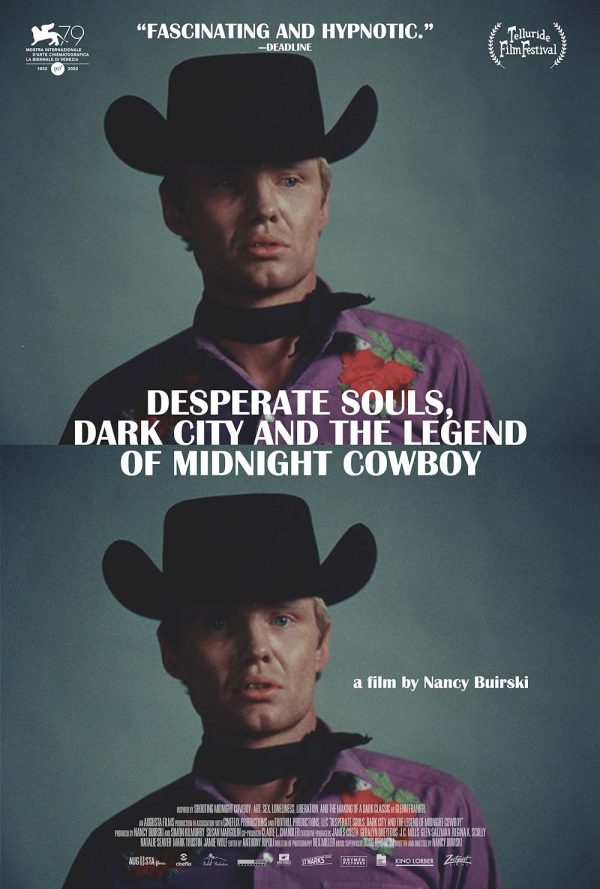 ______________________________________________


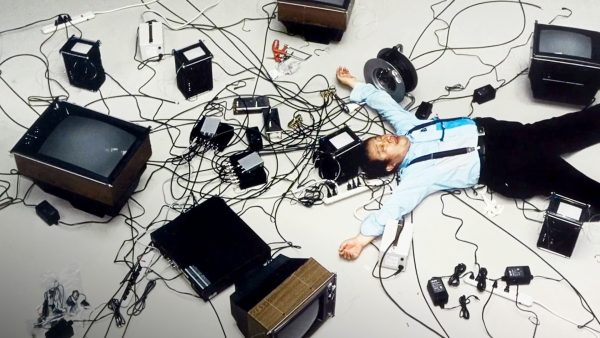


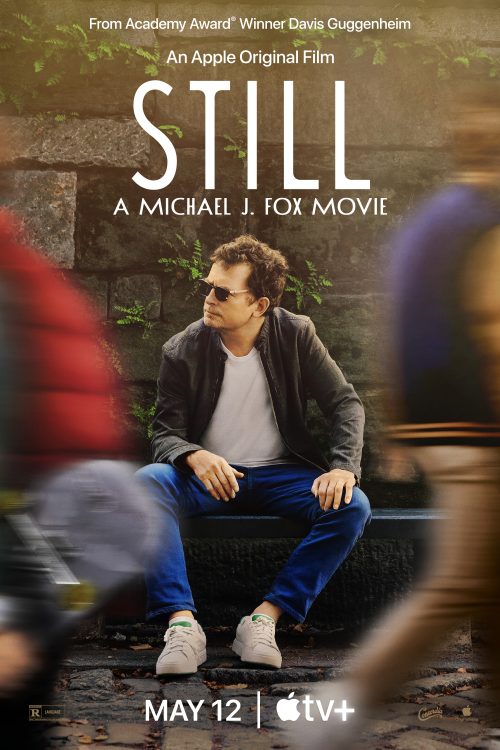


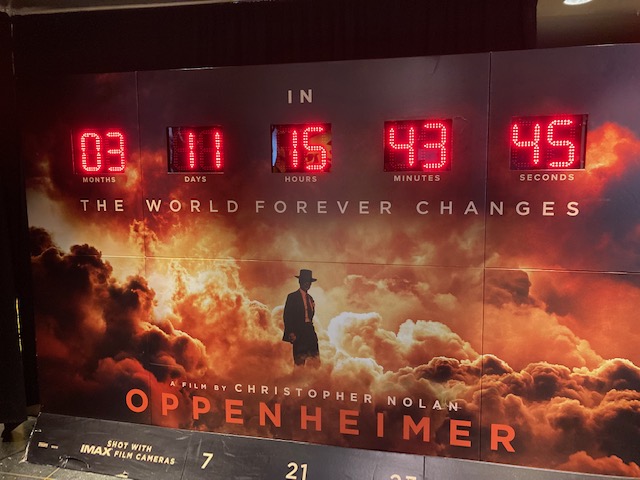
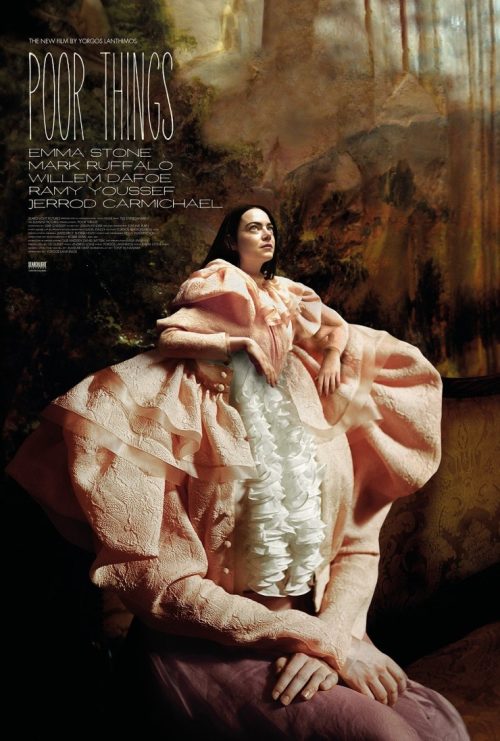
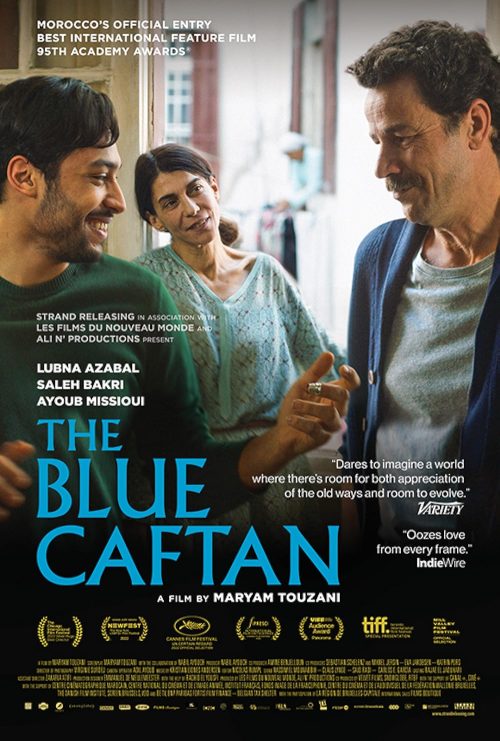
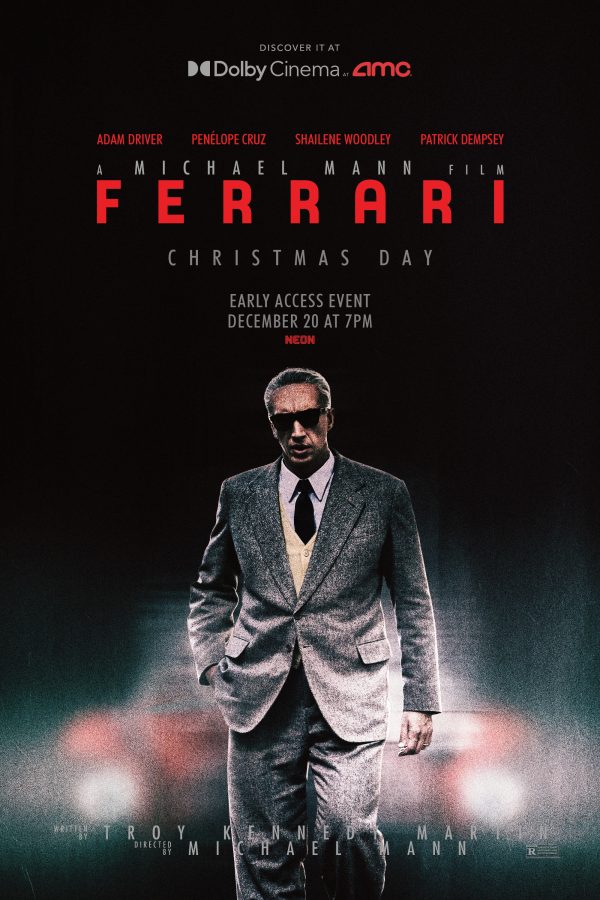


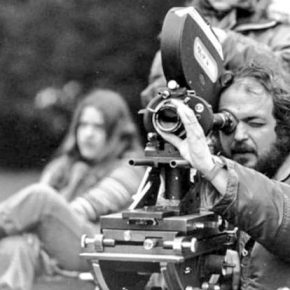
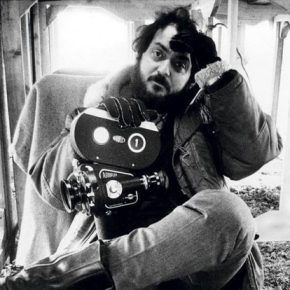

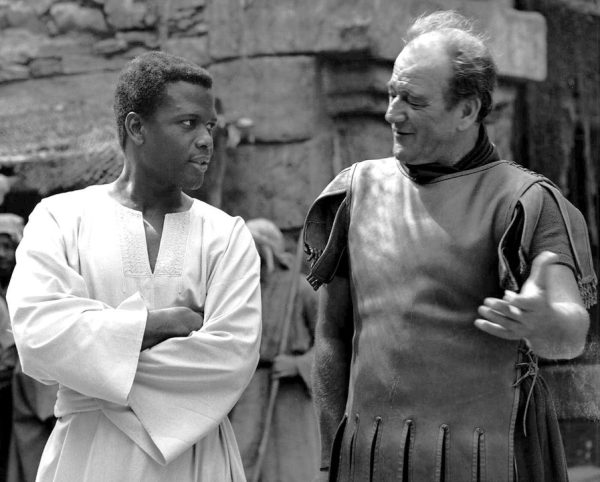

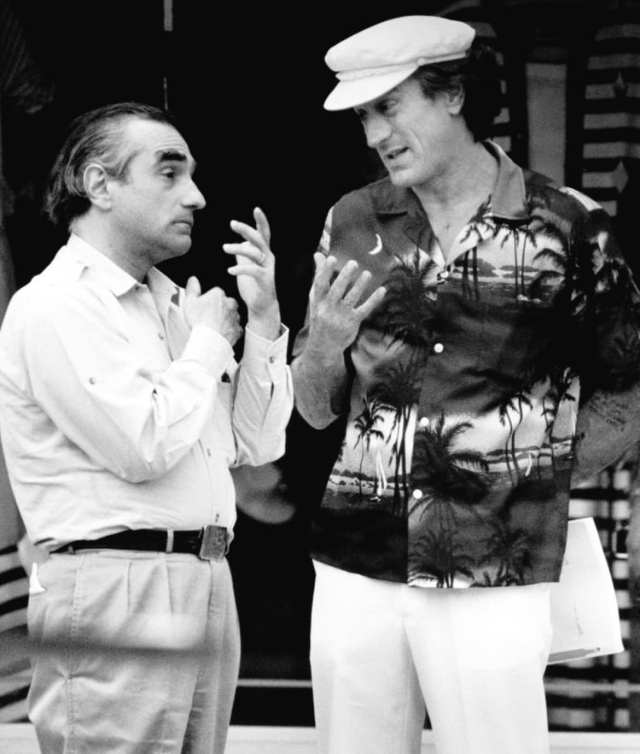


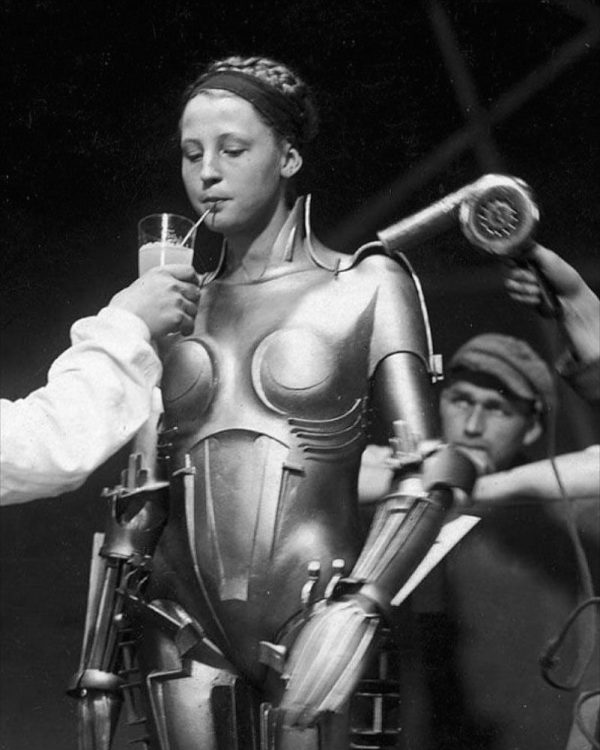


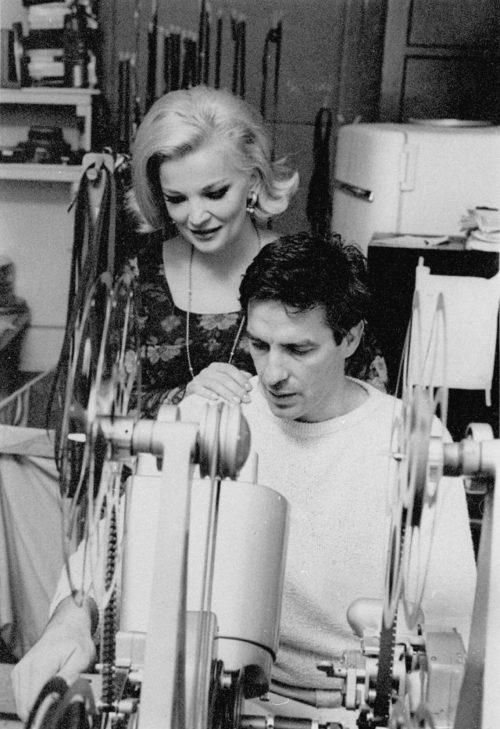
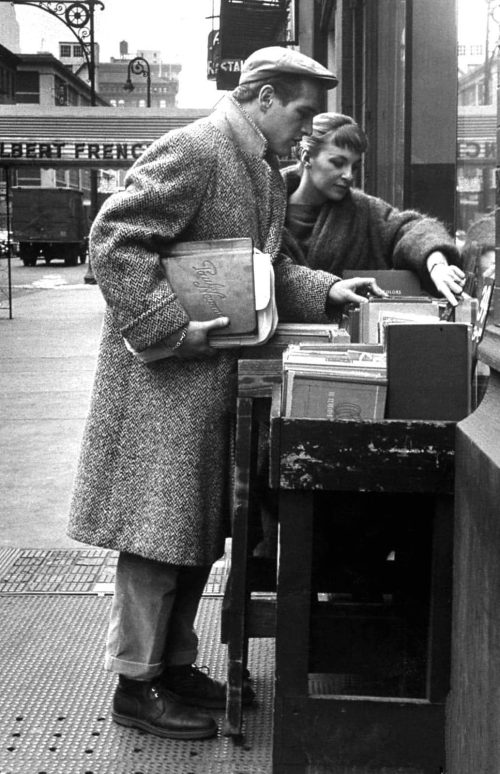

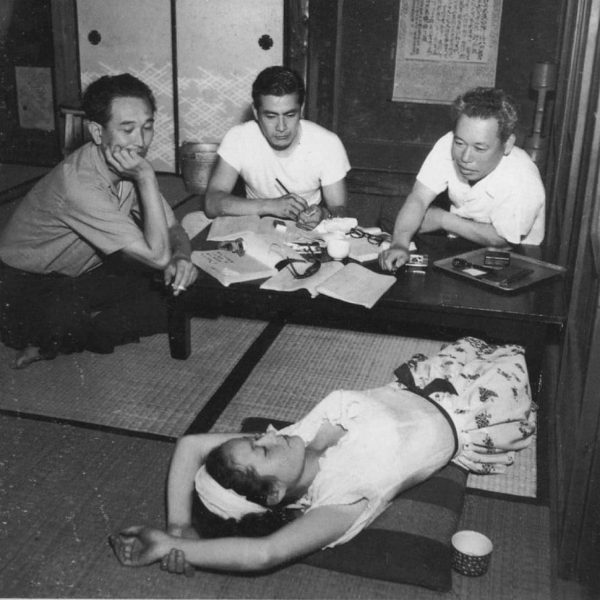


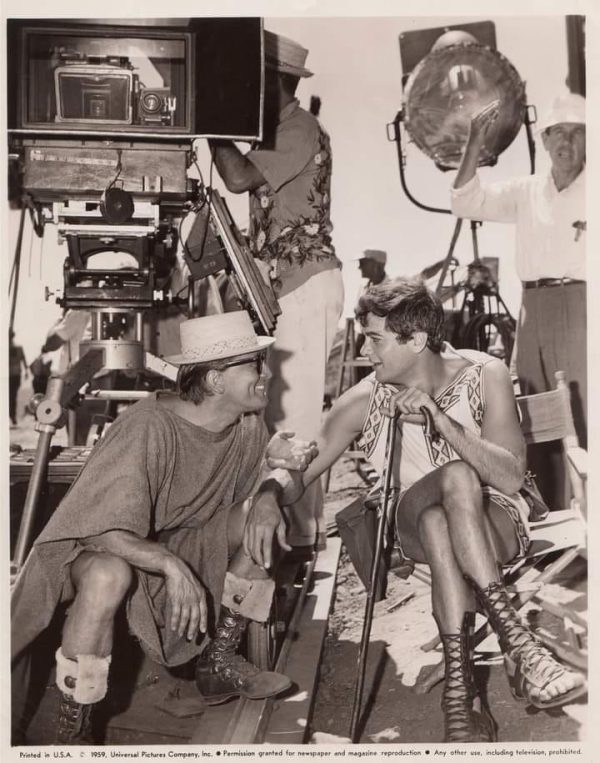
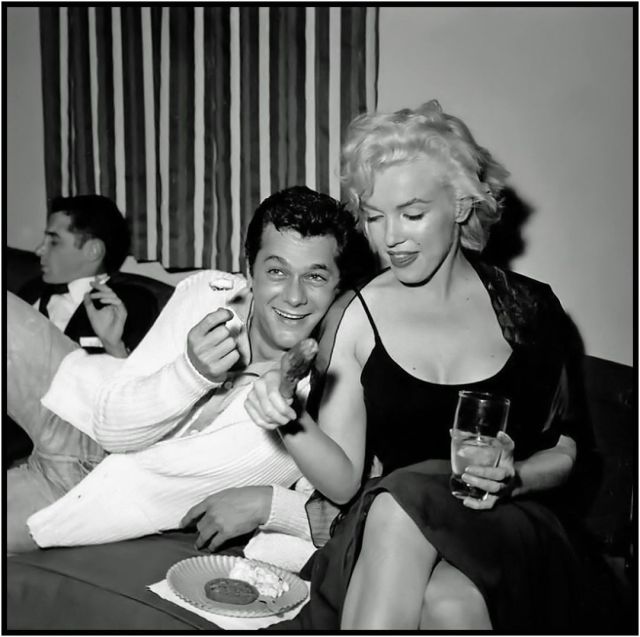
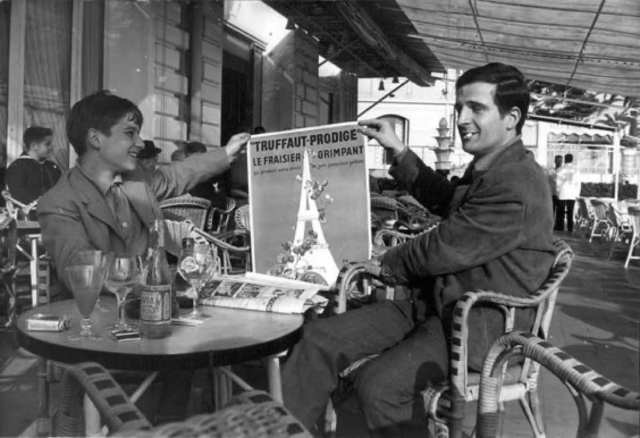


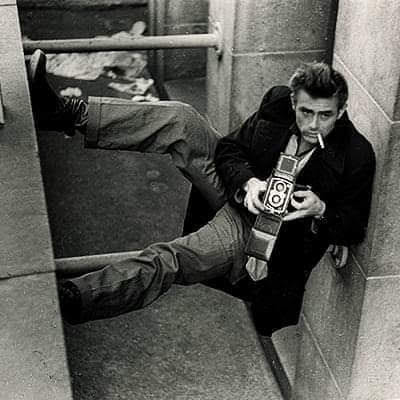


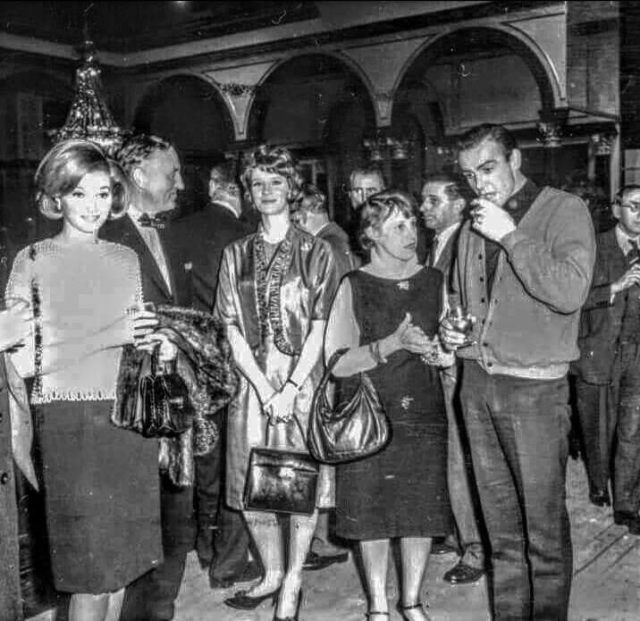
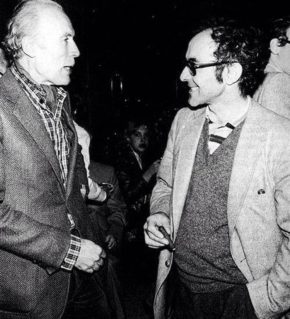
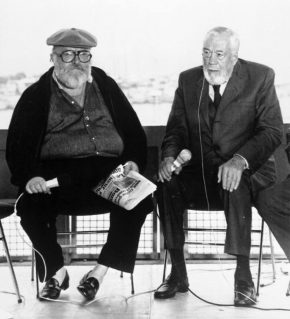
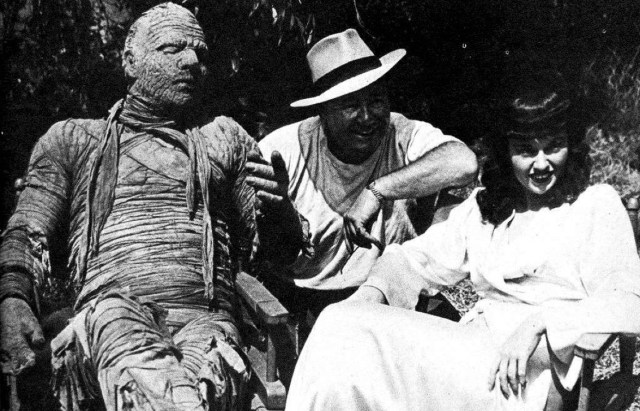

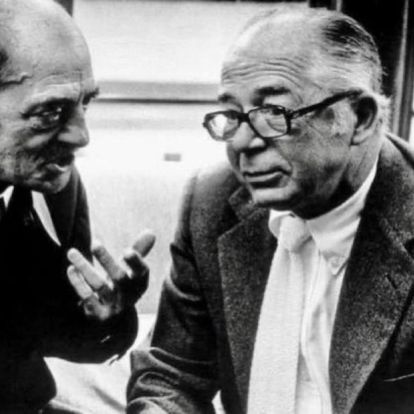
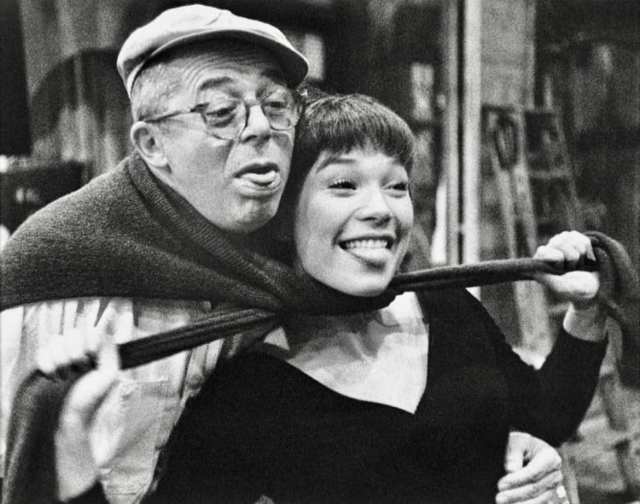


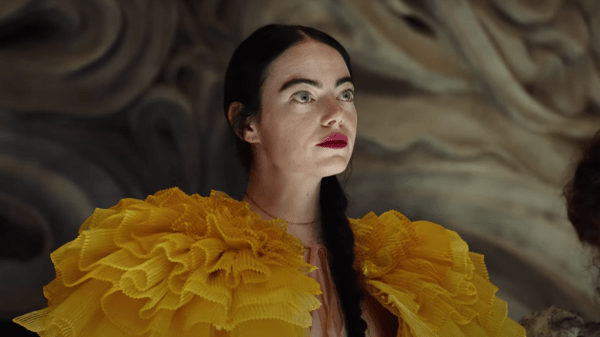
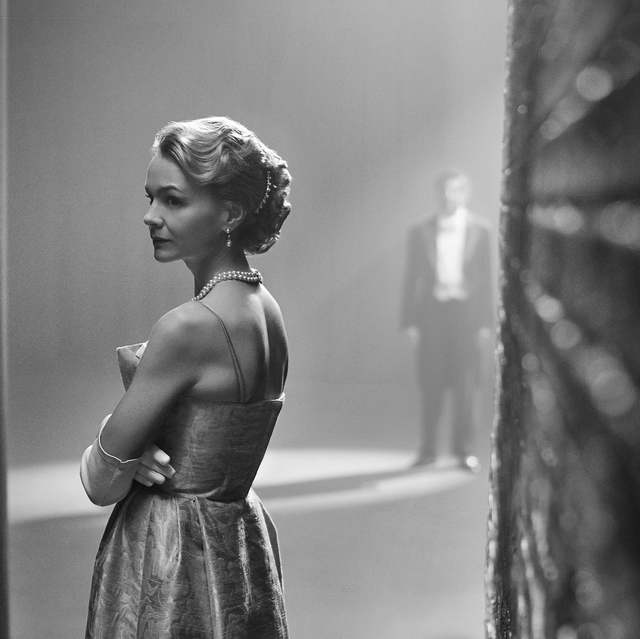
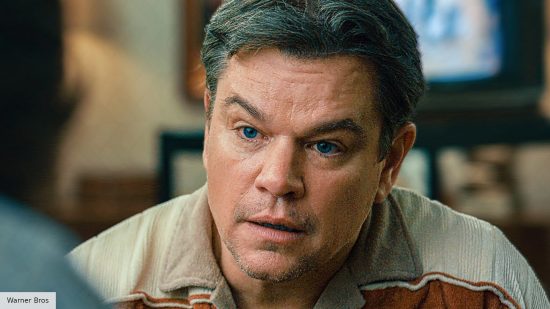

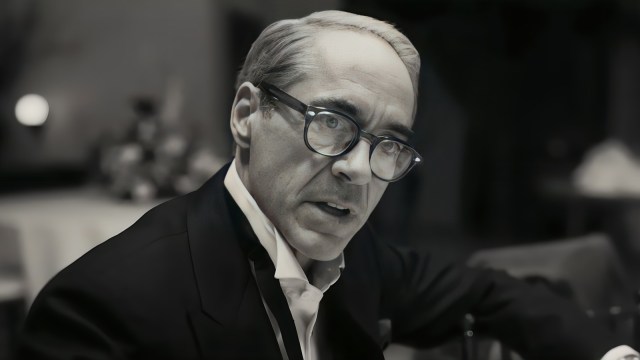
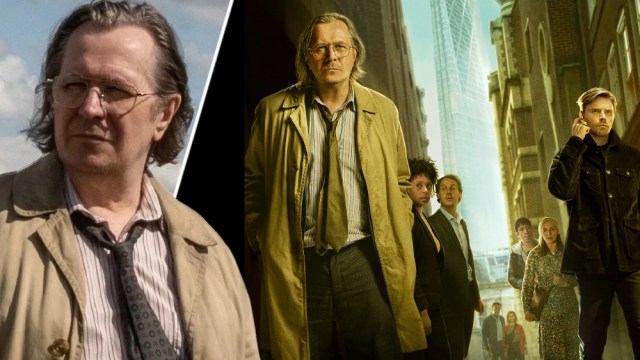


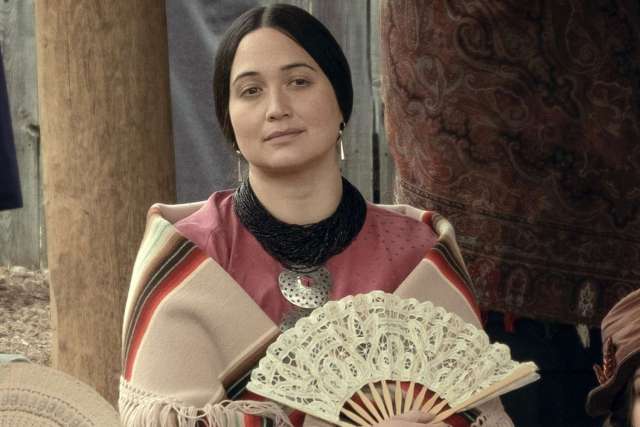

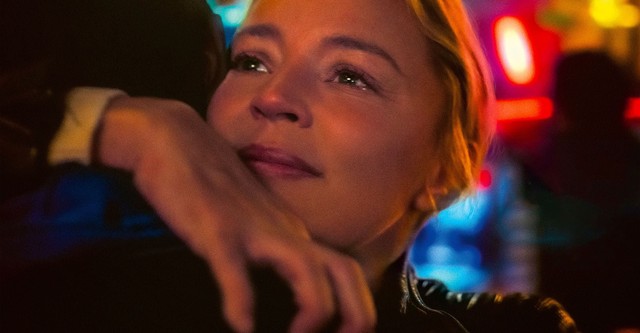
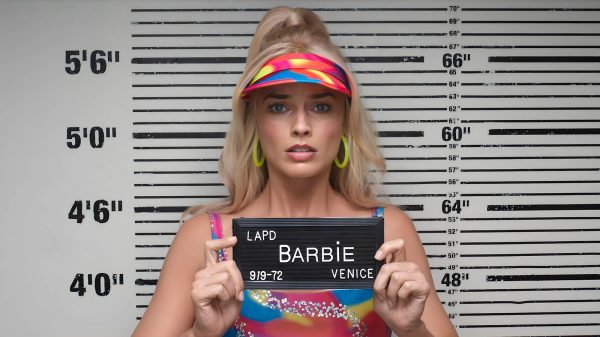
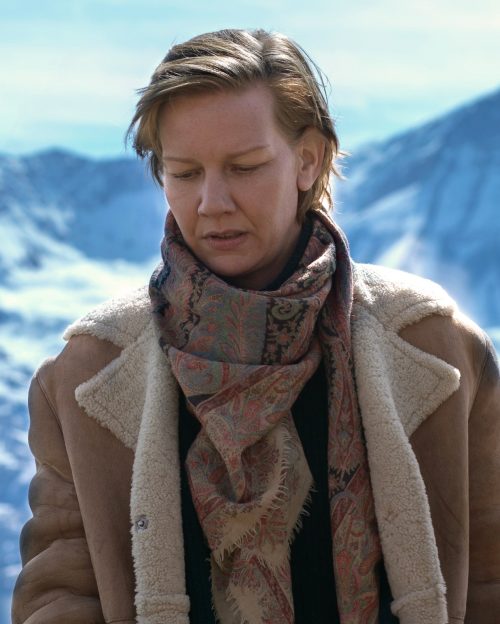
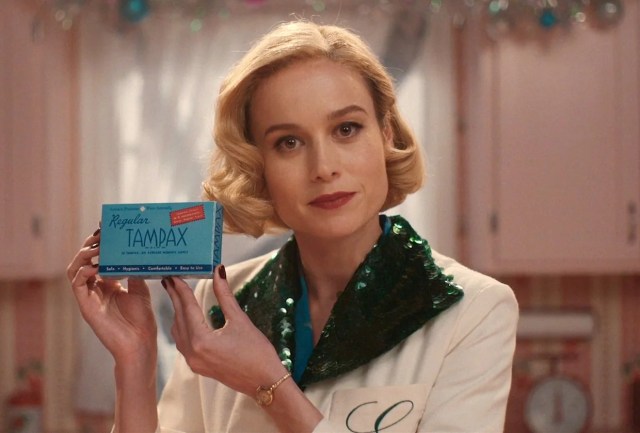

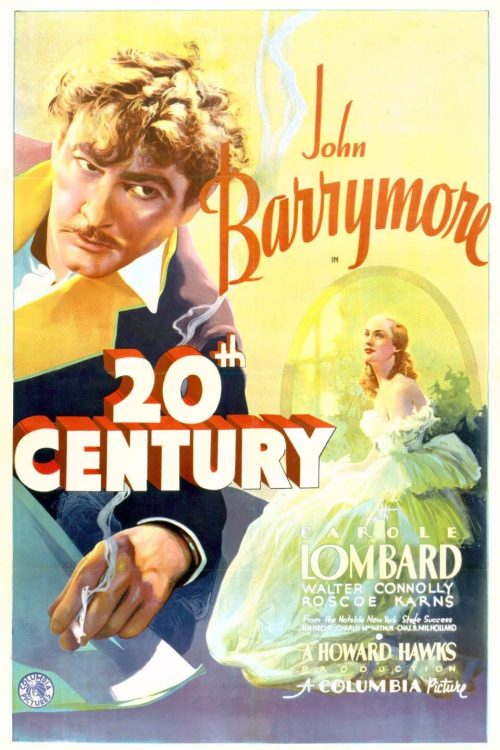
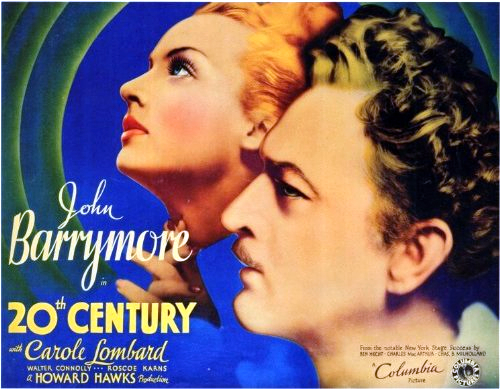
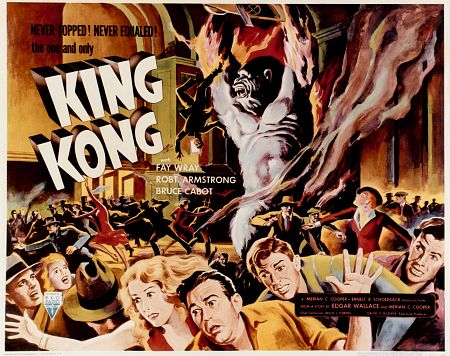
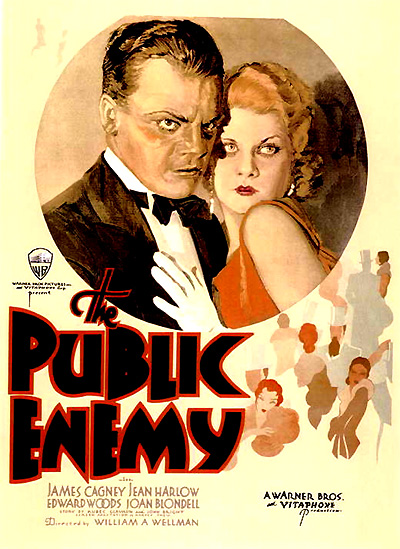
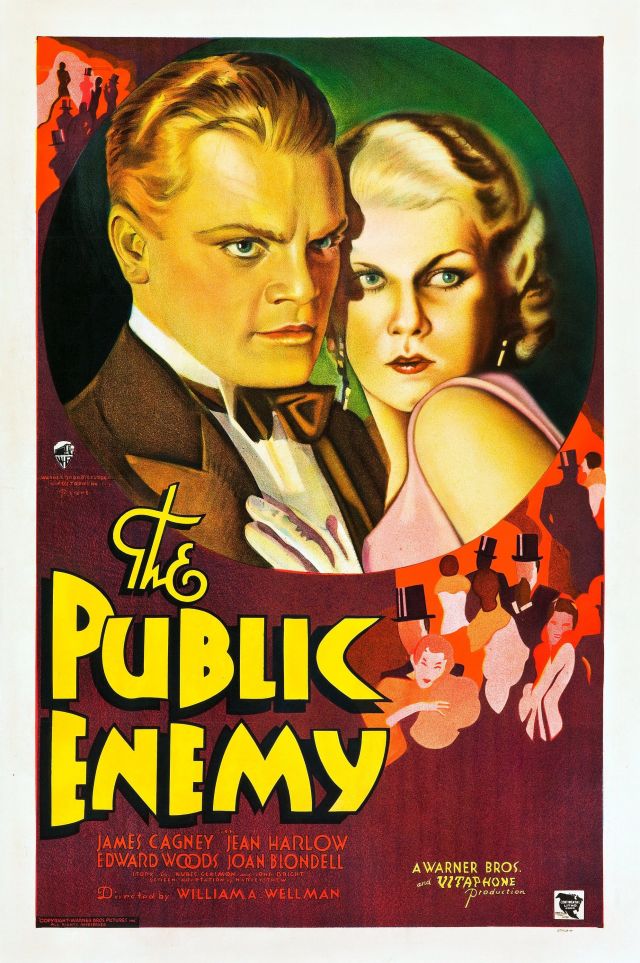


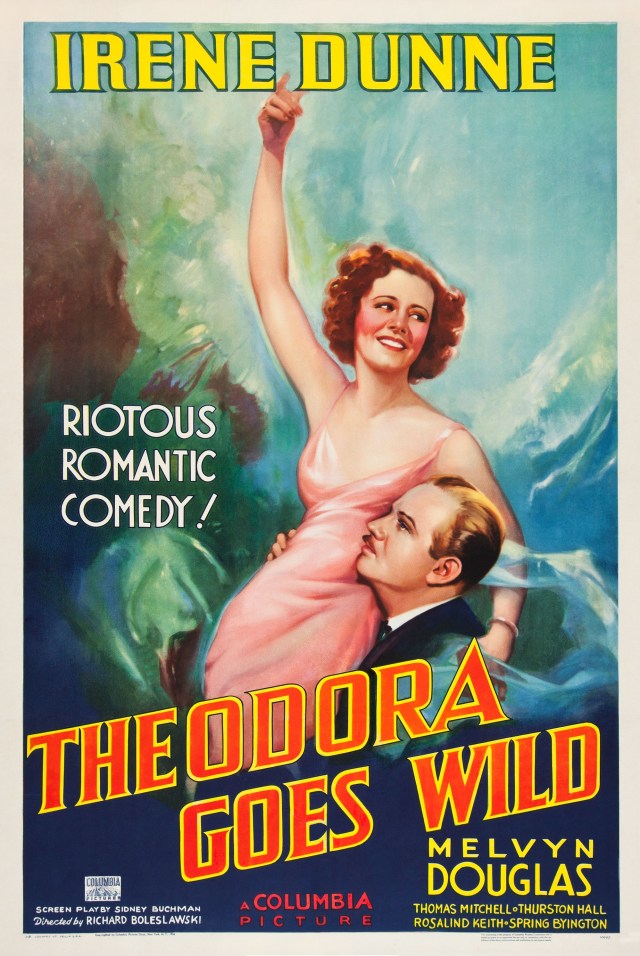

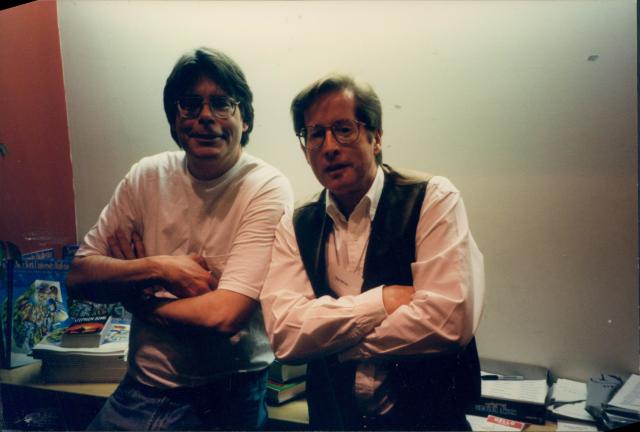

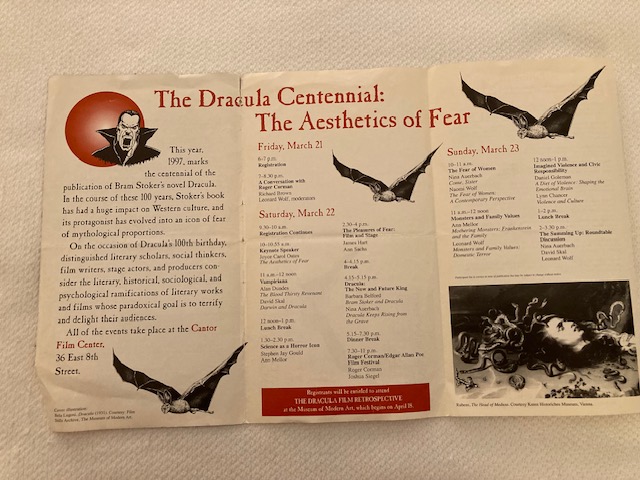
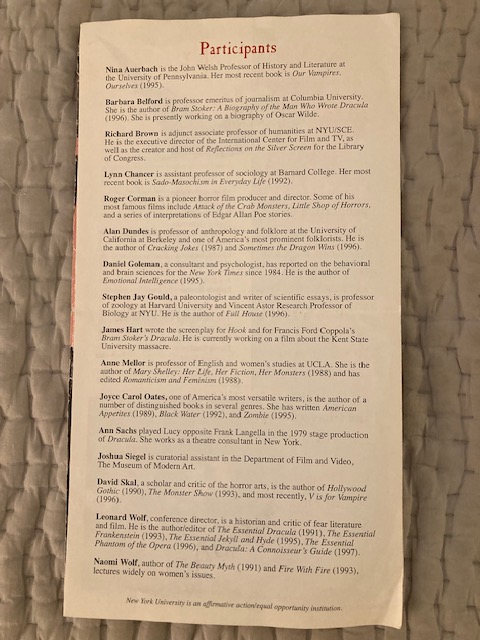
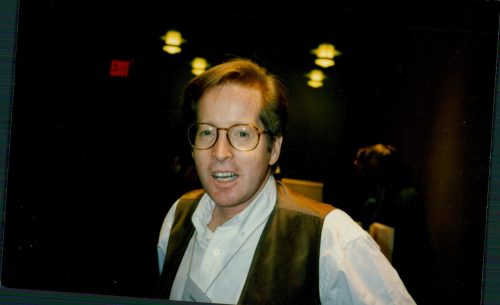


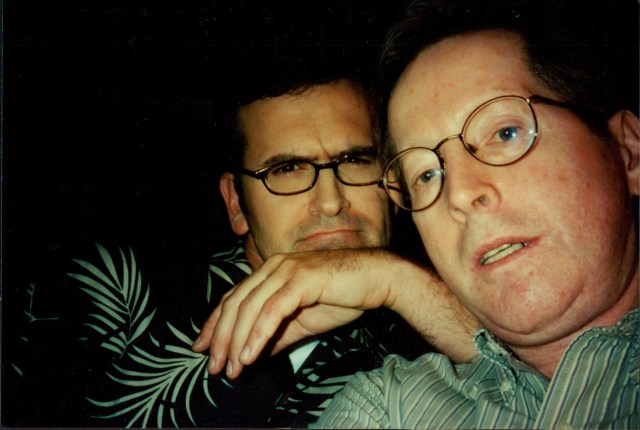


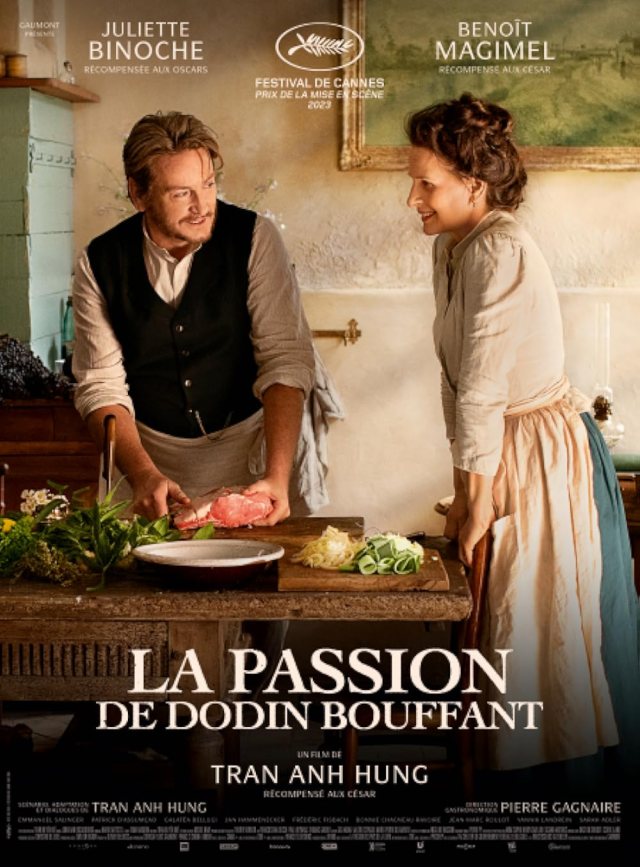



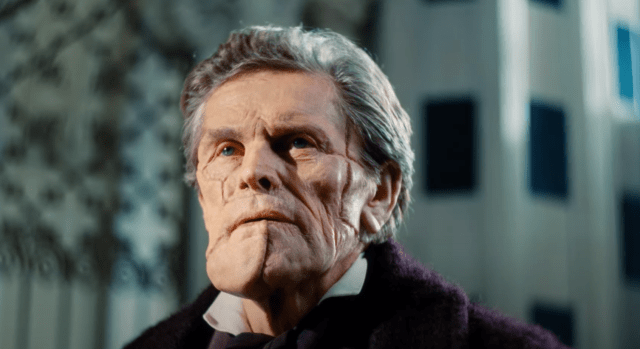

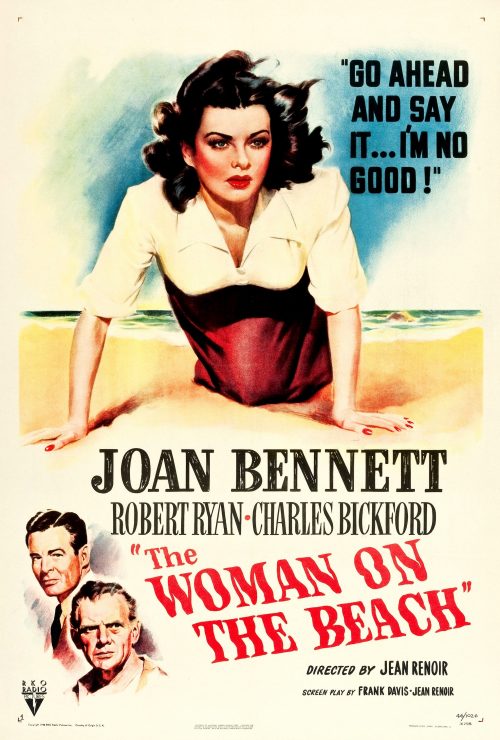






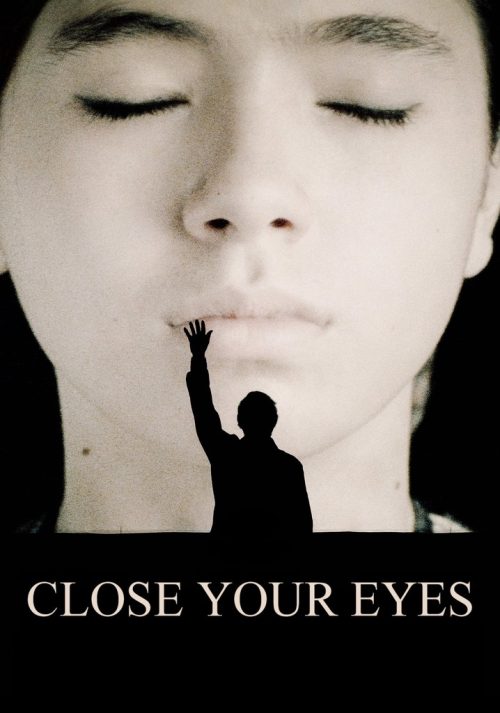


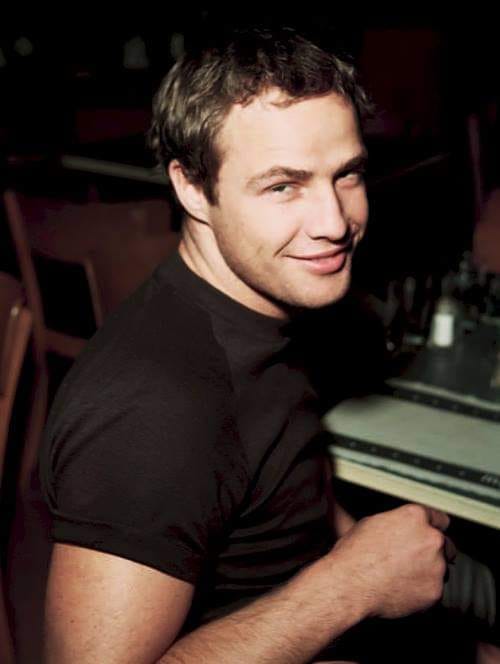
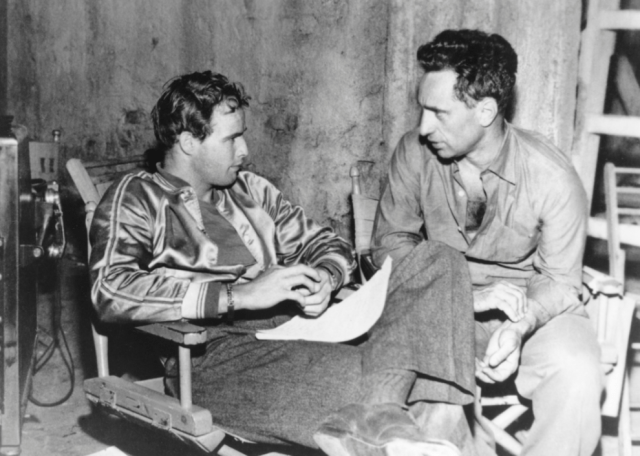


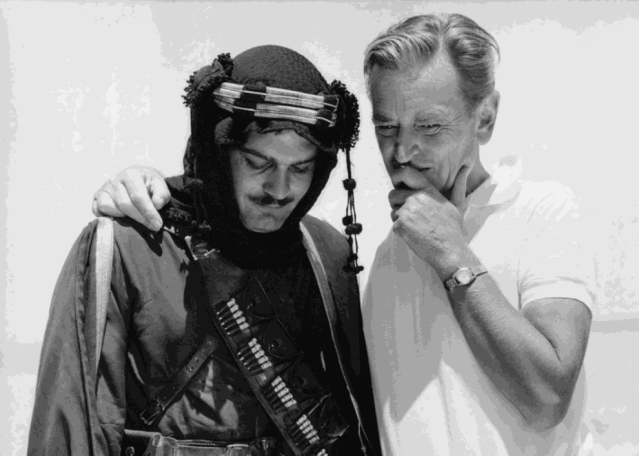

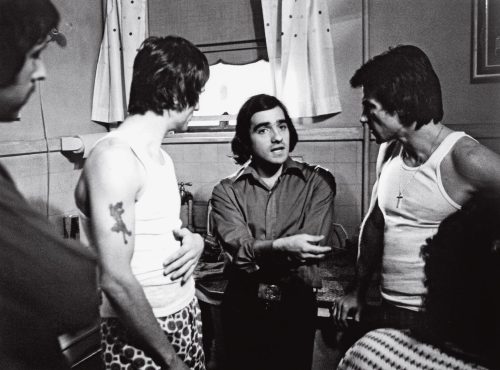
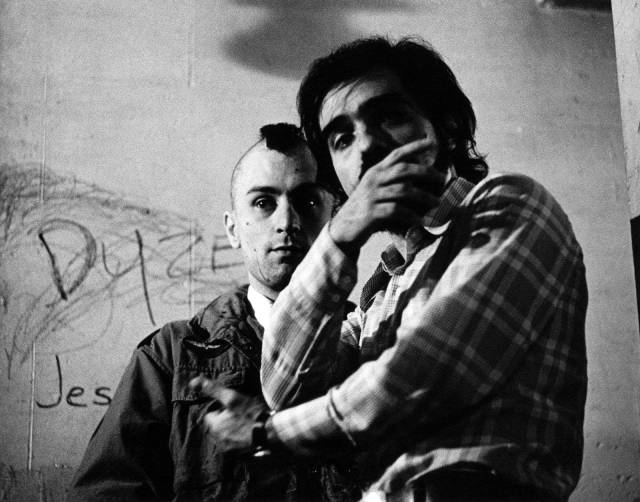
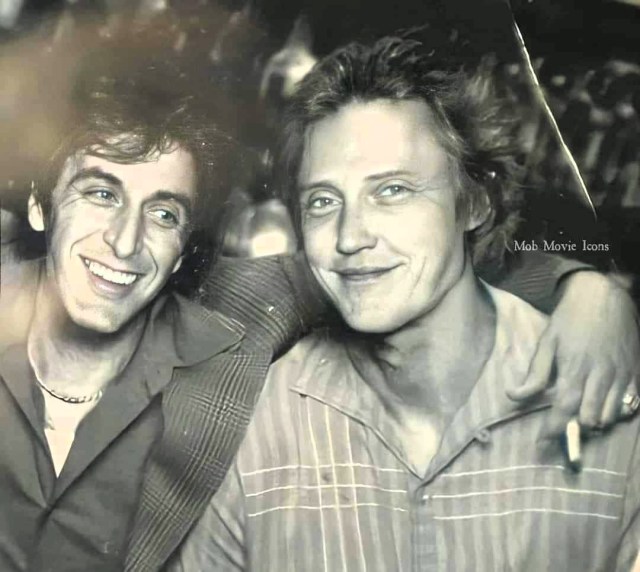


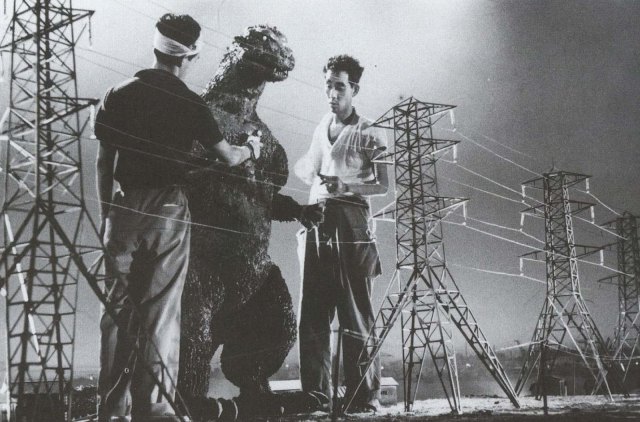
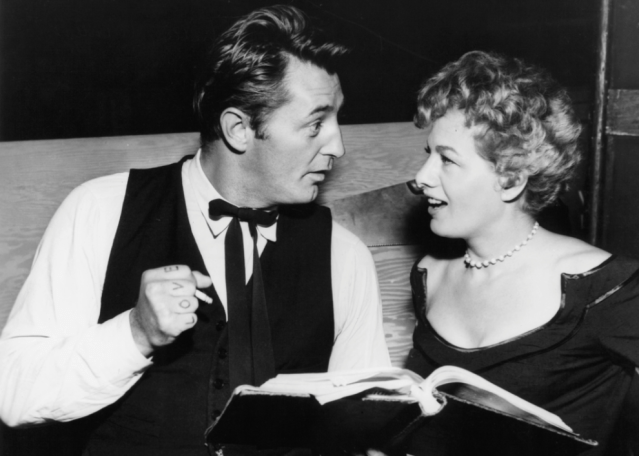


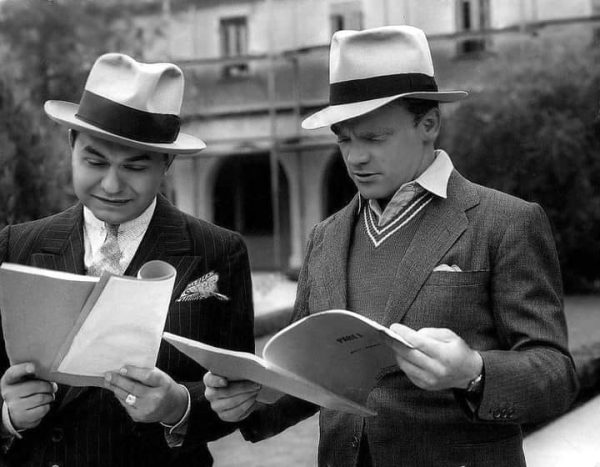


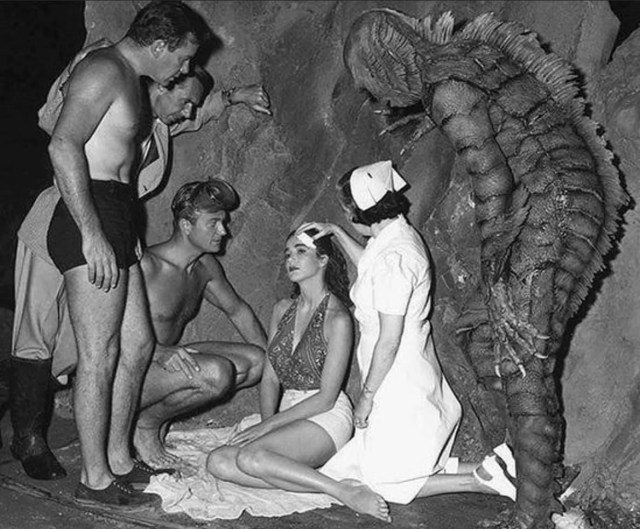
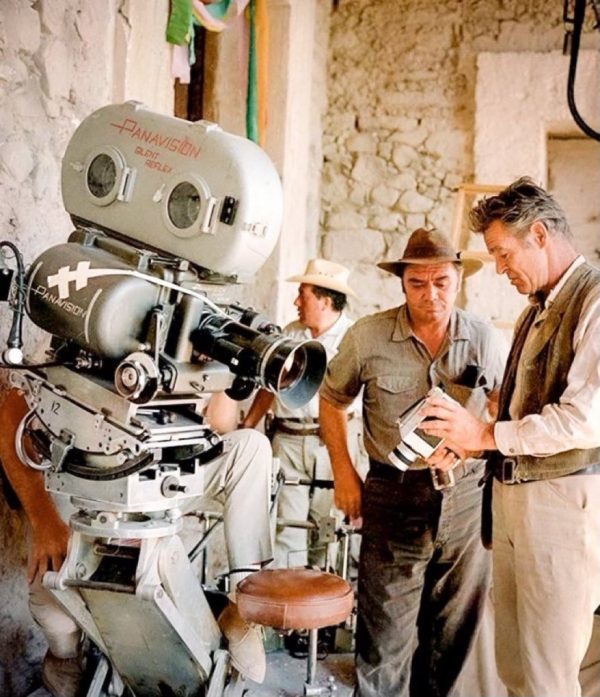


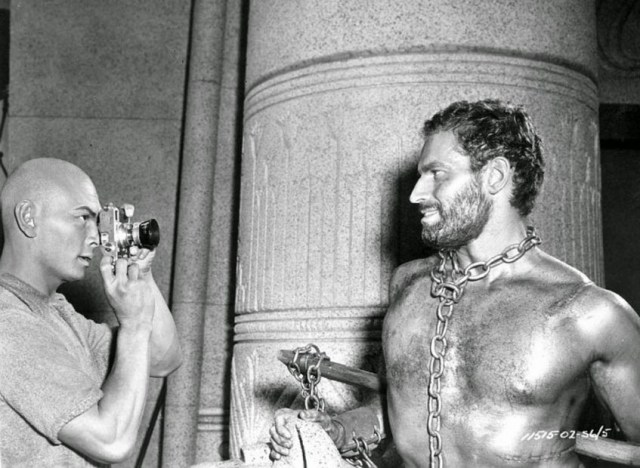
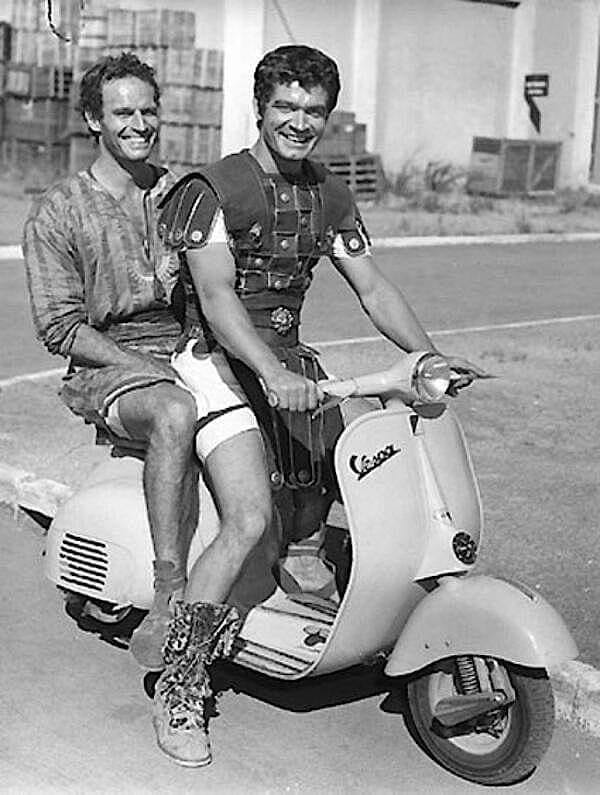
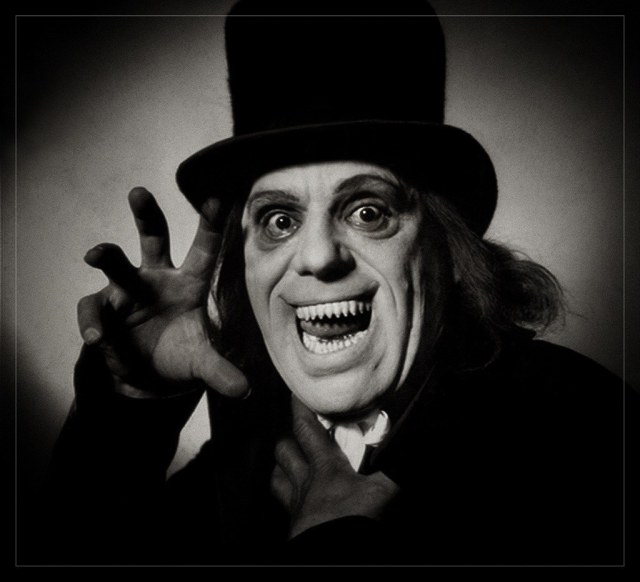


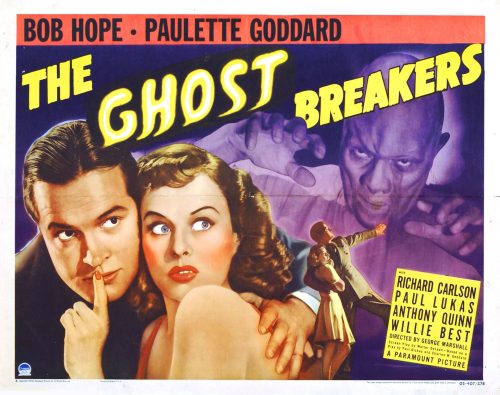

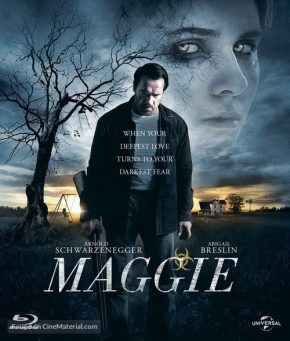
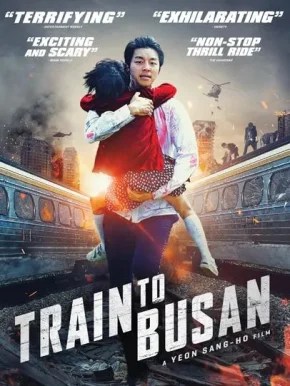
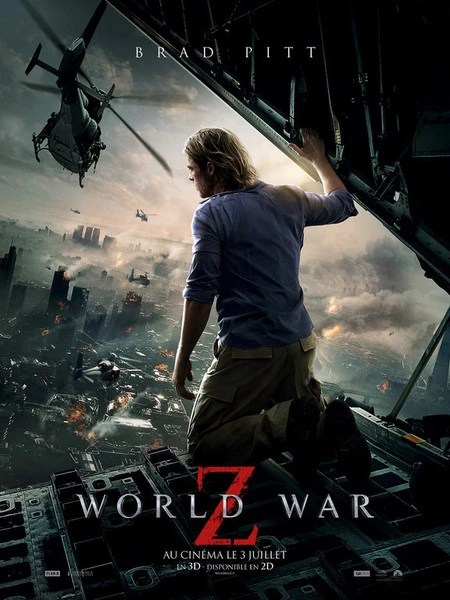

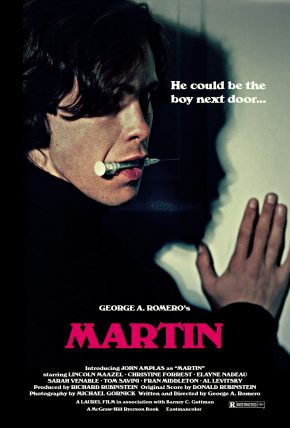

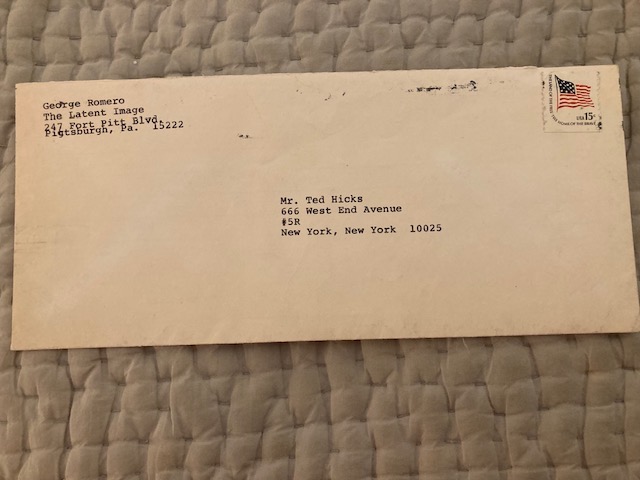


 Films etc.