
 ______________________________________________
The New York Film Festival has grown a lot over the years. I started attending in 1977, the year I moved to the city, when the only venue was Alice Tully Hall (which remains the main venue to this day). At that time, it was possible to see everything being shown, if you were so inclined. This changed with the opening of the Walter Reade Theater in 1991, and then the Elinor Bunin Munroe Film Center in 2011, which has two screens, plus an amphitheater for in-person events. These additional screens allow more films to be shown. Today it would be logistically impossible to see everything in any given year. An embarrassment of riches, so to speak.
By my count, this year’s festival included a total of seventy-four features plus thirty-two shorts. I managed to see seventeen features in the Main Slate, Spotlight, and Revivals categories. Not that many, perhaps, but I think they’re a good sampling that reflects the overall quality of the films shown.
I could be wrong, but it seemed that this year more films than usual were scheduled to open commercially in movie theaters shortly after their festival screenings, in some cases even before the festival ended. I’ve counted nineteen films that have either already opened in theaters or will between now and Christmas. Some of these will be streaming after short runs in theaters. This includes higher profile titles such as After the Hunt (Opening Night), Springsteen: Deliver Me from Nowhere (Spotlight Centerpiece), and Is This Thing On? (Closing Night). When I was making my initial picks of films to see, if I knew which ones would open within the next couple months, I elected to wait rather than pay the higher ticket price. Though there’s something to be said for seeing a film at the festival with a festival audience, and being there for Q&As with filmmakers after the screenings. This feels different from seeing the films in a multiplex. Probably because it is different. In a way, having so many of the festival films available so soon somewhat undercuts the “exclusivity” of seeing them at the festival. I guess paying more for tickets and being lucky enough to get them before they sell out is part of that exclusivity. But not as much as it once was. I remember in earlier years when a lot of films (mostly foreign) were shown that if you didn’t see them at the festival, you might not be able to see them at all. Not everything got distributed in this country. Things change, right? I don’t know, maybe it’s more democratic now.
Following are notes on the films I saw, in the order I saw them.
______________________________________________
Saturday, September 27. Peter Hujar’s Day (Ira Sachs, director/co-writer).
Per the NYFF description: “Ira Sachs’s mesmerizing latest film is based on rediscovered transcripts from an unused 1974 interview by nonfiction writer Linda Rosenkrantz (Rebecca Hall), in which photographer Peter Hujar (Ben Whishaw) narrates the events of the previous day in minute detail…about a difficult shoot with Allen Ginsberg, a confusing visit from a Vogue editor, a call from Susan Sontag, financial and health worries—and set entirely in Rosenkrantz’s apartment, PETER HUJAR’S DAY vividly renders a unique and moving window on an evolving artist at a specific place and time.”
You might think that a film about two people in an apartment with one of them describing everything he did the previous day would be boring. This is anything but, thanks largely to Ben Wishaw, an actor who is immensely engaging and appealing. Multiplex audiences probably know him better as Q in the Daniel Craig Bond films.
Opens on November 7 at Film Forum and Film at Lincoln Center.
_______________________________________________
Monday, September 29. A House of Dynamite (Kathryn Bigelow, director).
 If the purpose of Kathryn Bigelow’s film is to scare the hell out of an audience, mission accomplished. An unidentified missile is detected coming over the Pacific from an unknown source, its trajectory indicating it will strike somewhere in the continental United States, most likely Chicago. Once this kicks off, it never lets up, as various governmental agencies race to figure out what’s going on, how to deal with it and how to respond. The film gets seconds away from point of impact at least twice, then rewinds to start the clock over in different locations and agencies. The cast is excellent. Not a lot of laughs. It’s especially unnerving, in light of our president’s plans to resume nuclear testing.
Opened at the Paris Theater on October 10, began streaming October 24 on Netflix.
_______________________________________________
Monday, September 29. Blue Moon (Richard Linklater, director).
Per the NYFF description: A portrait of one crucial night in the melancholy life of legendary lyricist Lorenz Hart (played by Ethan Hawke, in a tour de force), Blue Moon is a surprising yet entirely fitting addition to the Richard Linklater canon.
Ethan Hawke radically transformed his appearance for this part. I found his look a little hard to get used to, but his performance is outstanding. Also excellent are Andrew Scott as Hart’s songwriting partner Richard Rogers, and Bobby Canavale as a bartender at Sardi’s, where the film is set over the course of one eventful, strung-out night.
Opened in New York City on October 17.
_______________________________________________
Tuesday, September 30. Queen Kelly (1929 — Erich von Stroheim, Richard Boleslawski, directors).
This film was part of the Revivals section of the festival. I’d not seen it before, but was interested because of the history behind it. It’s Erich von Stroheim’s uncompleted final film, with Gloria Swanson starring. Their connection to Sunset Boulevard (1950) resonates. I doubt I could have been more disappointed. The acting seems absurd and overdone, even for the period. It’s crude and often incoherent, pasted together, though that may be partly because Von Stroheim wasn’t allowed to finish it. I guess I’m glad I saw it, so I can check that box, but got nothing from it. Though the poster below is pretty cool.
 _______________________________________________
 Thursday, October 2. Days and Nights in the Forest (1970 — Satyajit Ray, director/writer).
Per IMDb: Four carefree, jaded middle-class bachelors from Calcutta head out for a holiday in the wilderness. Before long, each man undergoes their own journey of self-discovery.
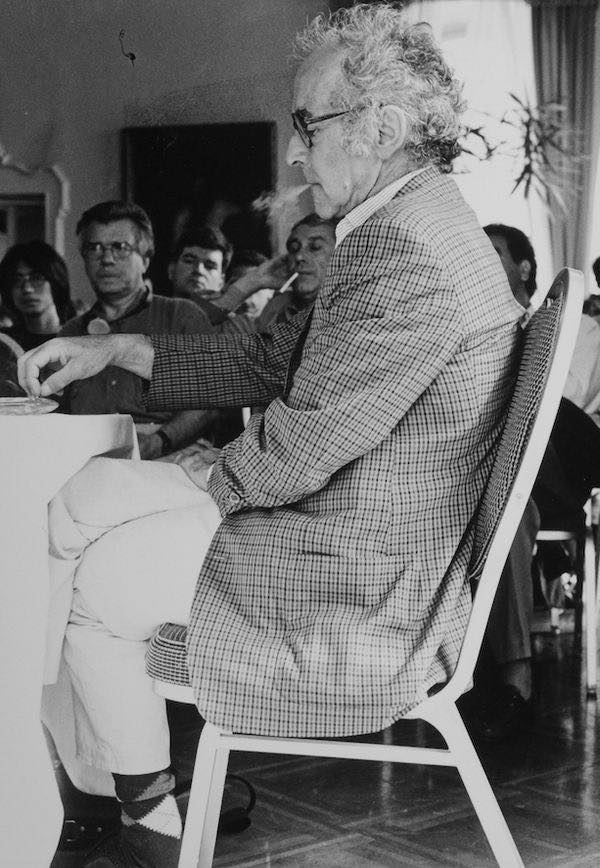
I’d seen Satyajit Ray’s famed Apu Trilogy (1955-1959) and several of his other films. He was a major film director. This film was in the Festival’s Revivals section and I wanted to see it. The relationships between the four men and their personalities are quite engaging. I need to see more of his films.

Satyajit Ray
_______________________________________________
Saturday, October 4. Mr. Scorsese (Rebecca Miller, director).
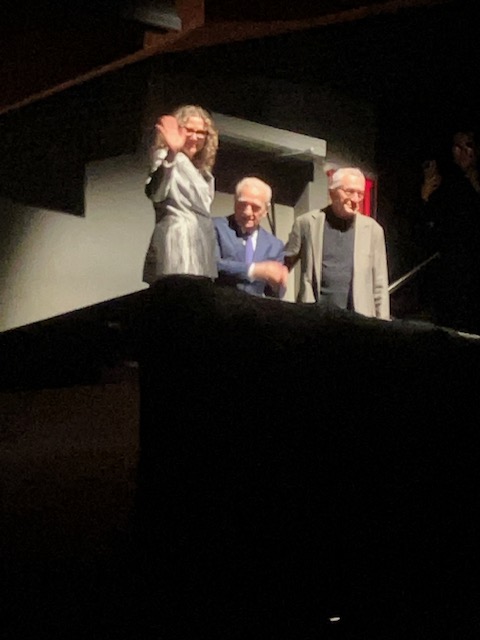
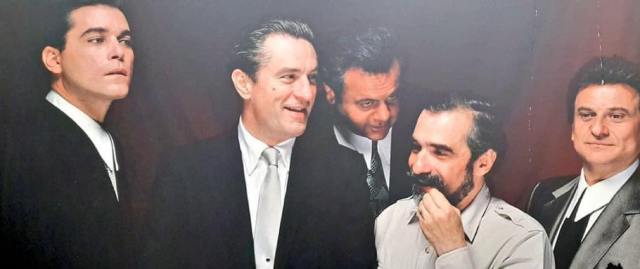
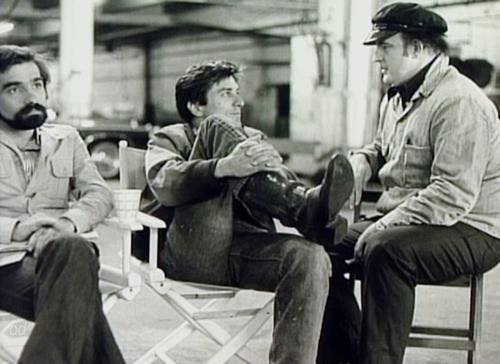
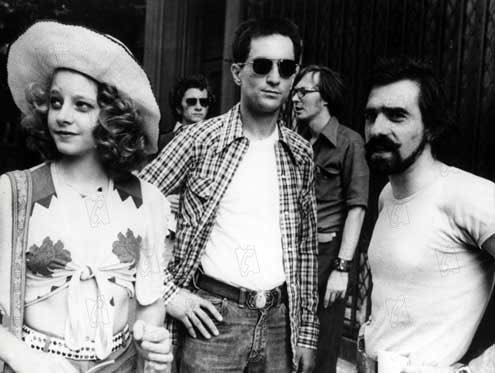
 Well, hell, Martin Scorsese, right? Made as a five-part series for Apple TV, the festival was screening all five episodes together on Saturday, October 4. This would mean 4 hours and 45 minutes with one 30 minute break after the third episode. Initially, I didn’t plan to see it. The running time seemed a little daunting, and I could wait to stream it like a more rational person. But the thought of seeing it all in one go on a theater screen proved too tempting. These immersive experiences usually pay off. Rebecca Miller’s documentary is a pretty deep dive. Scorsese is always incredibly informative and entertaining when he speaks; he gets a lot of time here. Interviews, archival footage and home movies, plus an abundance of great clips from his many films are skillfully edited in a way that feels very lively. During the end credits of the final episode, a light came up in a box seat section on one side of the auditorium to reveal Rebecca Miller, Robert De Niro, and Martin Scorsese standing there. After spending nearly five hours with them onscreen, this felt like a real bonus, the cherry on top.
Currently streaming on Apple TV.
_______________________________________________
Sunday, October 5. Stiller & Meara: Nothing Is Lost (Ben Stiller, director).
 This is great. Ben Stiller’s extremely personal documentary about his parents, Jerry Stiller and Anne Meara, their lives and careers. Stiller and Meara were a very successful comedy team in the 1960s and ’70s, kind of a rowdier Nichols and May. After his parents deaths – Anne in 2015 and Jerry in 2020 – Ben and his sister Amy began going through possessions in their apartment on Riverside Drive. Jerry had made hundreds of cassette recordings of the family and carefully labelled every one. These, plus home movies, letters, and much else, including interviews with their friends and colleagues, provided the material that Ben would use in putting the documentary together. I especially liked the interview with Christopher Walken. He’s funny and entertaining in that off-kilter way of his.
Opened on October 17 at the IFC Center, now streaming on Apple TV.
_______________________________________________
Sunday, October 5. A Private Life (Rebecca Zlotowski, director/co-writer).
 Per the NYFF description: Rebecca Zlotowski’s unpredictable and playful murder mystery stars an entrancing Jodie Foster, in her first French-language performance, as an American psychoanalyst in Paris whose tightly knit world begins to unravel after the sudden death of a patient.
Jodie Foster stars in this psychological murder mystery/thriller from French director Rebecca Zlotowski. Foster is fluent in French, so the fact that she speaks it in this film isn’t quite the big deal some people seem to think it is, though it takes some getting used to. I didn’t like the film, found it scattered, disconnected, increasingly illogical and almost farcical at times. Though it occurs to me now that I may have misread it. Seeing the film as a straightforward, realistic narrative, as I tried to do, doesn’t work. At least, not for me. Maybe it’s a satire, a comedy of sorts playing with genre elements. Or it’s something else. In any case, I missed it. That makes more sense, because there was too much talent involved for the film to be as off as I thought it was.
A Private Life has a strong cast, which includes Daniel Auteuil, Virginia Efire, Matthieu Amalric, Vincent Lacoste, Irene Jacob (blink and you’ll miss her), and Aurore Clement. In an odd bit of casting, the great documentary filmmaker Frederick Wiseman appears in a scene as “Dr. Goldstein.” I can’t remember why his character was there. Have to wonder how this came about.
Here’s a clip out of context that gives a sense of the visual approach.
_______________________________________________
Wednesday, October 8. Resurrection (Bi Gan, director/writer).
 Per the NYFF description: This phantasmagoric dream machine from visionary Chinese director Bi Gan is an elusive yet monumental love letter to a century of cinema, unfolding over five chapters that feature a dazzling array of styles and genres.
I loved this film, but am unable to describe it in a way that makes much sense. It’s a shapeshifting mashup of many different elements. I’d need to see it again, which I intend to do. Or maybe a dozen times, to get a better handle on what’s going on and how it all goes together. A few years ago I saw Bi Gan’s Long Days Journey into Night (nothing to do with Eugene O’Neill), which is similar to Resurrection in style and structure. I was drawn in and became quite disoriented, at one point not sure what theater I was in or what day it was. With both films I gave up trying to make sense of what was going on and just went with it.
Opens December 12 at Film at Lincoln Center.
________________________________________________
Wednesday, October 8. Cover-Up (Laura Poitras, Mark Obenhaus, directors).
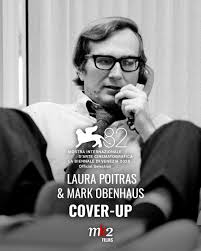 Per the NYFF description: For the past six decades, Seymour Hersh has been at the front lines of political journalism in the United States. Hersh’s breakthrough reportage has brought to the public’s attention many of the most damning constitutional wrongdoings and cover-ups, from the My Lai massacre in South Vietnam to the CIA’s involvement in plots to assassinate foreign leaders to the Iraq invasion and systematic tortures at Abu Ghraib. In many cases, the revelations of his work have led to governmental reckonings and legal ramifications, yet Hersh, now 88 and surrounded by boxes of files from decades of tireless work, sees himself not as a crusader but as a citizen just doing his job.
Terrific documentary. Hersh is dedicated to getting at the truth of things. He’s relentless about that. Not a warm and fuzzy guy, he calls things as they are. In an excellent Q&A after the screening we saw, he was not hopeful about the current state of our democracy. This is an important film.
Opens December 19 at Film Forum.
________________________________________________
Thursday, October 9. Late Fame (Kent Jones, director).
 Per the NYFF description: In Kent Jones’s marvelously witty second feature, a once-upon-a-time New York poet (Willem Dafoe) gets an ego boost when he is welcomed into the world of an emerging literary salon, but must reckon with the authenticity of his newfound circle of twentysomething admirers.
Very good film that concerns literary life in New York City and a poet (Willem Dafoe), who had some renown years back but stopped writing and has worked in the post office for the last thirty years. A group of aspiring writers might provide a second chance. Dafoe is, as always, excellent and authentic. The cast also features Greta Lee, who seems to be everywhere these days — Past Lives , Tron: Ares, A House of Dynamite, and The Morning Show. I really liked Jones’ previous feature, Diane (2018). His résumé includes film criticism, screenwriting, programmer, and directin. On top of that, he was director of the New York Film Festival from 2012-2019, which is when I was most aware of him.
No release date as yet.
________________________________________________
Thursday, October 9. Miroirs No. 3 (Christian Petzold, director/writer).
 Per the NYFF description: Christian Petzold’s haunting, beautifully crafted new film stars Paula Beer as a pianist from Berlin who’s taken in by a mysterious woman in an isolated country house after surviving a violent car crash.
Petzold is an excellent director. Films of his I’ve seen and liked include Jerichow (2008), Barbara (2012), Phoenix (2014), Transit (2018), and Afire (2023). His films feature strong female characters, usually played by Nina Hoss or Paula Beer, and are not predictable; they reveal themselves slowly.
No release date as yet.
_______________________________________________
 Friday, October 10. No Other Choice (Park Chan-wook, director/co-writer).
Per the NFF description: In his diabolical new thriller, Park Chan-wook crafts a dark fable about the cutthroat nature of contemporary work culture, starring Lee Byung Hun as a husband and father who takes violent action after being laid off.
Didn’t care for this, which was a disappointment for me, since I’ve liked his earlier films, especially his amazing Old Boy (2003). Just couldn’t hook into it. I suspect this was my problem, since it seemed like the audience at Alice Tully Hall loved it. I’ll mark this as one to see again.
To be released January 2026 in this country.
_______________________________________________
Saturday, October 11. The Fence (Claire Denis, director/co-writer).
Per NYFF description: In Claire Denis’s absorbing and intimate film, set at a white-run construction site in West Africa, Albouny (Isaach de Bankolé) demands the return of his brother’s body, killed in a mysterious work accident, but the site’s foreman (Matt Dillon) is clearly hiding the truth.
Didn’t like this very much. It’s based on a stage play and feels like it. Isaach de Bankolé, a frequent presence in Denis’ films, is a very strong actor, but his role here is very static. It was interesting to see Matt Dillon in this. The film didn’t feel very real to me; it seemed stiff and guarded. I guess I prefer more naturalism in acting and filmmaking. Though not always, just depends.
No release date as yet.

_______________________________________________
Saturday, October 11. Sentimental Value (Joachim Trier, director/co-writer).
 Per the NYFF description: In Joachim Trier’s Cannes Grand Prix–winning follow-up to The Worst Person in the World, Renate Reinsve burrows to the steely core of an acclaimed stage actress reconnecting with her estranged movie director father (Stellan Skarsgård).
Loved it!!! Probably my favorite film of those I saw in this year’s festival. Stellan Skarsgård is especially good. With Elle Fanning as an American actress cast in the film Skarsgård is directing. Lots of deep feeling in this.
Opens November 7.
_______________________________________________
 Monday, October 13. Magellan (Lav Diaz, director/writer).
Per NYFF description: Every astonishing visual composition carries historical and political weight in the monumental new film from singular Filipino filmmaker Lav Diaz (Norte, The End of History, NYFF51). Gael García Bernal brilliantly subordinates his stardom to Diaz’s discerning camera, disappearing into the role of the Portuguese explorer Ferdinand Magellan, who, at the start of the 16th century, navigated a crew to Southeast Asia after convincing the Spanish crown to fund his journey. Rather than retell the mythical, received narratives of the Age of Discovery, Diaz mounts an impressive and absorbing story of colonial conquest and obsession, depicting Magellan’s charted course to the Malayan Archipelago as a pitiless reckoning with human frailty and brutal violence as much as an evocation of overwhelming natural beauty. A Janus Films release.
I had a very hard time with this film. I was expecting something more traditional, a more conventional narrative. My fault. I didn’t know the director’s previous work, so I didn’t know what I was in for and was unprepared. This is a style of filmmaking that seems to hold everything back — camera, actors, story. There are many scenes where apparently nothing is happening, and the camera will hold on that seemingly forever. I’m not saying this is bad, but it’s just not for me, not in this particular case anyway. I like the films of Russian director Andrei Tarkovsky, for example, films like Solaris (1972) or Stalker (1979), with their very measured (e.g.. slow) rhythms. But Magellan didn’t work for me. As someone once told me, “Sometimes you get on the ride, and sometimes you don’t.”
No release date as yet.
_______________________________________________
Monday, October 13. The Last One for the Road (Francesco Sossai, director/co-writer).
Per NYFF description: Two best friends, who can never seem to make that “one last drink” truly the last, aimlessly if coolly navigate the absurdities of middle age in Italian director Francesco Sossai’s genial, wistful hangout movie. Aimlessly if coolly navigating the absurdities of middle age, Doriano (Pierpaolo Capovilla) and Carlo (Sergio Romano) make for delightful company in Italian director Francesco Sossai’s genial, wistful hangout movie. The two best friends, who can never seem to make that “one last drink” truly the last, imbibe and bicker and trade anecdotes as they traverse the Venetian countryside, befriending an anxious architecture student, Giulio (Filippo Scotti), who’s cramming for an upcoming design exam. Imparting their screwball wisdom to Giulio, and even roping the younger man into some of their half-baked capers
This film about two alcoholic friends and the young student they take hostage as they drift through a long night is very shaggy and quite wonderful. Reminded me of Withnail and I (1987), though more upbeat. This was a great film for Nancy and me to end the festival on. Below are two clips that will give you a sense of The Last One for the Road.
No release date as yet.
_______________________________________________
I’ve since seen the following four festival films.
Anenome (Ronan Day-Lewis, director/co-writer). Co-written with Daniel Day-Lewis, who also stars in his son’s film in his return to screen acting after an eight-year “retirement.” Excellent film, very serious, reveals itself slowly, with a couple moments of almost magical realism.
Has opened in theaters here, but no longer seems to be showing, which is unfortunate.
______________________________________________________
The Mastermind (Kelly Reichardt, director/writer). Josh O’Connor as a hapless art thief in 1970, with Vietnam hanging heavy in the background. Typical of Reichardt’s alt-narrative approach, but I didn’t find it nearly as satisfying as Showing Up (2022), First Cow (2019), Wendy and Lucy (2008).
– Opened October 17 at Film at Lincoln Center. Currently showing.
________________________________________________________
It Was Just an Accident (Jafar Panahi, director/writer). Another excellent film from this Iranian director, it received the Palm d’Or at Cannes this year. He’s the real deal, continued to make films while officially forbidden to do so by his government. Great example of resistance and creation.
Opened October 15 at Film Forum and Film at Lincoln Center. Currently showing..
____________________________________________________
Springsteen: Deliver Me From Nowhere (Scott Cooper, director/writer).
Very good. Scott Cooper is a strong director. I love his first film, Crazy Heart (2009) and later Hostiles (2017). His being the director/writer here is what got me past my initial ambivalent feelings about this film when I first heard about it. Jeremy Alan White had the almost impossible job of recreating Bruce Springsteen, made more challenging by the fact that Bruce is still here. That it centers around the making of the Nebraska album was significant. I love that record. Knowing now that it came out of Springsteen’s deep depression at the time makes it more meaningful to me. I have some reservations, mainly about the fictional girlfriend, but the movie works much more than it doesn’t.
______________________________________________________
That’s all for now. Next up in a few days is a selection of interviews, discussions, and Q&As from the festival. Stay tuned. Happy Halloween! — Ted Hicks
_______________________________________________________
 _________________________________________________–



















































































































 Films etc.