
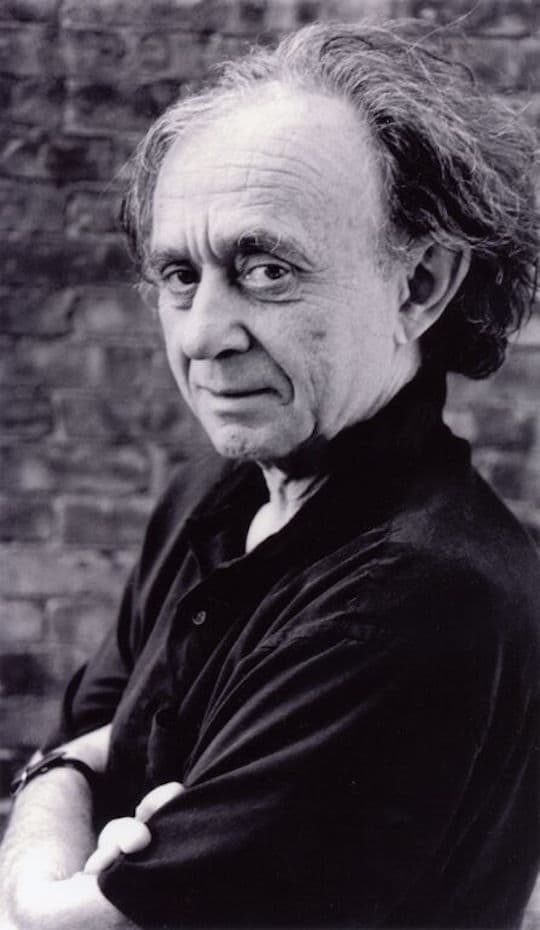
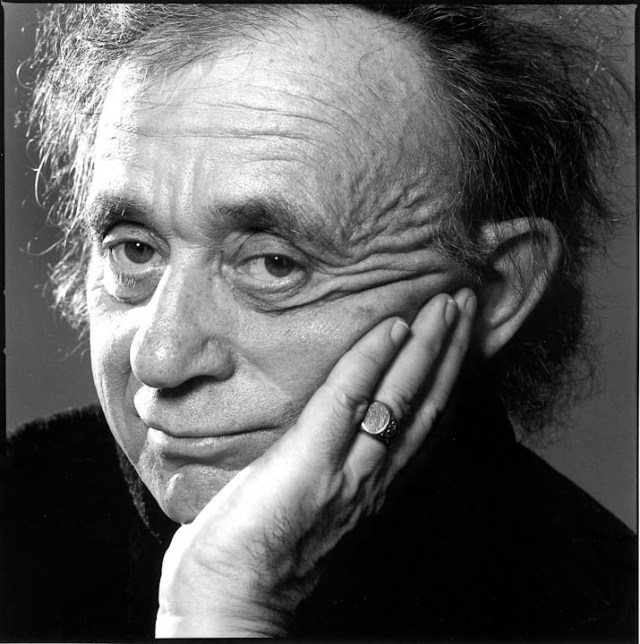
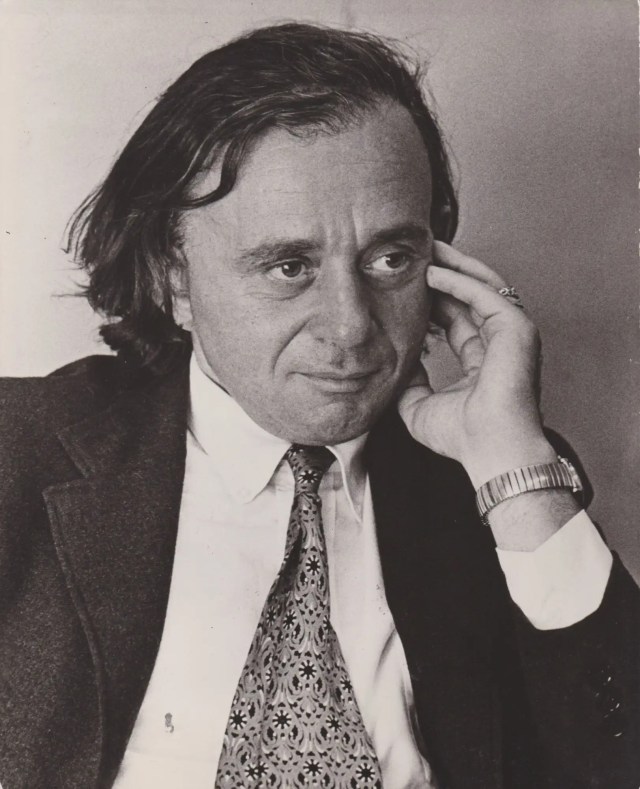
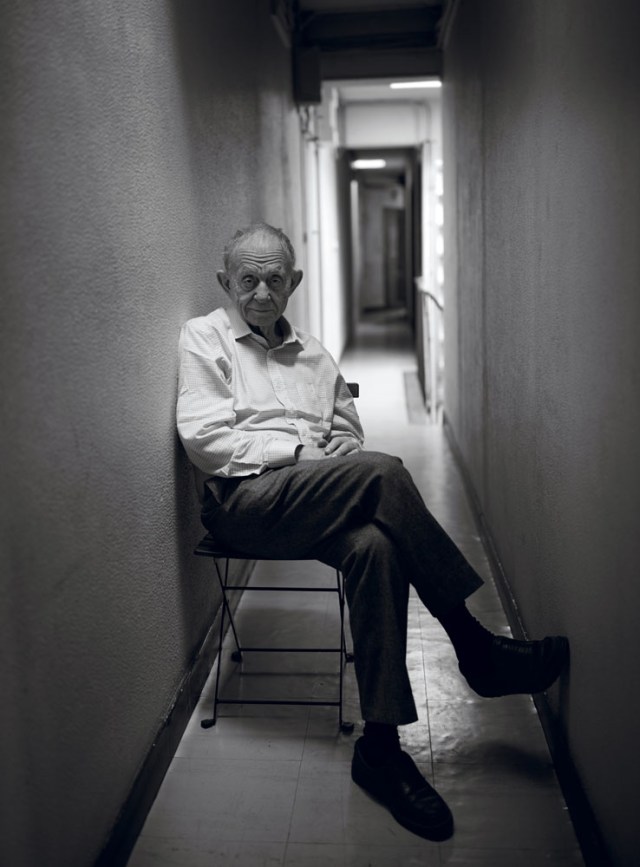
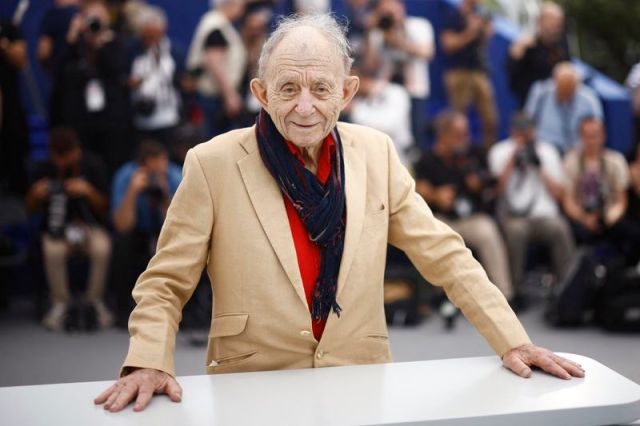
 A lot has already been written about Frederick Wiseman in the wake of his death on February 16, but I wanted to add my thoughts about his extraordinary, unparalleled career. He was a major artist who leaves a massive body of work as his legacy. It’s impossible to overestimate his importance.
____________________________________________
In a piece about the 61st New York Film Festival posted on November 30, 2023, I wrote the following in response to Wiseman’s latest film, the four-hour Menus-Plaisirs Les Troigros:
Fred Wiseman has made a career out of examining institutions of all kinds, often at lengths of three to four hours (or more), without identifying titles, narration, or talking-head interviews. Nothing fancy; we’re just there. This is immersive, in-the-moment filmmaking (though carefully edited and structured). Wiseman is one of the greatest living filmmakers. With the deaths of Al Maysles (age 89) in 2015 and D. A. Pennebaker (age 94) in 2019, he’s probably the last one standing of his generation. At age 93 he does not appear to be slowing down, which is great for the rest of us.
That was in 2023. And as it turned out, that was his last film. In 2025, he said in an interview that he was retiring because he did not “have the energy” for a new production. I think we can cut him some slack on this, since in the fifty-six years since his first film in 1967, Titicut Follies, Wiseman made (by my count) forty-four documentaries, many of which, as mentioned above, have running times of three to four hours. One of which, Near Death, which I’ve yet to see, is just shy of six hours.
__________________________________________
In a piece about the fifty-first New York Film Festival posted on October 1, 2013, I wrote the following regarding Wiseman’s four-hour At Berkeley:
I don’t know how he gets the access he does, but with a three-man crew he gets into the guts of how these places work. There’s no exposition, no on-screen titles to identify people or places, no narration or interviews. It’s the very definition of fly-on-the-wall observation. Though Wiseman doesn’t like terms like “cinéma vérité,” which he once called a “pompous French term that has absolutely no meaning as far as I’m concerned.” He has said, “What I try to do is edit the films so that they will have a dramatic structure.” He has also said his films are “based on un-staged, un-manipulated actions… The editing is highly manipulative, and the shooting is highly manipulative…What you choose to shoot, the way you shoot it, the way you edit it and the way you structure it… all of those things… represent subjective choices you have to make.” His films have a point of view (his view), but you don’t get hit over the head with it.
In a 1991 interview with Frank Spotnitz in American Film, Wiseman said, “All aspects of documentary filmmaking involve choice and are therefore manipulative. But the ethical… aspect of it is that you have to… try to make a film that is true to the spirit of your sense of what was going on… My view is that these films are biased, prejudiced, condensed, compressed but fair. I think what I do is make movies that are not accurate in any objective sense, but accurate in the sense that I think they’re a fair account of the experience I’ve had in making the movie.”
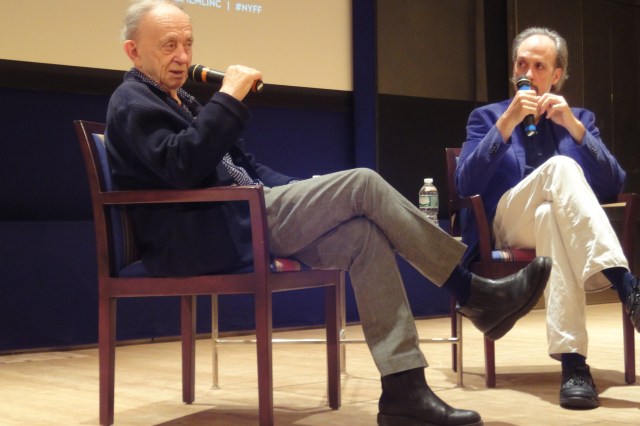 At the excellent HBO Directors Dialogue moderated by Kent Jones on Sunday, Wiseman said he doesn’t start with a particular point of view, but begins to collect footage to see where it leads. For At Berkeley he shot on digital cameras for 12 weeks, resulting in 250 hours that was edited down to 4 hours over a period of 8-10 months. Watching the film is a bit disorienting at first, because we spend time in conference rooms and classrooms without knowing who the people are (though you pick that up) or what exactly is going on (you pick that up, too). There are wonderful moments throughout. One of my favorites is almost a throwaway. We’re in a robotics lab watching a machine with robot arms fold a towel over and over. Each time it ends with motions of the arms that suggest an elegant “Et voila!” gesture.
I think the goal in his films is to get inside institutions like UC Berkeley to show how they work, how they function. After seeing all the administration meetings, classroom discussions, students going to and from classes, etc etc, I felt like I had a sense of the ongoing life of the university. This is Frederick Wiseman at his best.
__________________________________________________
From a remembrance and interview with Fred Wiseman by Ed Symkus in The Arts Fuse, an online arts magazine in Boston:
From the interview: “Yes, shooting is the research. Since none of the events in my films are staged, I find there’s not much point in spending a lot of time in the place because nothing that I’m seeing will be repeated exactly the way I saw it. So, what I try to do in advance is get a sense of the geography and a sense of the routine before I start shooting. When I made At Berkeley, I knew where the director’s office was, and I knew where the entrances were, and I knew what time the place opens up. I can usually do that in a day.”
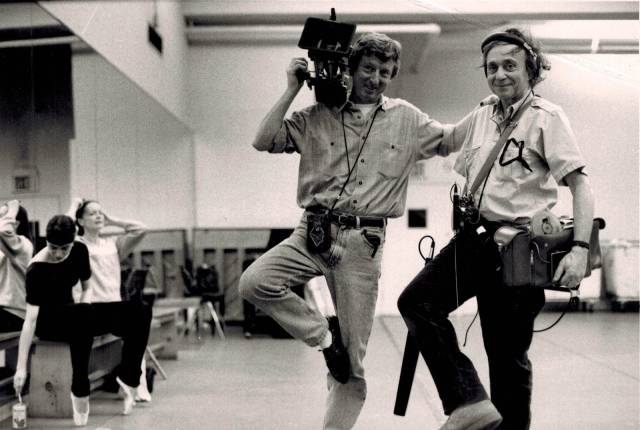 “The technique is always the same. It’s a small crew. There are three of us – me on sound, John Davey’s behind the camera – and we only use one camera – and an assistant. No interviews, no lights. You just hang around.”
“I discover the film in the editing, and I always have.”
Re the process of editing: “I look at all the rushes. That takes six or seven weeks. I make notes about the sequences, then I put aside roughly 40 to 50 percent of them, and I edit the ones that I think I might want to use in the film, without even thinking about structure. It’s only when I have all of the ones edited that I think I might use that I begin to work on structure.”
“It’s very interesting work. I don’t find it to be a strain. I love doing it. I love making documentaries because it’s intellectually demanding and physically demanding. You have to be in shape, both to run around and make the movies, and then to sit for 10 months in a chair editing them. But it’s fun because it’s completely absorbing.”
___________________________________________________
I remember I was working the night shift at the Du Art lab here in 1988 when this guy brought in a big bag of 16mm film for processing. It took me a minute to realize this was Fred Wiseman. He was shooting Central Park (1990) at the time. Came in by himself. I really got a kick out of that.
___________________________________________________
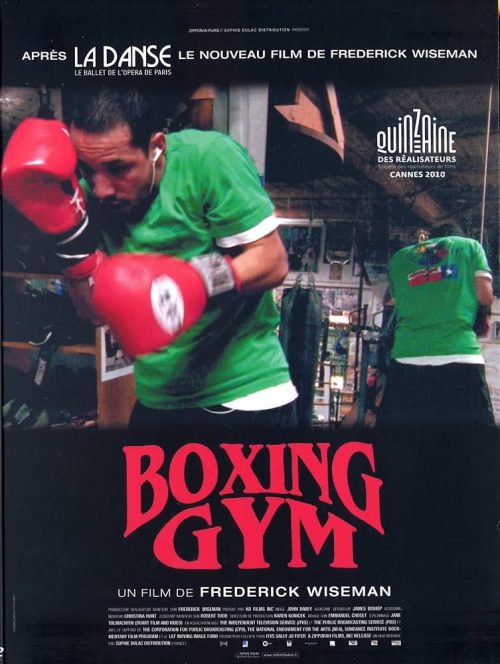 A Wiseman film that I don’t think gets as much attention as many of his others is Boxing Gym, which I saw when it came out in 2010. At ninety-one minutes, it’s one of his shortest films. The setting is Lord’s Boxing Gym in Austin, Texas. I saw it again last year in a major Wiseman retrospective at Film at Lincoln Center, “Frederick Wiseman: An American Institution,” an appropriate title considering the institutions of all kinds that have been his focus throughout his career. Boxing Gym might seem to be on a smaller scale when compared to Wiseman’s films concerning hospitals, museums, library systems, and the like. More of a breather compared to the deep dives of those films. But I was quite taken with it.
Per the description when Boxing Gym was shown at the 48th New York Film Festival: Wiseman observes men, women, and children as they train and interact in a lively and diverse environment. The irresistible portrait is marked by Wiseman’s sensitive eye and adroit editing, and recalls his past meditations on bodies in motion (Ballet; La Danse) and on violence, people at play, and America in microcosm.
What stuck me the most was near the end, when we see a real sparring match between two guys who are much closer to being real boxers than the “ordinary” people we’ve seen up to that point. It was brutal and brought home the violence that boxing is. There was nothing casual or playing-around about it. And it was just there in the film without making any kind of big deal about it.
____________________________________________________
In an online profile for The New Yorker, Richard Brody calls Frederick Wiseman the “greatest documentary filmmaker ever.” He’ll get no argument from me, though there are some people of Wiseman’s generation who deserve mention as well, in addition to the previously mentionbed Al Maysles and D.A. Pennebaker, as follows:.
Robert Drew, died age 90. Sometimes called the father of cinéma vérité, or direct cinema (a term I think Wiseman might prefer)
Ricky Leacock, died age 89
Agnes Varda, died age 90
Raymond Depardon, a French filmmaker I’m just getting exposed to via a current retrospective of his work at Film at Lincoln Center, age 83 and still alive.
Fred Wiseman lived to age 96, the oldest of the bunch.
_____________________________________________________
 ________________________________________________________
 ______________________________________________________
 ______________________________________________________
So long, Fred, and thanks!
Wiseman appraisal – Alissa Wilkinson, NYT
That’s all for now. See you next time. — Ted Hicks
______________________________________________________
P.S. Just remembered this. Too good not to add. This is from an interview with Wiseman by Eric Hynes for Metrograph in 2016.
Wiseman: I had some interest in making fiction movies. I wrote a screenplay based on a novel by Anne Tyler, but I couldn’t get the money. My bullshit meter explodes when I land in Los Angeles. I just don’t have the patience or the tolerance or the sufficient interest to have pursued that. It’s hard enough getting money for documentaries.
Bullshit meter explodes. I love that.
________________________________________________

 Films etc.
Ted…that’s a wonderful appraisal! Very interesting to note that documentary filmakers can live to ripe old ages….. Keep ’em coming!
I’ve never been a big ‘documentary’ gal….but this is intriguing.