
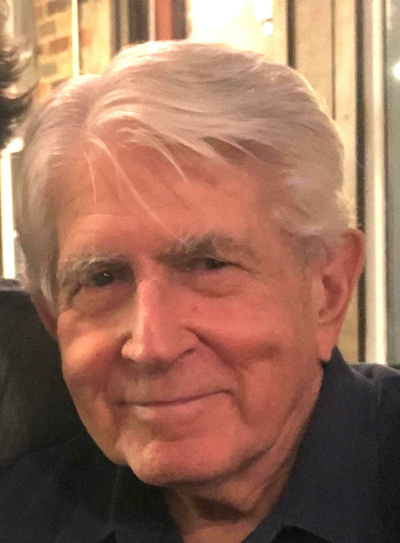
On July 3 of this year I was jolted by the news that Ted Perry had died the previous month. I first met Ted and his wife Miriam in 1964 at the University of Iowa when he was a TA in the first film production course I took, Cinematography Techniques, which everyone called Cine Tech, taught by Dr. John Kuiper. Sixty years ago. whew! We became friends and stayed in contact during all that time. Ted followed this blog, so when I saw a response I assumed was from him in my in-box, I was anxious to see what comments he might have made on my previous post. But it was his daughter Melissa, writing to tell me her father had passed away on June 10. Sad news indeed, especially for those of us who knew him.
 I became friends with Ted and Miriam at Iowa. I think we took a film history course together in the first semester of the 1965-66 school year. I seem to remember meeting with them and others from the course in the cafeteria lounge of the student union to go over notes before the final exam. I still have my notes around here somewhere. I also remember a film party that was held at Don Pasquella’s great apartment above the Whiteway grocery store in downtown Iowa City where I was living in the months prior to leaving for Air Force basic training that October. A bunch of us chipped in to rent a 16mm print of Tod Browning’s Freaks (1932) to show. Quite a party. “One of us! One of us!” I remember Ted was there, though not sure if Miriam was. By now they’d had their first child, so maybe not.
___________________________________________________________
Ted has had a truly impressive and important career in film. I’m always amazed that I actually know people like this. After the University of Iowa, he went to the University of Texas at Austin where he was on the ground floor developing a film program. From there he and Miriam moved to New York City where he was the new Chair of Cinema Studies at NYU from 1971 to 1975. After that he was the director of the Museum of Modern Art’s Film Department from 1975 to 1978. Ted was hired by Middlebury College in Vermont in ’78 as a professor of theater and dean of the arts and humanities. Seeing that Middlebury didn’t have a film studies department, he basically built one from the ground up, which became the Department of Film and Media Culture. Ted stayed at Middlebury until he retired.
Ted was one of the film scholars who was instrumental in developing film studies programs in this country. As he said in a 2018 interview, “…I think a lot of credit should go to those peopled who really had to fight at places to teach film and to have film recognized as medium for serious study.”
Michelle McCauley, a longtime colleague, wrote that “Ted recognized the instrumental value for students to be not only well read but also well viewed. He led Middlebury to develop a robust film curriculum far ahead of many of our peers. Our nationally renowned film and media culture program is a testament to his inspiring vision.”
In an article Ted wrote for Middlebury Magazine in 1988 titled “Why I Teach Film,” he said, “Investigating the history and criticism and the aesthetics of the moving image is important, not only because the moving image is an independent art form, but also because the moving image has inflected the culture of this century.”
I also liked what he said when he arrived at the University of Texas, “Okay. You want to have a film program. Let’s go.”
_____________________________________________________
When I moved to New York in 1977, we met at MoMA and Ted gave me a year-long pass, which I really appreciated since I had very little money then. I put it to good use seeing many films at the museum. We got together a few times before he and Miriam and their kids made the move to Burlington, Vermont. After that, we stayed in touch via email.

Monica Vitti – Red Desert
The last time I saw Ted in person was when he and Miriam came to the city for the start of a Michelangelo Antonioni retrospective at MoMA in December of 2017. Ted loved Antonioni’s films, ever since L’Eclisse (1962) had knocked him out when he first saw it at Iowa. He’d even done his doctoral dissertation on that film. The series began on Thursday, December 7, with Red Desert (1964). I met Ted and Miriam at MoMA before the film, where they introduced me to Antonioni’s widow, Enrica, with whom they’d become great friends. Two days later, Nancy and I met Ted and Miriam for lunch at their hotel. Nancy took the following shot. I remember Ted mentioning that the color timing was off in some scenes in the copy of Red Desert we’d seen. I liked that.
 _________________________________________________
When I’d learned that Ted had written a memoir titled My Reel Story, I was anxious to read it. I remember getting a copy when it was first published in 2001. At the time, I had a very uncertain reaction to the book. I was confused and disappointed that it was so personal and open. I hadn’t expected that, and was maybe a little embarrassed by it. I didn’t want to know all that. It was too much information. This wasn’t the book I’d expected. I thought it was just going to be about movies, but it was much more than that. Movies were important to Ted growing up in New Orleans, but the images of his mother and father were disturbing to me. He had a problematic relationship with problematic parents. I’m not sure I even finished reading it then. When I emailed a mutual friend to tell him about Ted’s death, he mentioned that he was re-reading My Reel Story. This motivated me to take another look. Due to some recent downsizing, I no longer had my copy, but got one at the library. This time I loved it! Re-reading it made me think my original discomfort was because it had triggered feelings of my complicated relationship with my own parents. Their marriage was certainly problematic, but I suspect that’s true of all marriages to varying degrees. I know it wasn’t Father Knows Best, but that’s what I saw on TV in the ‘50s. I think what I’m saying is that book was personal to Ted in ways that are personal to me in my own story. It just took me a while accept that.
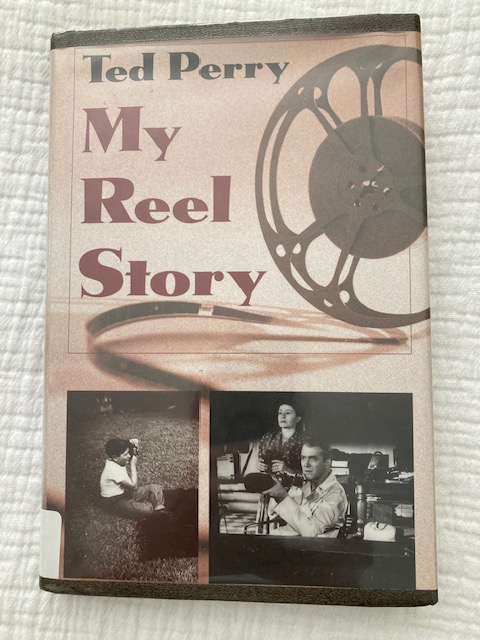 I love the photo below on the back jacket cover. So there actually is a streetcar named Desire in New Orleans!
 ___________________________________________________
When I started looking online for material to include in this post, I found the transcript of an interview with Ted that had been done in 2018. I read the interview and thought it was great, but could find nothing in the transcript itself that would indicate attribution of the piece. I was eventually put in touch with Christian Keathley in the Film & Media Culture Department at Middlebury college. Chris had done the interview with Ted for the Society for Cinema and Media Studies Fieldnotes program, which is a series of in-depth interviews with film scholars and educators relating to their careers and the history of film and media studies in academia. He gave me this link to the Fieldnotes interviews.
I found that besides being able to access transcripts of each interview, videos of the interviews are also available. Being able to see and hear the person being interviewed is obviously much more immediate and alive than just reading words on a page or screen. One thing I really like about this interview with Ted is how much of his personality and humor are present. He always seems to have a twinkle in his eyes.
__________________________________________________
From the brief obituary at the Sanderson Funeral Home website:
Edward “Ted” S. Perry, 87, peacefully passed away June 10, 2024 surrounded by his family.
“Surrounded by his family” sounds pretty ideal, if it’s time to go. After Iowa, Ted and I infrequently got together, but were never out of touch. I really miss him, and am proud that we were friends.
_____________________________________________________
______________________________________________________
Postscript: Ted was a fan of The Texas Chainsaw Massacre (1974). He knew some of the people who worked on the film. In a somewhat controversial move, the Museum of Modern Art acquired a print of that film for their permanent collection in 1976. This was while Ted was head of the Film Department at MoMA, and from what I’ve been able to find, Larry Kardish and Adrienne Mancia are credited with that decision, but not Ted. Nevertheless, I’d like to think that he had to have been involved in that somehow.
______________________________________________________
That does it for this one. See you next time. — Ted Hicks
______________________________________________________

 Films etc.
Excellent piece on Ted Perry!! Were you in my Film 1 class, Ted Perry then a TA taught it. One assignment was everyone received a short 26mm roll of a fight scene from Gunsmoke, unedited, shots all out of order including the cutaways of Miss Kitty and Doc. The assignment was to put it together as it would be done by a professional editor. At the time I was a big enthusiast for experimental film so I asked Ted if I could do an experimental film instead, using the Gunsmoke footage. He said, well, it’s definitely not what I was asking for but I’m curious to see what you can do with it. I did it; he liked it! Not sure if anyone else in the class liked it. But it was fun to do. Thanks to Ted for stepping outside the rules! You may remember Ted directed a play, Pere Ubu, for this thesis project. Part of the play had little film clips to be show in it so Ted asked me to be the projectionist. I was nervous because I didn’t want to have something go off the rails and ruin his thesis project. It all went well. WHEW! I don’t remember if Ted was at the film screening in my apartment or anybody else for that matter, except for a few: you, Chap, Lorraine, I think John Huston, Pat?, Jack and Didi? Do you recall who all was there?
Yes, that was a very cool apartment even if it had no furniture to speak of.
Looking back on the whole experience in the film department, it was fundamentally a shitty faculty with very limited production equipment for us to work with. The guy who taught film history would start the projector and leave! Ray Fielding really had no personal filmmaking experience whatsoever. Sam Becker ditto since he was a Comm Theory guy.
But what a fascinating group of us from such different backgrounds (me an ex engineer, Mike McKay ex chem major I think, plus my friends from the Music, Dance, Writing and Art departments). I loved being there and basically being left alone to do my own things.
I eventually finished my MA thesis on the history of the use of sound in silent film exhibition 1909-1919. Did a lot of the research at the Library of Congress with a bunch of guidance from Kuiper (who had left Iowa before I got there). He was head of the film section there at the time.
Anyhow, Don
Good attribution. Sounds like he was quite guy, and certainly important to you Ted.